

Sometimes, in housing only, and never as an automatic right. A provider evaluates each animal separately, so the request has to say what the second animal does that the first cannot. Since HUD's May 2026 enforcement memo, federal enforcement no longer backs untrained emotional support animals, which pushes these requests toward state fair-housing law.
Two emotional support animals can be reasonable in some situations and unrealistic in others. A person may rely on a dog for daily routine and a cat for nighttime calm, or two animals may provide different support tied to the same disability-related need. The short answer is that two can work in housing and nowhere else, and even in housing it is never automatic. A provider assesses each animal on its own, so the second animal has to be doing something the first one is not.
Why housing rules shifted after HUD
Emotional support animal rules are setting-specific. Public places, flights, hotels, long-term housing, campus housing, and workplaces do not use one universal ESA rule. In housing, a person may request an accommodation related to disability, but the outcome can depend on documentation, current federal enforcement policy, state law, local law, court decisions, and the housing program.
Two things happened, eight months apart. The Federal Register notice on withdrawal of HUD fair-housing guidance documents records that HUD's prior assistance-animal guidance, including the 2013 and 2020 documents, was withdrawn effective September 17, 2025 and should not be relied upon as authoritative. Then on May 22, 2026 HUD's fair-housing office issued an enforcement memo, effective immediately, directing staff to stop pursuing complaints in which the animal is an untrained emotional support animal and to hold open ESA cases for individual review. Only individually trained service animals are presumed exempt from pet policies and pet fees. Any advice about ESA numbers written before those two dates is describing a system that no longer runs.
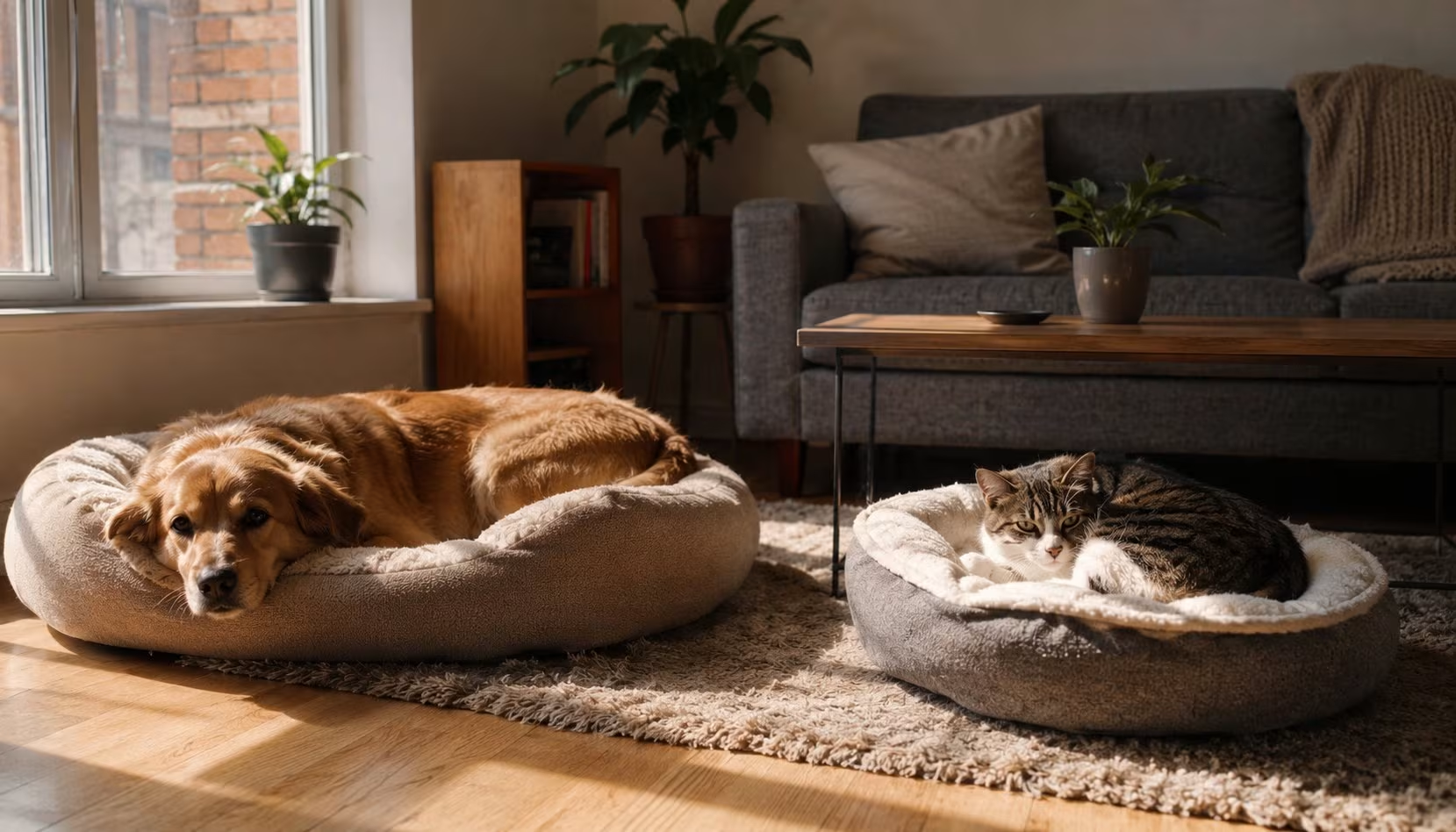
The baseline rules in emotional support animal requirements apply to each animal separately, which is the part people get wrong. One letter naming two animals is not one request. It is two requests in the same envelope, and a provider can approve one and refuse the other. That is worth knowing before you write it, because a letter that treats the pair as a package invites a single answer for both.
A stronger request explains the disability-related need for each animal. One animal may support routine, outdoor movement, and interruption of isolation. Another may support sleep, panic recovery, or tactile comfort at home. The explanation should be truthful and specific without disclosing more medical history than necessary.
Weak requests sound like pet preference. "I love both animals" may be true, but it does not explain why two support animals are necessary. "My dog helps me leave the apartment each morning, while my cat provides nighttime grounding during panic symptoms" gives the housing provider a clearer accommodation question.
The animals do not need to perform service-dog tasks if the request is truly about emotional support, but they should be manageable. Noise, odor, waste, aggression, property damage, and overcrowding can all affect whether a request is reasonable.
What a clinician letter should include
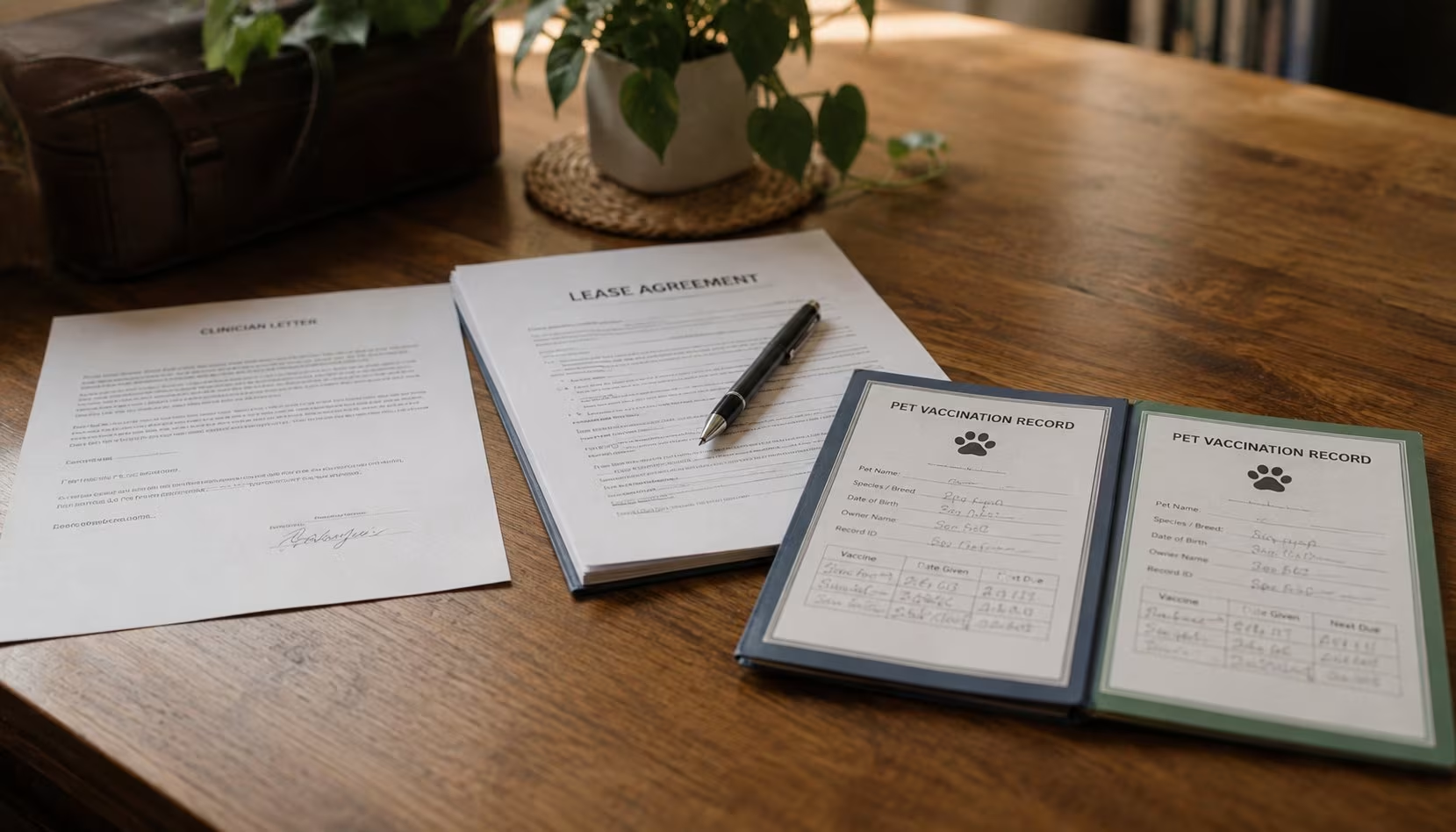
A clinician letter should come from a licensed professional who has enough information to assess the person's disability-related need. For two animals, the letter may need to address why one animal is not enough or why the animals meet different needs. It should avoid fake registry language, federal certification claims, and promises that the animals can go everywhere.
Ask the professional to use plain wording. The letter does not need to list every diagnosis or therapy note. It should connect the person, the disability-related limitation, and the support animals in the housing context. If state law has special requirements for ESA letters, follow those rules.
Name the mechanism, because that is what turns a preference into an accommodation question. Routine means the dog has to be walked at seven whether or not you feel able to get up. Sensory grounding means the weight or texture of the animal interrupts a physical symptom. Caregiving structure means having something that depends on you is what gets the day started. Those are describable and checkable, and an emotional support animal can help with anxiety goes through them. "Makes life better" is not one of them.
Two quiet indoor cats in a large apartment raise different concerns from two large barking dogs in a small studio. A cat and a rabbit may be easier to house than multiple animals with prey-drive conflict. A dog and bird may be fine in one home and stressful in another. The housing provider may look at safety, sanitation, space, property damage, and impact on neighbors.
Financial responsibility also matters. Food, veterinary care, parasite prevention, litter, grooming, emergency boarding, and damage repair all multiply with each animal. If an owner cannot afford basic care for two animals, the support plan is unstable.
Species rankings are the wrong tool for a second animal anyway. The question is not which species is best in general but which second animal can share a specific unit with the first one, and the answer changes with square footage, flooring, whether there is a balcony, and how the two animals behave when a stranger knocks. Species comparisons like best emotional support animals are a starting filter, not a decision.
| Element | One animal | Two animals |
|---|---|---|
| The need | A disability-related limitation, stated generally | The same limitation, plus which part of it each animal addresses |
| Why this number | Not applicable | The reason one animal is not sufficient, in one sentence, without medical detail |
| Naming | The animal identified by species | Each animal identified by name and species, so a partial approval is unambiguous about which one |
| The professional | Name, license type, license number, jurisdiction, date | The same, and ideally one professional covering both rather than two letters from two providers |
| Relationship | A genuine treatment relationship. California requires 30 days of client relationship before a letter is issued, with limited exceptions | The same standard. A second letter obtained quickly to cover a newly acquired animal is the weakest document in this whole process |
| What it must not say | No registry numbers, no certification claims, no promise of public access | The same, and no claim that approval of the first animal carries the second |
Answering a provider's follow-up questions
If the disability-related need is not obvious, a housing provider may ask for reliable information. For multiple animals, the provider may ask why each animal is needed. They may also discuss reasonable rules for sanitation, control, vaccination, and emergency access. They should not ask for unnecessary private medical records, but they can evaluate the request.
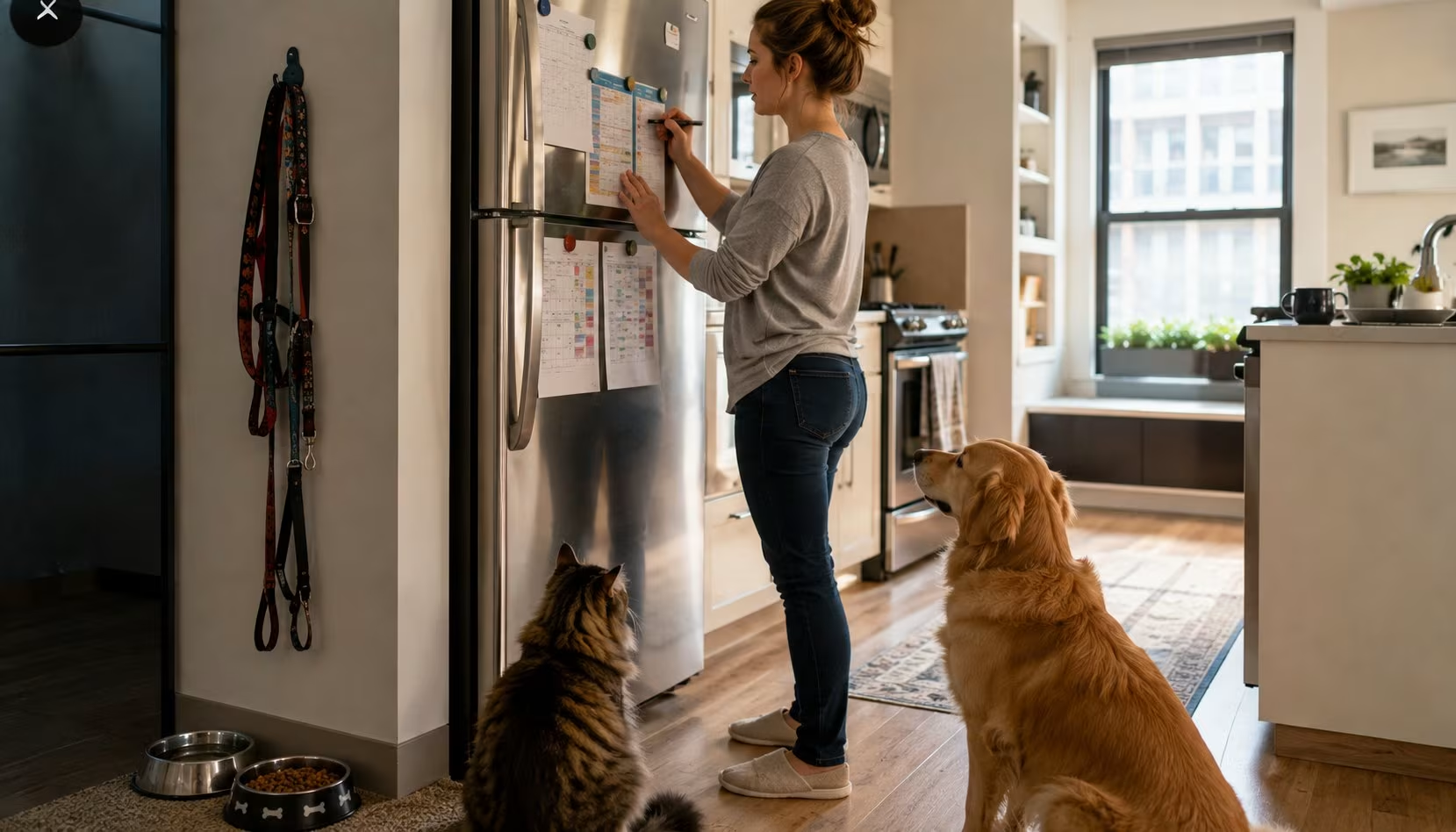
Put the request in writing. Identify each animal by name, species, age, and basic description. Attach documentation if needed. Explain how each animal relates to the disability-related need. Offer practical management steps: litter box count, relief area, leash control, noise plan, crate or room confinement during repairs, and a backup caregiver.
If the provider denies the second animal, ask for the reason in writing and whether more information would resolve the issue. Then contact a fair-housing agency, legal aid office, disability-rights group, or attorney in your state before escalating.
| Concern | What it looks like from their side | What resolves it |
|---|---|---|
| Noise | The complaint that arrives from the unit next door at 11 p.m. | A written note on how the dog is managed when alone, and honesty if there is an existing barking problem plus the plan for it |
| Sanitation | Litter volume, odor in a shared hallway, waste in a common yard | Litter box count and location, relief routine, and who cleans it on a bad week |
| Maintenance safety | A technician entering a unit with two animals loose | An offer to crate or confine both animals during entry, and a phone number that gets answered |
| Property damage | Flooring, doors, screens, and the deposit | Behavior history, and acceptance of the same damage terms every other tenant has |
| Other tenants | Allergies, fear of dogs, a prior incident in the building | Route and timing habits, such as using a specific exit or avoiding the elevator at peak times |
| Number itself | Whether the unit is over a city or building animal limit | Check the municipal animal-limit ordinance before asking. A reasonable accommodation request is a different conversation from one that also asks the building to break a local cap |
Preventing conflict between two animals
Two animals can create conflict with each other. Fighting, chasing, resource guarding, spraying, barking, or destructive behavior can turn a support plan into a housing problem. Provide separate feeding areas, beds, litter boxes, resting spaces, and safe retreats.
Noise is a common complaint. A dog who barks when left alone may need separation-anxiety care before a second animal is added. A second animal can sometimes reduce loneliness, but it can also double stress. Behavior plans should be based on the animals in front of you, not a hope that they will entertain each other.
Adding animals has a ceiling and then a reversal. Beyond the point where the household can be kept clean, quiet and calm, each additional animal costs the owner attention and money and returns less support than the one before it. The definition in what constitutes an emotional support animal is about an effect on one person, and an effect that is already being delivered by the first animal does not double.
Pause before bringing home another animal just to strengthen an accommodation request. The animal should already make sense for the person's care, the household, and the property. Adding an animal first and building the explanation later can create a weak request and a stressful home.
Write a plain care plan before the second animal arrives. Include feeding locations, litter or relief routines, sleeping spaces, veterinary costs, parasite prevention, grooming, emergency transport, and who will care for both animals if the owner is hospitalized or traveling. A provider may never ask for every detail, but the exercise reveals whether the arrangement is realistic.
Also think about species rules. Some rentals have safety concerns about reptiles, birds, aquariums, rabbits, or animals that need special enclosures. An animal can provide emotional support and still be unsuitable for a particular unit. The stronger position is to choose animals that can live safely, quietly, and humanely in the space available.
- Set up the second animal in its own closed room before it arrives, with food, water, bed, and for a cat a litter box. It lives there for the first few days.
- Swap scent before sight. Trade bedding or rub a cloth on each animal and leave it where the other one sleeps. Feed both animals on opposite sides of the closed door.
- Let them see each other through a barrier only after both eat normally at the door. A baby gate for a dog and cat, a cracked door for two dogs.
- Keep the first sessions to a few minutes and end them while both animals are still relaxed. Stiffness, a hard stare, a tucked tail or a low tail flick means you stop, not that you wait to see what happens.
- First loose introduction on leash, in a neutral room, with an escape route for the cat that the dog cannot follow.
- Feed separately, permanently. Most fights in multi-animal homes start over food, a bed, a doorway, or a person, and separate feeding removes the most common one.
- Count resources. One more of everything than the number of animals: beds, water bowls, and for cats litter boxes, placed in different rooms rather than in a row.
- Give it several weeks before you judge it, and do not leave the two alone together until they have been reliably calm with you in the room for many days.
If either animal is still tense after a month, that is information about the plan, not about the animals. A household where two animals are managing each other is not a household providing support to a person.
Flights and hotels ignore housing approval
Even if two ESAs are accepted in housing, that does not mean both can enter restaurants, stores, or airplanes. The ADA service animal FAQ does not treat comfort-only ESAs as service animals for public access. The DOT's service animal air-travel guidance also excludes emotional support animals from service-animal status under current air-travel rules.
For travel, the animals will usually be treated under pet policies unless one separately qualifies as a trained service dog. Airlines and hotels can limit pet numbers, size, fees, and room access. Plan separately for each setting instead of assuming a housing accommodation follows you everywhere.
A partial approval is possible. A provider may agree that one support animal is reasonable but question the second. If that happens, ask for the reason in writing. The concern might be documentation, animal behavior, unit size, species, noise history, or a policy conflict that can be addressed with more information.
Do not retaliate, hide the second animal, or move it in quietly. That can damage credibility and create lease problems. Instead, decide whether stronger documentation, a behavior plan, mediation, legal advice, or a different housing option is the right next move. If the second animal is truly part of disability support, the response should be organized and factual rather than emotional.
Some households also need a phased plan. The provider may be more open after seeing clean inspections, stable behavior, and no neighbor complaints from the first animal. That does not guarantee approval, but it can turn an abstract worry into a record of responsible care.
Building the care plan before adding one
One thing separates the requests that get approved from the ones that do not, and it is not the letter. It is whether the provider can picture the second animal in the building without picturing a problem. A tenant with a year of clean inspections, no complaints, and a written plan for who takes both animals during a hospital stay is asking a much smaller question than a tenant who is asking about animal number two in month one of a lease.
Before adding a second ESA, write the care budget, behavior plan, backup caregiver list, and documentation plan. If those pieces are not ready, the second animal may create more stress than support.




0 Comments
No comments yet. Be the first to share your thoughts!
Leave a Comment