

Breed tendencies narrow the search, but the individual dog decides the outcome. Calm adults with a known history, a size your building allows, grooming you can pay for and no untreated pain settle fastest. Cavaliers, Labradors, Goldens, Poodles, Bichons, Havanese, Greyhounds, Cocker Spaniels and mixed-breed adults all appear on shortlists, and every one of them fails in the wrong household.
The best emotional support dog is not chosen by breed list alone. A comforting ESA dog should fit the person's housing, energy, budget, allergies, mobility, schedule, and care capacity. Breed tendencies can help narrow the search, but individual temperament matters more than a name on paper.
Some dogs are naturally steady, affectionate, and easy to live with. Others are loving but too intense for the person's needs. The right match should reduce daily stress, not add another source of chaos.
Temperament traits that make a dog calming
An emotional support dog is not the same as a service dog under the ADA. The ADA's service animal guidance says emotional support alone does not make a dog a service animal for public access. Breed choice does not change that.
The practical test is what staff are allowed to ask. Under the ADA, staff may ask only whether the dog is required because of a disability and what task it has been trained to perform, and an emotional support dog has no trained task to name. That does not make the support fake, and the benefits of having an emotional support animal are well documented, but it does mean no breed buys you public access.
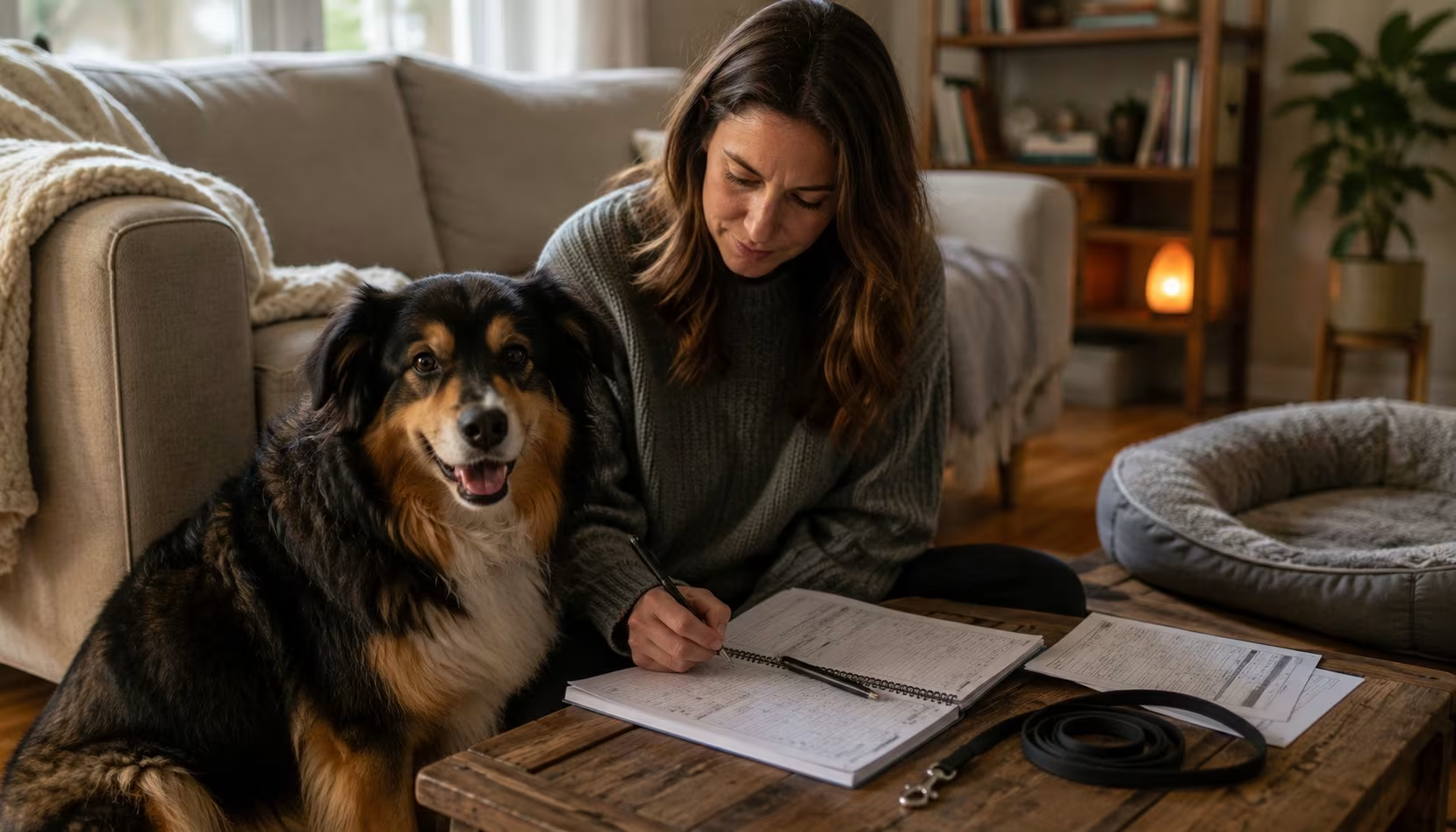
Look for a dog who is comfortable with normal household sounds, recovers after surprises, enjoys gentle contact, can settle, and can learn basic manners. A comforting dog should not be so fearful, reactive, or energetic that the owner becomes tense trying to manage it.
Age matters too. Many people do better with a settled adult dog than a puppy. Puppies can be wonderful, but they require house-training, chewing management, socialization, night waking, and constant supervision.
Cavaliers are often affectionate, small, and people-oriented. They can suit apartment life if their health and exercise needs are met. Their size makes them manageable for many households, and many enjoy lap time.
Health matters. Cavaliers can be prone to heart disease and other conditions. Choose carefully and budget for veterinary care.
Labradors are often social, steady, and trainable. A calm adult Labrador can be a strong companion for someone who wants a larger dog and can provide exercise. Young Labradors, however, can be energetic, mouthy, and strong.
Match age and activity level to the person. A field-bred young Lab may be too much for a quiet apartment, while an older Lab may be a better fit.
Golden Retrievers, Poodles and Bichons compared
Golden Retrievers are known for affectionate, people-focused temperaments. Many are gentle and responsive with good training. They need exercise, grooming, and space, and they can be prone to cancer, skin issues, and orthopedic problems.
Reputation tells you nothing about the dog standing in front of you. Ask a breeder for hip, elbow, eye and heart clearances on both parents, and ask a shelter what the intake exam found and whether the dog has been treated for skin or ear problems since arriving. Then watch what the dog does when a door slams.
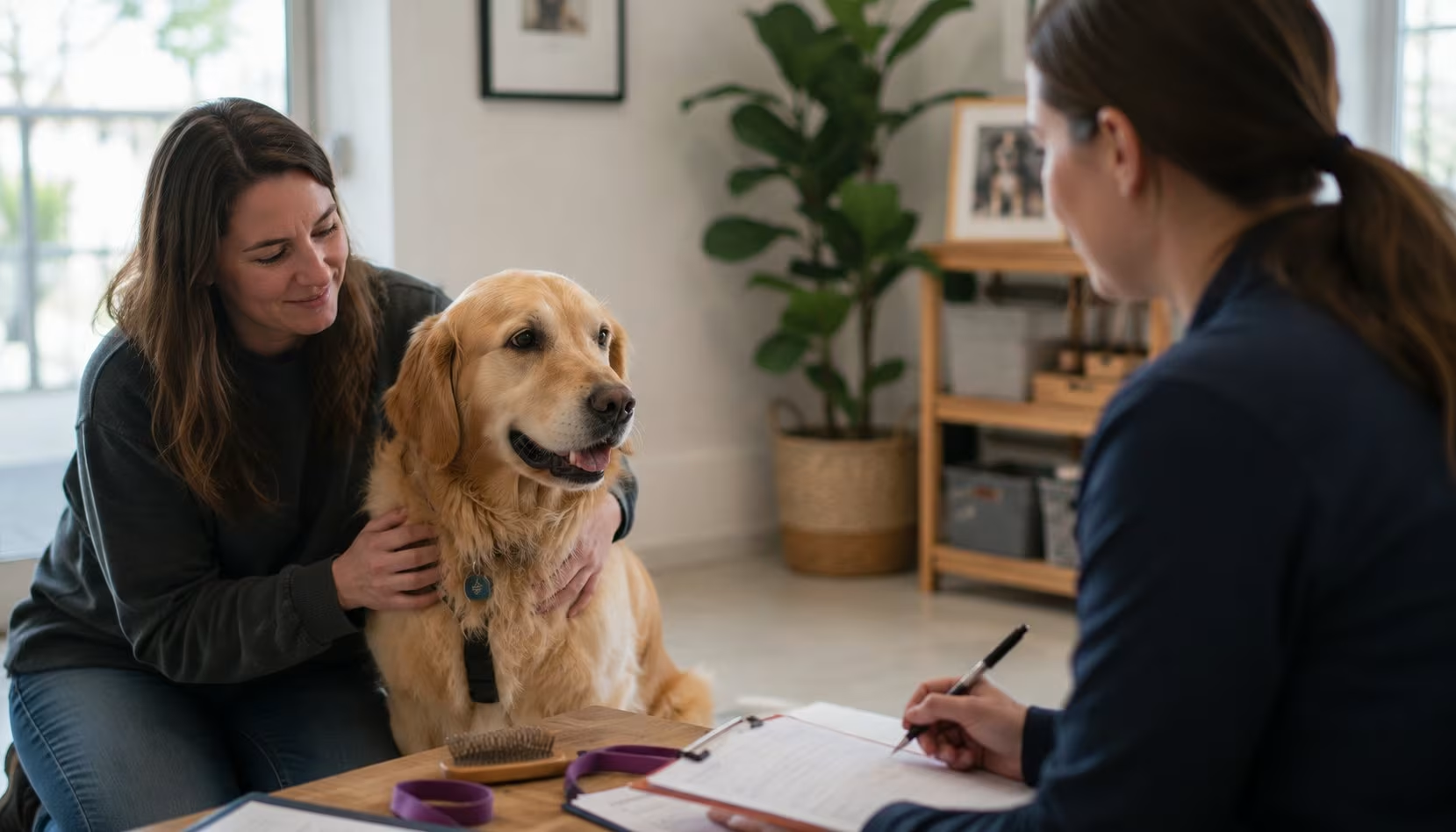
Poodles are intelligent, trainable, and come in different sizes. They may suit people who need lower-shedding coats, though no dog is truly allergy-proof. Grooming is a major responsibility.
Poodle mixes vary widely. A doodle can inherit any mix of coat, energy, size, and temperament. Evaluate the individual dog, not the marketing label.
Bichons are small, cheerful companion dogs for many homes. They can be affectionate and adaptable with good training. Grooming and dental care are ongoing needs, and some can be vocal or separation-sensitive.
They may fit people who want a small dog but can handle grooming costs and regular companionship.
Havanese dogs are often social, trainable, and people-oriented. Their size can work for apartments, and many enjoy close contact. They need coat care, dental attention, and regular activity.
As with any small dog, avoid treating the dog like a toy. Safe handling, training, and boundaries still matter.
Greyhounds, Cocker Spaniels and mixed-breed rescues
Retired racing Greyhounds can be calm indoors and affectionate once settled. They need safe leash handling, soft bedding, and protection from temperature extremes. Some have strong prey drive, so cat or rabbit homes need caution.
Greyhounds surprise renters twice. They are tall enough to look like a problem on a weight limit, and they sleep most of the day, which is why retired racers so often do well in apartments.
Cocker Spaniels can be affectionate and soft-natured, but grooming, ear care, and temperament screening matter. Some lines are more sensitive or prone to ear and skin problems. A well-matched adult can be comforting; a poorly matched dog can be stressful.
Ask about handling tolerance, grooming history, and ear health.
Many excellent emotional support dogs are mixed breeds. Adult rescue dogs often reveal their size, coat, energy, and personality more clearly than puppies. Look for calm greetings, recovery after noise, gentle food manners, and interest in people without frantic behavior.
Criteria are easier to hold to when they are written down before you walk into the shelter, and planning to get an ESA dog covers what to settle on in advance about size, energy and monthly cost.
High-drive herding dogs, intense working breeds, guard-oriented dogs, very vocal breeds, and dogs with severe separation anxiety may be challenging for some ESA homes. They can be excellent dogs, but they need jobs, training, exercise, and confident handling.
Meeting a dog before adopting for support
Your building's pet policy now weighs more heavily on this choice than it did two years ago. HUD's May 22, 2026 animal accommodation enforcement guidance tells HUD staff to stop pursuing complaints where the animal is an untrained emotional support animal, and treats only individually trained service animals as presumptively exempt from pet rules and pet fees. State and local fair housing laws are untouched by that memo and some still protect ESAs, so check yours first. Where they do not, a dog that already clears your building's weight limit and breed list is the safer choice, and South Carolina's rules show how far state to state variation can run.
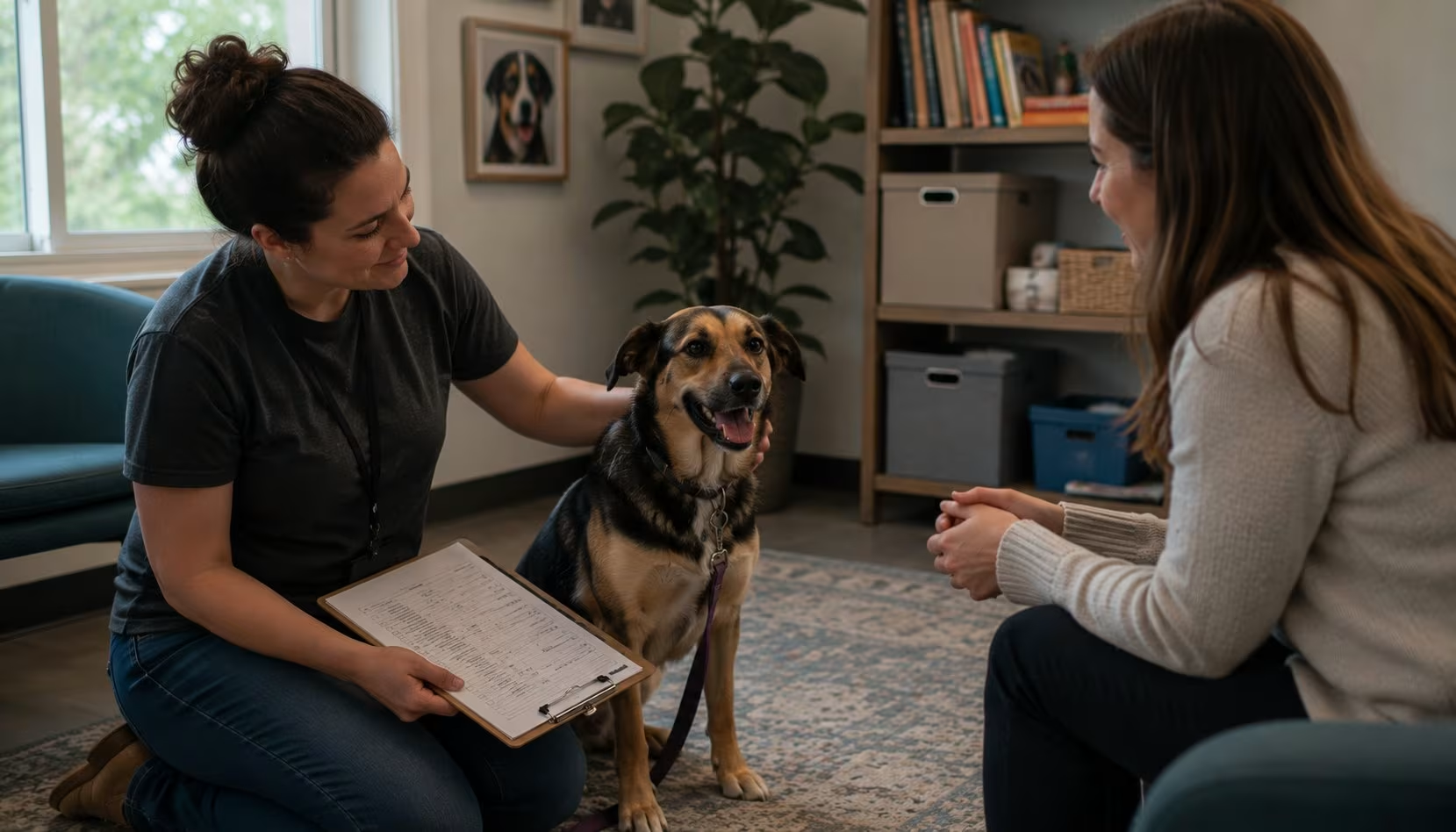
Meet the dog in a quiet place and then in a slightly busier place if possible. Watch recovery after noise, interest in people, leash manners, body softness, food manners, and response to gentle handling. A dog who freezes, lunges, growls, or cannot settle may need more support than the owner can provide.
Ask the shelter, breeder, or previous owner about separation behavior, house training, bite history, medical needs, grooming, and how the dog handles strangers.
Puppies are not automatically more supportive. They chew, wake people at night, need house-training, and can be emotionally demanding. An adult dog with a known temperament may give more predictable support.
A meet-and-greet that actually tells you something
- Meet in a quiet room first. Sit down, say nothing, and let the dog approach or not. A dog who cannot come over in ten minutes is telling you about its recovery speed, not about you.
- Drop a set of keys behind you. Watch how long it takes the dog to go back to what it was doing. Under a minute is a good sign.
- Stroke the dog along the shoulder, then take your hand away. A dog who leans back in wants contact. A dog who moves off wants space, and that is worth knowing before the papers are signed.
- Hand over a treat, then handle a paw and look briefly at an ear. Stiffening, freezing or a hard stare during handling means grooming and vet visits will be work.
- Walk the dog outside past whatever traffic the shelter has. You are looking for a dog that can be walked on a bad day, not a dog that can be walked on a good one.
- Come back a second day at a different time and repeat steps one and two. Shelter dogs have loud days and quiet days, and one visit only shows you which day you got.
Ask the shelter or breeder four questions before you leave: why the dog left its last home, whether it has been alone in a room and for how long, whether there is any bite history on file, and what it costs per month to keep right now.
Matching size and coat to daily life
Small dogs can be easier in apartments, but some are vocal or fragile. Large dogs can be calmer indoors but need space, exercise, and strength to manage safely. Coat type affects cleaning and allergies. Grooming cost affects budget.
Choose the dog you can care for on a bad week, not only on a good week.
An ESA dog should learn house manners, leash manners, calm greetings, settling, crate or safe-area comfort, and handling tolerance. Training does not need to be harsh. It should make life predictable for both the person and dog.
If the dog is anxious, reactive, or destructive, get help early. Emotional support should not depend on unmanaged behavior.
A practical short list might include Cavalier King Charles Spaniel, Labrador Retriever, Golden Retriever, Poodle, Bichon Frise, Havanese, Greyhound, Cocker Spaniel, Shih Tzu, and calm mixed-breed adults. Each can be a good fit in the right home and a poor fit in the wrong home.
A dog with chronic pain, severe itching, untreated dental disease, or anxiety cannot offer steady support without support of its own. Before choosing a dog, ask about medical history, current medications, grooming needs, exercise limits, and behavior concerns.
A dog who needs complex care may still be loved, but the owner should know the commitment upfront.
Coat type is the recurring bill. A Poodle, Bichon, Havanese or Cocker Spaniel that is clipped every four to eight weeks becomes a standing appointment for ten to fifteen years, and a coat left to mat becomes a painful vet problem rather than a cosmetic one. A Labrador or a Greyhound costs almost nothing to groom and sheds onto everything you own instead. Neither is the harder option, but only one of them can be skipped in a bad month.
Size carries a second cost that changed recently. Because HUD staff no longer treat an untrained emotional support animal as presumptively exempt from pet rules and pet fees, a dog over a building's weight limit may now mean a pet fee or a refused application rather than an accommodation request, unless a state or local fair housing law says otherwise. Check your lease's weight limit and pet rent before you fall for a large dog.
Using trial adoptions to test the fit
Some people feel better with a dog that encourages walks. Others need a low-energy companion who will not demand constant activity. Neither is wrong. The mismatch is the problem.
Write down what a normal hard day looks like. Choose a dog that can live well on that day.
People often choose Poodles or Poodle mixes because of shedding concerns, but allergy response is individual. Spend time with the dog before adoption if allergies matter. Grooming needs also affect cost and routine.
Lower shedding does not mean lower maintenance. A coat that mats can become painful if grooming is skipped.
Some rescues offer trial adoptions or temporary placement before final adoption. A trial can show whether the dog sleeps, eats, eliminates, and settles normally in the home. It can also reveal separation distress or noise sensitivity.
Use the trial honestly. If the match is wrong, returning the dog early can be kinder than forcing a stressful fit.
A beautiful dog can still be too intense, fearful, sick, or expensive for the home. A plain-looking mixed breed may be the most comforting companion in the room. Choose function over appearance.
Shortlist of comforting companion breeds
Nine types keep showing up on shortlists for a reason: Cavaliers, Labradors, Golden Retrievers, Poodles, Bichons, Havanese, Greyhounds, Cocker Spaniels and calm mixed-breed adults. What they share is not a temperament setting. It is that each one is common enough in rescue that you can meet several adults of the same type in a month and pick the steady one.
Choose calm temperament, health, trainability, housing fit, budget fit, and care capacity over breed popularity. A good ESA match should make daily life more stable for both the person and the dog.
| Breed | Typical adult size | Coat work | Energy indoors | Ask about |
|---|---|---|---|---|
| Cavalier King Charles Spaniel | Small, roughly 13 to 18 lb | Brushing, feathering trims | Low to moderate, settles on a lap | Heart murmur history in the parents |
| Labrador Retriever | Large, roughly 55 to 80 lb | Minimal, heavy seasonal shedding | High until about three years old, then steady | Whether the line is field bred or show bred |
| Golden Retriever | Large, roughly 55 to 75 lb | Weekly brushing, constant shedding | Moderate, needs a daily outlet | Hip, elbow, eye and heart clearances |
| Poodle, standard to toy | Toy to large depending on variety | Clip every 4 to 8 weeks, mats without it | Moderate to high, mentally busy | Real grooming quotes in your area, not averages |
| Bichon Frise | Small, roughly 12 to 18 lb | Clip and brush, ongoing | Moderate, cheerful and bouncy | Barking and time spent alone |
| Havanese | Small, roughly 7 to 13 lb | Daily brushing or a short clip | Moderate, follows people room to room | Dental care and tolerance for being left |
| Greyhound, retired racer | Large and tall, roughly 55 to 80 lb | Almost none | Very low indoors, sleeps most of the day | Prey drive around cats, cold tolerance |
| Cocker Spaniel | Small to medium, roughly 20 to 30 lb | Clip plus weekly ear cleaning | Moderate | Ear infection history, handling tolerance |
| Mixed-breed adult | Whatever is in front of you, already grown | Depends on coat, visible on the day | Observable, not predicted | Surrender reason and behavior in the previous home |
The last row is the strongest one for most first-time ESA owners. With an adult mix, size, coat, energy and manners are facts you can see rather than projections from a breed standard.





0 Comments
No comments yet. Be the first to share your thoughts!
Leave a Comment