

A deaf dog can learn sit, stay, recall, leash manners, grooming routines, and household rules. The training is not easier or harder in every way; it is different. Instead of relying on spoken cues, the handler uses visual signals, tactile signals, environmental setup, and strong rewards. The dog learns by watching, feeling, and predicting patterns.
The most useful first goal is attention. A dog who cannot hear its name needs another way to know that communication is starting. Once the dog knows how to look back, the rest of training becomes much more practical.
Building visual cues instead of harsh tools
VCA's guide to teaching and training a deaf dog explains that cues for deaf dogs may be visual, tactile, or scent-based. The American Veterinary Society of Animal Behavior's position statements support reward-based training for dogs in general. Together, those principles make the foundation clear: show the dog what works, mark it clearly, and reward it.
Deafness is not a reason to use harsher tools. A dog who cannot hear may be easier to startle, so trust matters. Training should make the dog more confident about human movement, touch, light, and visual signals.
Pawdraft's article on specialty collars for training your dog is relevant because vibration collars are sometimes used with deaf dogs. A vibration signal should mean "look at me," not punishment. Shock-based use can damage trust and create fear.
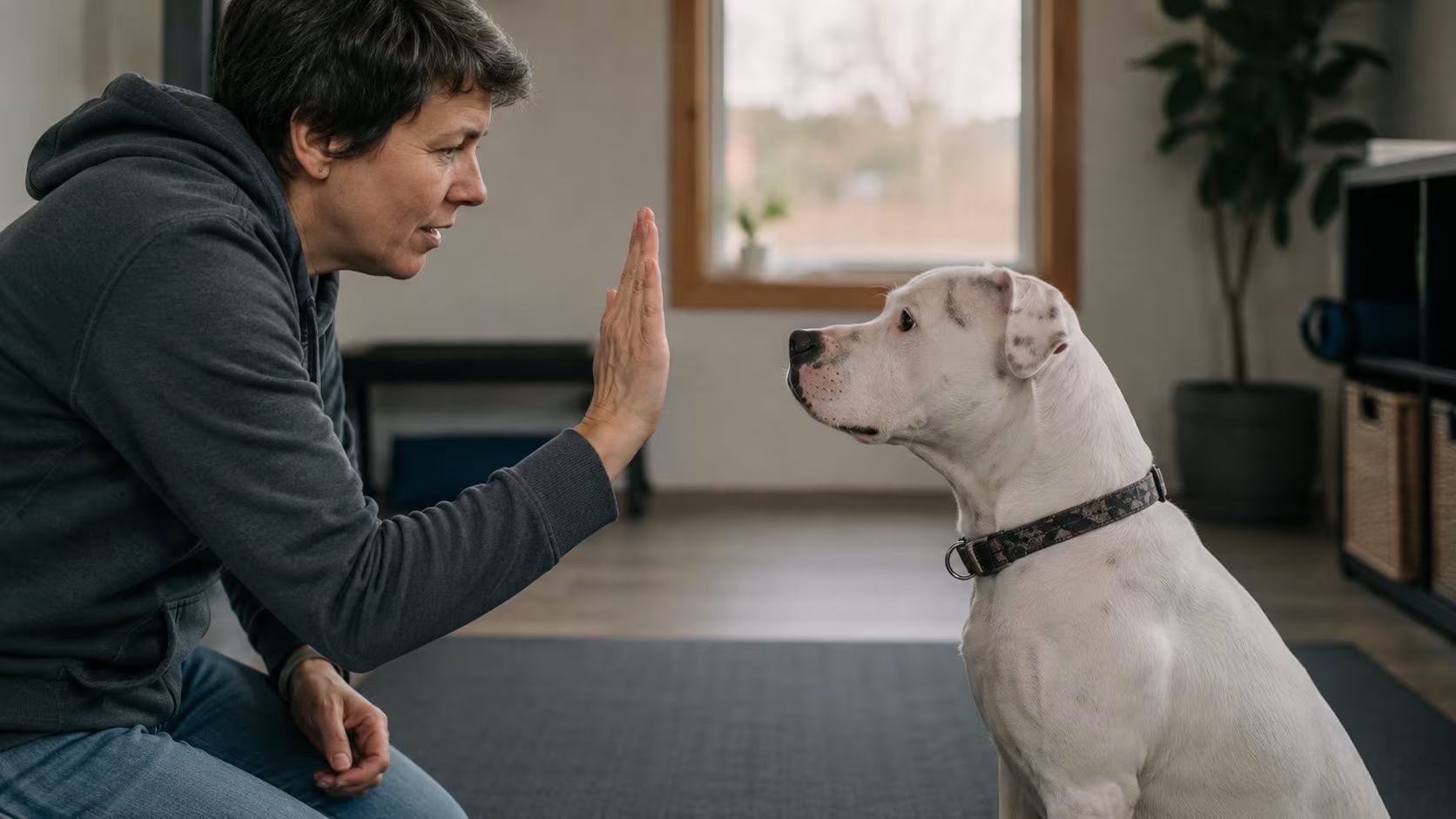
Hearing dogs often learn with a clicker or a word like "yes." Deaf dogs need a visual marker. Many handlers use a thumbs-up, a small hand flash, or a brief light signal in safe conditions. The marker means, "That behavior earned a reward."
Charge the marker first. Give the thumbs-up, then immediately offer a treat. Repeat until the dog brightens at the signal. Then use it to mark sit, eye contact, coming toward you, lying down, and calm behavior. The marker should be quick and consistent so the dog understands exactly which action paid.
Teaching vibration and touch as attention signals
Teach several attention signals. Indoors, you can tap the floor lightly so the dog feels vibration, wave in the dog's side vision, or use a gentle touch on the shoulder. Outdoors, a vibration collar can be conditioned as a cue to look back if introduced carefully with rewards.
Never throw objects at the dog or stomp aggressively. The goal is not to scare the dog into looking. The goal is to create a predictable signal that always leads to something good.
Pawdraft's guide to stopping constant face licking is a different behavior topic, but the same pattern applies: teach an alternative behavior and reward it instead of reacting only after the habit appears.
Choose clear, distinct signals for sit, down, come, stay, wait, leave it, drop, good, all done, go to bed, and emergency stop. Keep signals large enough for the dog to see but simple enough for every household member to repeat. If two signals look similar, the dog will confuse them.
Practice one cue at a time. Signal sit, lure if needed, mark with thumbs-up, reward. Fade the lure so the hand signal itself becomes the cue. Practice in different rooms, then outside, then around mild distractions.
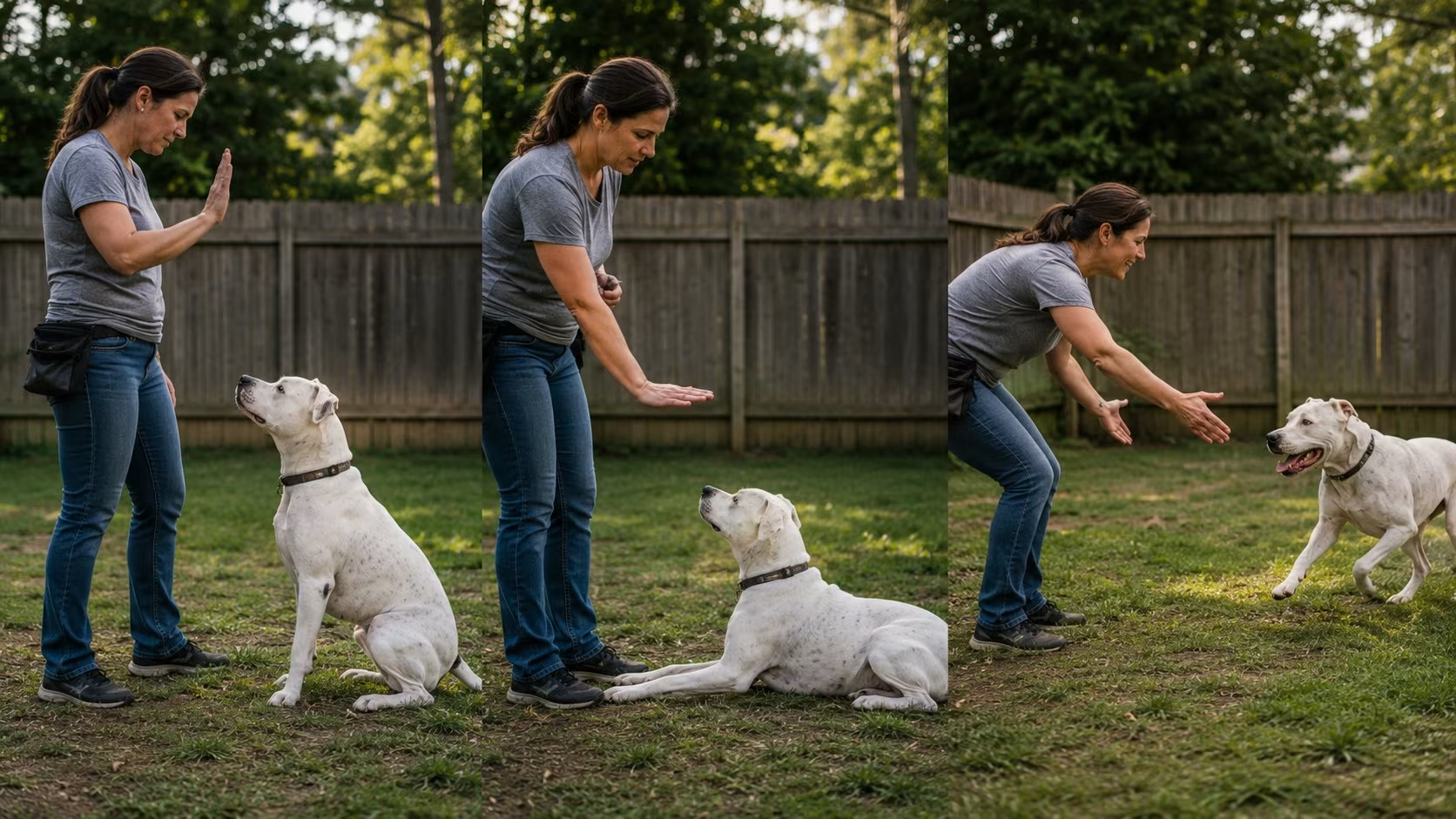
Do not worry about using formal sign language unless it helps the family stay consistent. Dogs do not care whether a signal has a human-language meaning. They care that the signal is clear, repeated fairly, and followed by predictable outcomes.
A deaf dog should not be off leash in unfenced areas unless the environment is truly secure. The dog cannot hear cars, bicycles, wildlife, other dogs, or your voice. A long line, fenced field, or enclosed yard gives the dog freedom while preserving safety.
Teach recall visually. Get attention, give the come signal, step backward, reward heavily when the dog arrives. Practice many easy repetitions. A vibration collar can become a recall attention tool if the dog has been conditioned to look at you happily when it vibrates. It should never be used as a correction.
Waking a sleeping dog without startling it
Many bites happen when a sleeping or distracted dog is startled. Deaf dogs need a safe wake-up routine. Touch the dog gently in the same place, such as the shoulder, then immediately offer a treat. Repeat until the dog wakes and looks for the reward instead of startling defensively.
Teach children not to grab, climb on, or surprise the dog. They can toss a treat near the dog after an adult wakes the dog safely. A deaf dog can be excellent with children, but the household must respect the dog's sensory limits.
Pawdraft's article on sudden aggression toward other dogs is useful if startle, pain, fear, or missed signals create conflict. A behavior change should be investigated rather than blamed on stubbornness.
Deaf dogs may bark because they see movement, feel frustration, want attention, or have learned that barking brings people running. They cannot hear how loud they are. Teach a visual quiet cue by marking and rewarding the moment the dog pauses. Also teach a "go check" or "go to mat" cue for window barking.
Pawdraft's guide to teaching the quiet command can be adapted with visual cues. The owner still needs to manage triggers: close blinds, add white noise for hearing household members, move the dog away from windows, and reward calm observation.
Pairing touch with grooming and vet visits
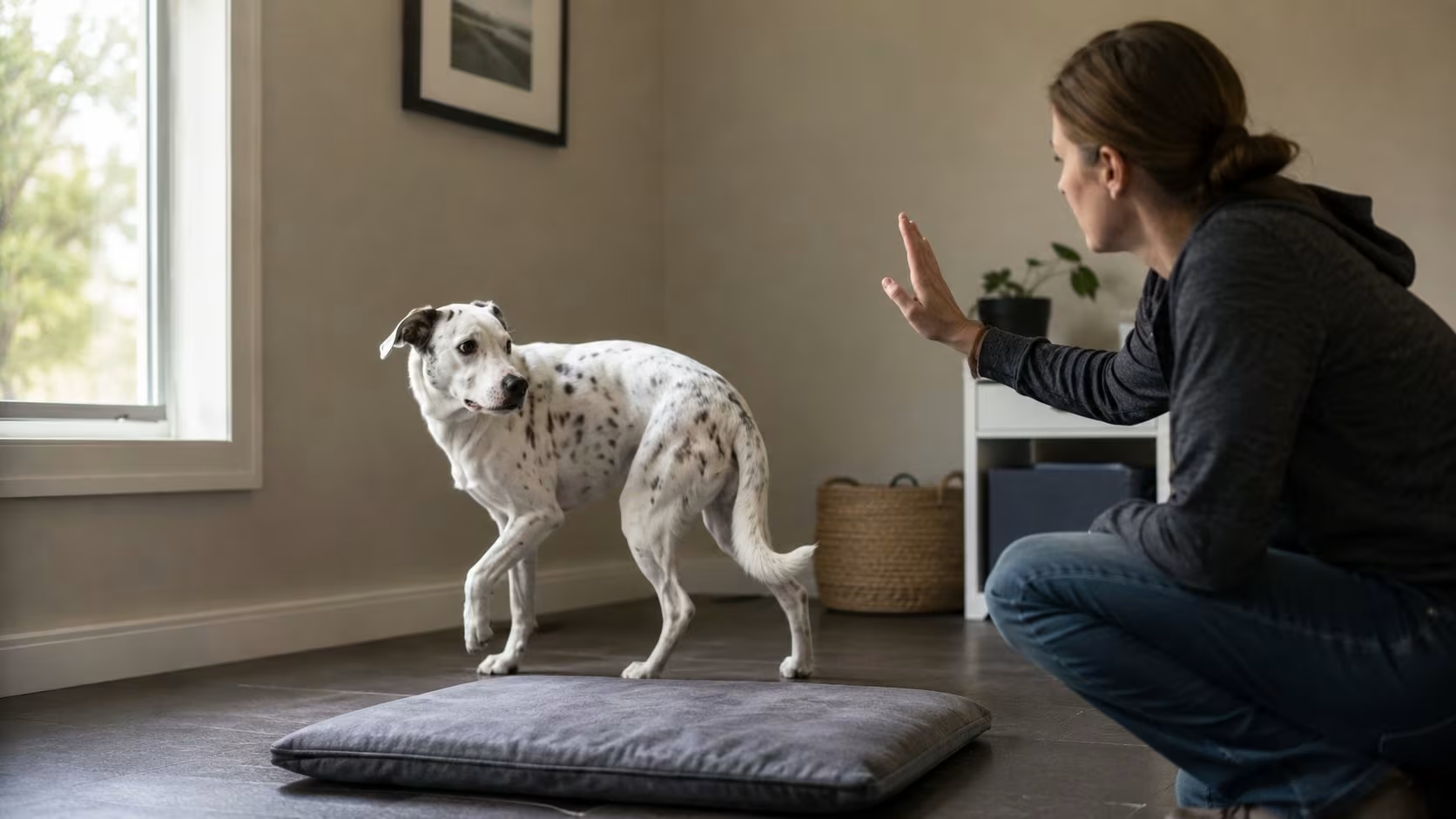
A deaf dog should learn that touch predicts good things. Handle paws, ears, collar, walking gear, mouth, and tail in tiny sessions. Mark and reward. This helps with grooming, nail trims, baths, and medical exams. A dog who sees the brush or towel and knows what comes next is less likely to panic.
Pawdraft's article on getting a dog to like taking a bath fits deaf dog training because visual setup matters. Let the dog see the towel, mat, treats, and tub before water starts. Avoid surprising the dog from behind with spray or loud movement.
Tell veterinary staff the dog is deaf before handling begins. Use a bright leash tag or note on the chart. Ask staff to approach from the front when possible and use gentle touch signals.
Other dogs often use sound during play and conflict. A deaf dog may miss growls, warning barks, or calls away from rough play. Supervise introductions and reward the deaf dog for checking in visually. Keep play breaks short and frequent.
Do not rely on another dog to guide the deaf dog. Some hearing dogs help naturally, but the deaf dog still needs its own communication system with people. Train each dog separately before expecting group manners.
Every person should use the same signal for the same behavior. Put a simple signal chart on the refrigerator if needed. Include attention, sit, down, come, wait, good, all done, outside, food, bed, and emergency stop. Consistency lowers frustration for the dog and for the people.
Signals should be visible from the distance where they will be used. A tiny finger cue may work in the kitchen but fail across a yard. Practice with the dog at different distances so the family knows which signals are clear.
Managing new environments without sound cues
New environments can be harder for deaf dogs because surprises arrive without sound. Let the dog scan the room, sniff, and orient before asking for difficult behavior. Stand where the dog can see you. Use the familiar marker and reward simple wins.
In busy places, choose space over pressure. A deaf dog who misses another dog's warning may need more distance. Calm exits teach the dog that the handler will help, which builds confidence for future trips.
Use visual check-ins during these outings. Reward the dog for turning back after seeing a person, dog, bicycle, or doorway. Those small check-ins can become the deaf dog's version of listening for your voice.
Return to easier places after stressful outings. Confidence grows from many calm repetitions, not from proving the dog can tolerate every busy environment at once.
The first mistake is giving cues when the dog is not looking. The second is changing signals every week. The third is using vibration as a threat rather than an attention cue. The fourth is skipping safety because the dog is well behaved indoors.
Consistency solves many problems. Use the same marker, same signals, same wake-up routine, and same rewards. Build difficulty slowly. A deaf dog can become highly attentive because watching people becomes part of daily life.
Building trust through clear visual communication
Deaf dog training starts with attention, trust, and visual communication. Teach a clear marker, build hand signals one at a time, reward check-ins, protect the dog outdoors, condition safe touch, and make vibration signals positive if you use them. A deaf dog does not need pity or force. It needs a household that communicates clearly, manages safety, and rewards the behaviors that make daily life calm.





0 Comments
No comments yet. Be the first to share your thoughts!
Leave a Comment