



Citronella dog collars are bark collars that spray a scent when the dog barks. Some owners choose them because they seem gentler than shock collars. The problem is that they still work by adding something unpleasant or startling. They may interrupt barking, but they do not teach the dog why barking is happening or what to do instead.
Barking is communication. Dogs bark because of alarm, boredom, fear, separation distress, frustration, play, pain, attention-seeking, territorial behavior, or triggers outside the window. A spray collar may suppress noise for a while while the cause remains untreated.
How the spray mechanism is triggered
Most citronella collars have a microphone or vibration sensor. When the sensor detects barking, the collar sprays citronella or another scent near the dog's face. Some collars also beep or vibrate.
The spray is meant to be unpleasant enough that the dog barks less. That is why the collar is an aversive tool, even when it does not shock the dog.
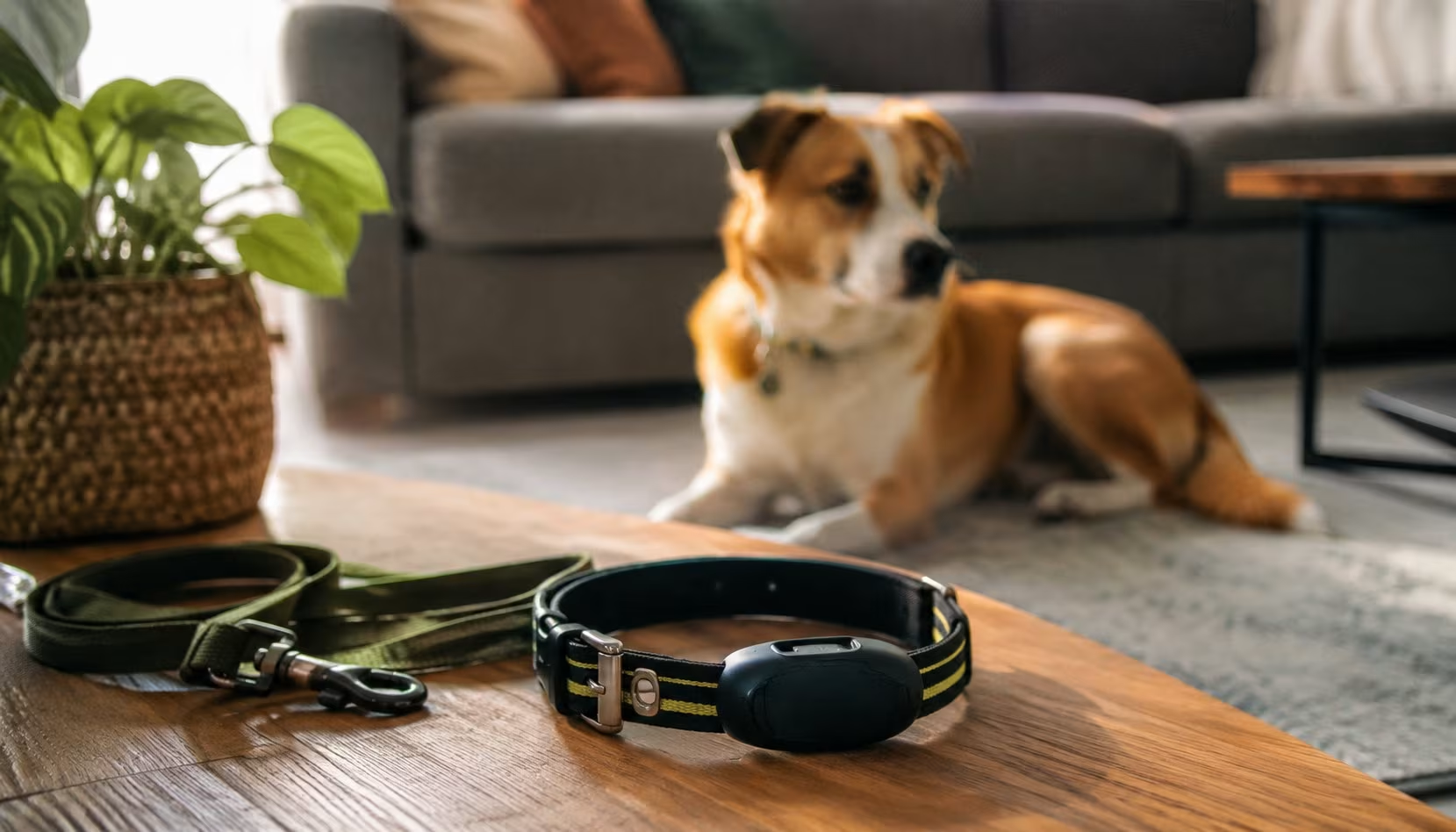
Pawdraft's article on bark collars gives broader context for anti-bark devices and why tool choice matters.
A dog barking at window traffic needs a different plan than a dog barking from separation panic. A bored dog needs enrichment and exercise. A fearful dog needs distance and confidence-building. A dog barking from pain needs a veterinary exam.
If the collar stops the sound but the dog is still afraid, lonely, or stressed, the welfare problem remains. Some dogs may become quieter while showing stress in other ways: pacing, panting, hiding, licking, digging, or chewing.
AVSAB's humane dog training position resources recommend reward-based training for dog training and behavior problems. That position matters because citronella collars rely on discomfort or startle rather than teaching a replacement behavior.
The Humane Society of Missouri's page sharing AVSAB's punishment statement notes that punishment can make some animals fearful and that fear can spread to other contexts, including examples involving citronella or electronic collars paired with tones.
False triggers and lingering scent problems
Bark collars can activate at the wrong time. Another dog barking nearby, collar movement, coughing, whining, or rough play may set off some devices. In multi-dog homes, one dog may be sprayed because another dog barked.
False triggers are confusing. The dog receives the spray without a clear connection to their own behavior, which can increase stress.
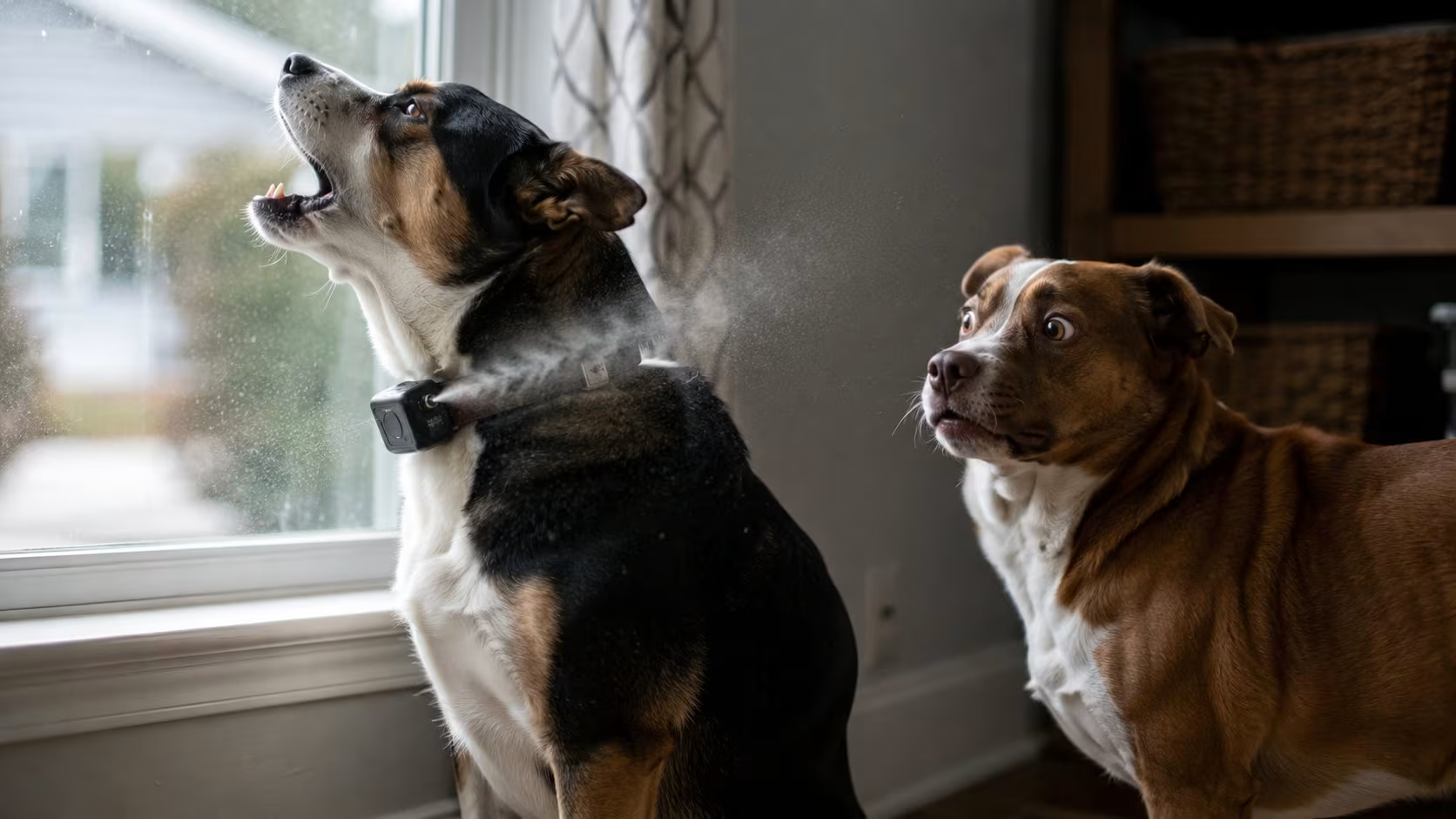
Unlike a brief sound, scent can linger on fur, bedding, furniture, and the dog's face. That means the unpleasant part may continue after the barking stops. Some dogs may rub their face, avoid the area, or become worried about the collar itself.
Dogs have sensitive noses. A scent that seems mild to a person may be much more intrusive to the dog.
Any collar worn for long periods can rub, trap moisture, irritate skin, or catch on objects. A spray collar also sits near the throat and face. Poor fit can change whether the device triggers or where the spray lands.
Remove collars during unsupervised rest unless the product and veterinarian say otherwise. Check the neck daily for redness, hair loss, odor, or sores.
A better barking plan starts with observation. Write down when the dog barks, where the dog is, what happened before it, how long it lasts, and what stops it. Then change the setup.
For window barking, block the view, use white noise, reward quiet check-ins, and teach the dog to move to a mat. For yard barking, supervise outdoor time and bring the dog in before rehearsed fence barking starts.
Teaching quiet during calm practice sessions
Teach quiet during easy practice, not during the loudest real-life episode. Let the dog notice a mild sound, mark a pause, reward, then guide the dog to a bed or mat. Build from small triggers to harder ones.
Pawdraft's article on remote collars discusses another tool category, but the same question applies: is the tool teaching a skill, or only interrupting behavior?

If barking happens when the dog is alone, do not rely on a citronella collar. Separation distress is panic, not stubbornness. Punishing panic can make the dog more distressed and may hide the sound that alerts owners to a serious problem.
Use a camera to observe alone-time behavior. Look for pacing, drooling, destruction near exits, urination, howling, or inability to eat. Severe cases need a veterinarian or separation-anxiety specialist.
New barking can come from pain, cognitive changes, hearing loss, vision changes, itching, urinary urgency, gastrointestinal discomfort, or medication effects. A dog who suddenly barks more, startles easily, or vocalizes at night should be checked.
Do not put a bark collar on a dog who may be barking because of pain.
Poor candidates for aversive bark tools
Puppies, fearful dogs, newly adopted dogs, and dogs with trauma histories are poor candidates for aversive bark tools. They need safety, routine, sleep, enrichment, and training that builds trust.
If the dog is already anxious, a spray collar may add another worry instead of solving the reason for barking.
Some products promise fast results. Fast suppression is not the same as behavior change. A dog may stop barking while wearing the collar, then bark again when it is removed. The dog may also learn to bark where the collar is absent.
Ask whether the plan would still work if the device vanished. If the answer is no, the dog has not learned a replacement behavior.
Noise complaints are stressful. Owners may feel pushed into a quick device. Still, rushing can create a worse problem. Combine management with documentation: block triggers, change schedules, add enrichment, use daycare or sitters when appropriate, and work with a qualified trainer.
Pawdraft's article on choosing a dog leash for comfortable movement is a gear article, but barking problems usually need more than buying equipment.
Telling citronella collars apart from other devices
Citronella collars are different from remote training collars and cone-style medical collars. Pawdraft's article on everything about e-collar can help separate terminology, since owners sometimes use "e-collar" to mean different products.
If a dog needs a medical cone after surgery, that is not a bark training device. If a product changes behavior by discomfort, evaluate it through a welfare lens.
Increase appropriate exercise, sniffing, food puzzles, chewing outlets, and rest. Block window views. Bring outdoor dogs inside before they rehearse barking. Teach mat work. Reward quiet. Practice calm door routines. Treat fear and separation distress as behavior health issues, not noise issues.
Pawdraft's article on cooling bandanas for dogs is unrelated to barking, but it is a reminder that gear should support welfare rather than replace care.
For three days, track the barking without trying to solve everything at once. Note time, place, trigger, duration, who was home, and what helped. Use a camera for alone-time barking if possible. Many owners discover a pattern: delivery hours, hallway noise, backyard wildlife, boredom after dinner, or panic after departure.
Once the pattern is clear, the plan becomes more precise. Window barking gets visual barriers. Boredom gets enrichment. Fear gets distance and confidence work. Alone-time distress gets a separation plan.
In apartments, barking can create pressure fast. Use management while training: white noise, closed curtains, planned potty times, food puzzles before noisy hours, and a resting area away from hallways. Tell neighbors you are working on it if that is safe and appropriate.
Avoid leaving a bark collar to handle the problem while you are gone. If the dog panics, gets sprayed repeatedly, or the collar misfires, no one is there to help.
Signs the collar is backfiring on the dog
If the dog has worn a citronella collar and now avoids collars, startles at beeps, rubs the face, hides, or barks more in other situations, stop and reassess. Give the dog a break from the device and rebuild collar comfort with rewards if needed.
A qualified reward-based trainer can help replace the collar plan with skills the dog understands.
Not all barking is a problem. Dogs may bark during play, alert briefly to a sound, or communicate a need. The goal is not a silent dog. The goal is barking that fits the situation and stops when the owner gives a clear cue.
Reward the dog for calm check-ins and quiet recovery. Those moments are the foundation of a better barking plan.
Before using any anti-bark device, rule out pain, itching, hearing changes, cognitive decline, urinary urgency, and medication effects. A dog barking because something hurts needs care, not a spray.
Recap on citronella collars and better alternatives
Citronella dog collars can interrupt barking, but they rely on an unpleasant spray and may cause confusion, false triggers, lingering scent, skin issues, or fear. They also do not teach the dog what to do instead. A better plan identifies why the dog barks, changes the environment, rewards quiet behavior, teaches a station cue, and gets qualified help for fear, separation distress, pain, or aggression.



Comments