

Your emotional support dog flies as a pet. The DOT rule that took effect on January 11, 2021 let airlines drop ESA status, and every major US carrier did that year. In practice that means an under-seat carrier, a fee of roughly $95 to $150 each way, and a small number of pet spots per flight. Book the dog when you book yourself.
The rule that governs this has a date on it. The Department of Transportation published its Air Carrier Access Act final rule in December 2020 and it took effect on January 11, 2021, allowing airlines to treat emotional support animals as pets rather than service animals. American, Delta, United, Southwest, JetBlue and Alaska all ended ESA acceptance during early 2021. Your dog now travels under the airline's pet policy, which means a carrier that fits under the seat, a fee, a weight limit, a cap on pets per flight, route restrictions and a booking made in advance.
This is where many travelers get surprised. A therapist letter or emotional support animal document may help with housing in some situations, but it usually does not give the dog free cabin access on U.S. flights. Air travel rules are separate.
Service dogs versus emotional support status
An emotional support dog provides comfort through companionship. A service dog is trained to perform work directly related to a person's disability. Airlines treat those categories differently.
The U.S. Department of Transportation page on service animals explains airline service animal requirements and behavior expectations. Under DOT rules, service animal access is tied to trained service dogs, not general comfort animals.
The flight is usually the shortest part of the journey, and traveling with pets covers the drive to the airport and the hotel at the other end.
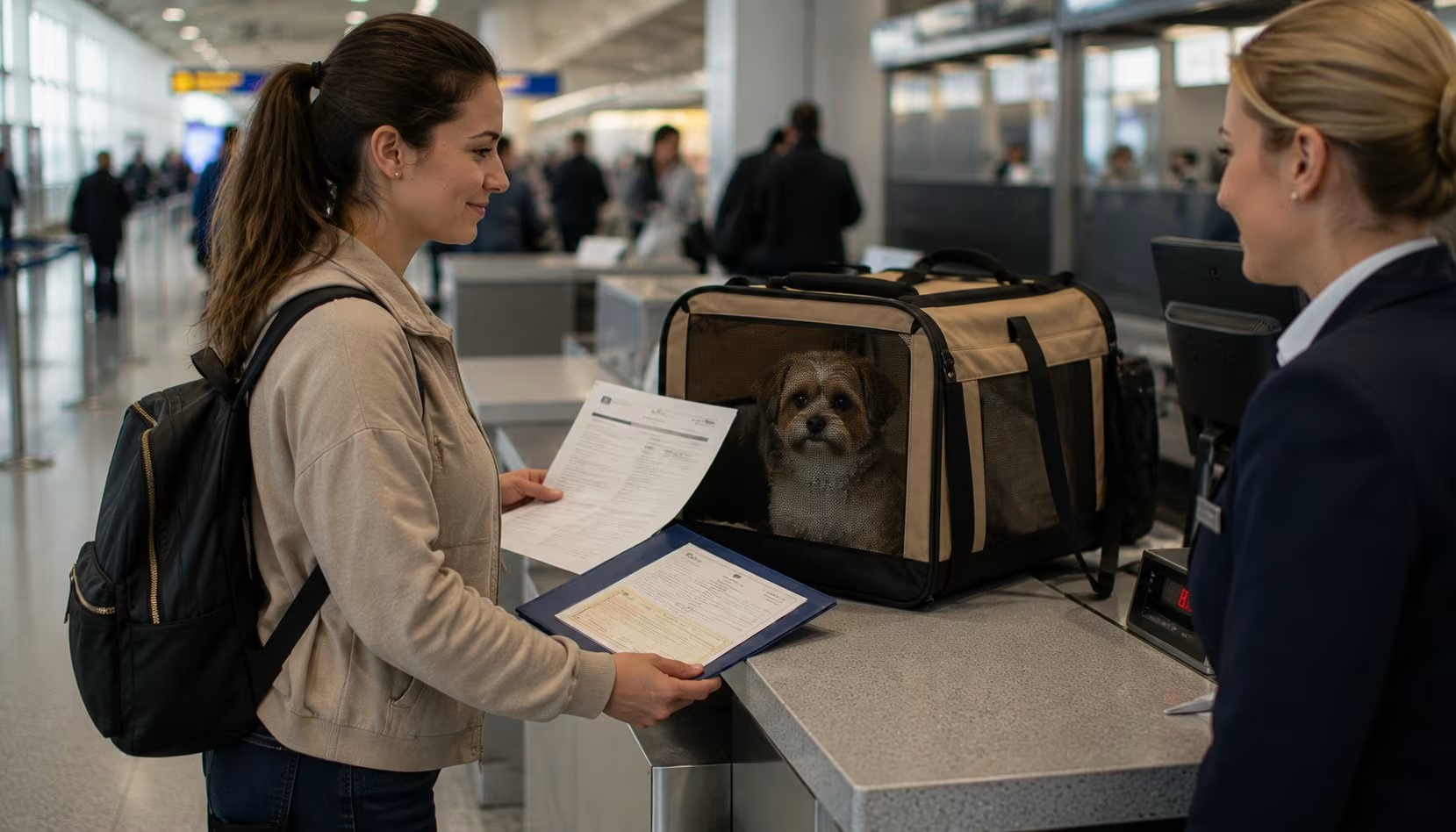
The DOT final rule changed how airlines handle emotional support animals. The Federal Register notice on traveling by air with service animals states that airlines may treat emotional support animals as pets. That is the central travel point for U.S. flights.
Airlines can choose their own pet policies within applicable rules. Some allow small dogs in carriers under the seat. Some limit the number of pets per flight. Some do not allow pets in certain cabins, routes, or aircraft.
Do not buy first and ask later. Go to the airline's current pet travel page, then call or use chat if anything is unclear. Ask whether your dog can travel in cabin, what carrier size is allowed, what fees apply, how to reserve a pet spot, and whether your destination has extra requirements.
Write down who you spoke to, when, and what they said, and get a pet confirmation number rather than a verbal assurance. Cabin pet spots are capped per flight and the cap is often small, so a promise with no record behind it is worth nothing at the gate.
American Airlines states on its service animals page that emotional support and comfort animals travel as pets, not service animals, with pet requirements and fees applying. Delta, United, Southwest, JetBlue and Alaska took the same position in 2021. What still varies between them is carrier dimensions, the fee, how many pets each flight will take and which routes and aircraft allow pets at all, so the policy page you need is your own airline's.
Carrier size rules for in cabin travel
For in-cabin pet travel, the dog usually needs to fit comfortably inside an approved carrier under the seat. The dog should be able to stand, turn, and lie down within the carrier. Soft-sided carriers often work better, but size rules vary by airline and aircraft.
Do not guess. Measure your dog from nose to tail base, shoulder height, and body width. Compare those measurements with the carrier and airline limits.
A large emotional support dog is not flying in the cabin. Under-seat space is the whole constraint, and no letter changes it. Cargo is a separate decision with its own risks, and airlines restrict it by breed, temperature, route, aircraft and the dog's age, with snub-nosed breeds refused by many carriers outright. For a large dog, driving is often the honest answer.
Many airlines limit the number of pets in the cabin. A paid ticket for you does not automatically reserve space for your dog. Add the pet to the booking as early as possible and confirm again before departure.
Ask about layovers, connecting flights, international rules, and return flight requirements. A dog accepted on one route may not be accepted on another.
If the flight is one leg of a move rather than a trip, moving with pets covers the records and supplies that need to travel with you rather than in the shipment.
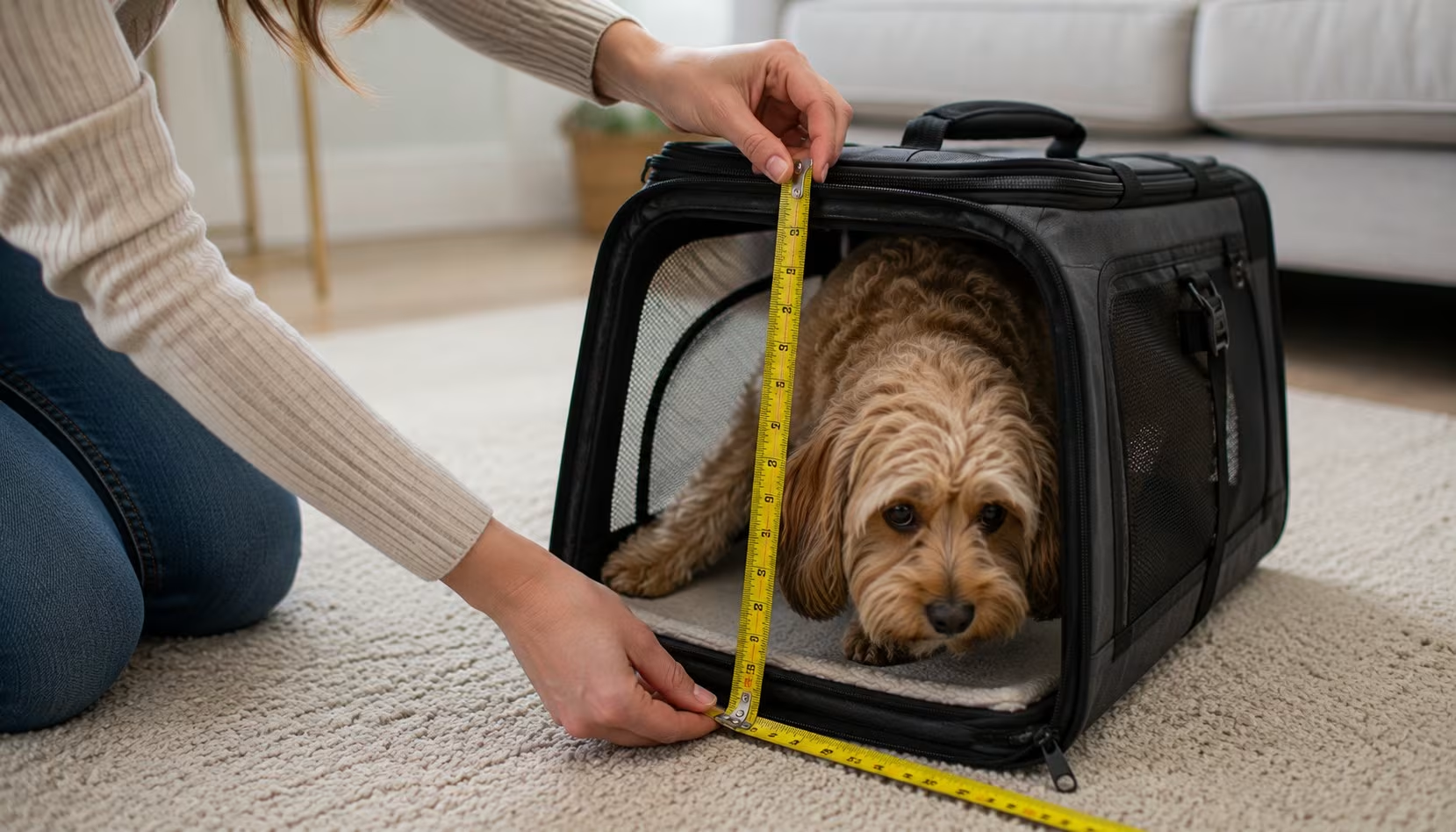
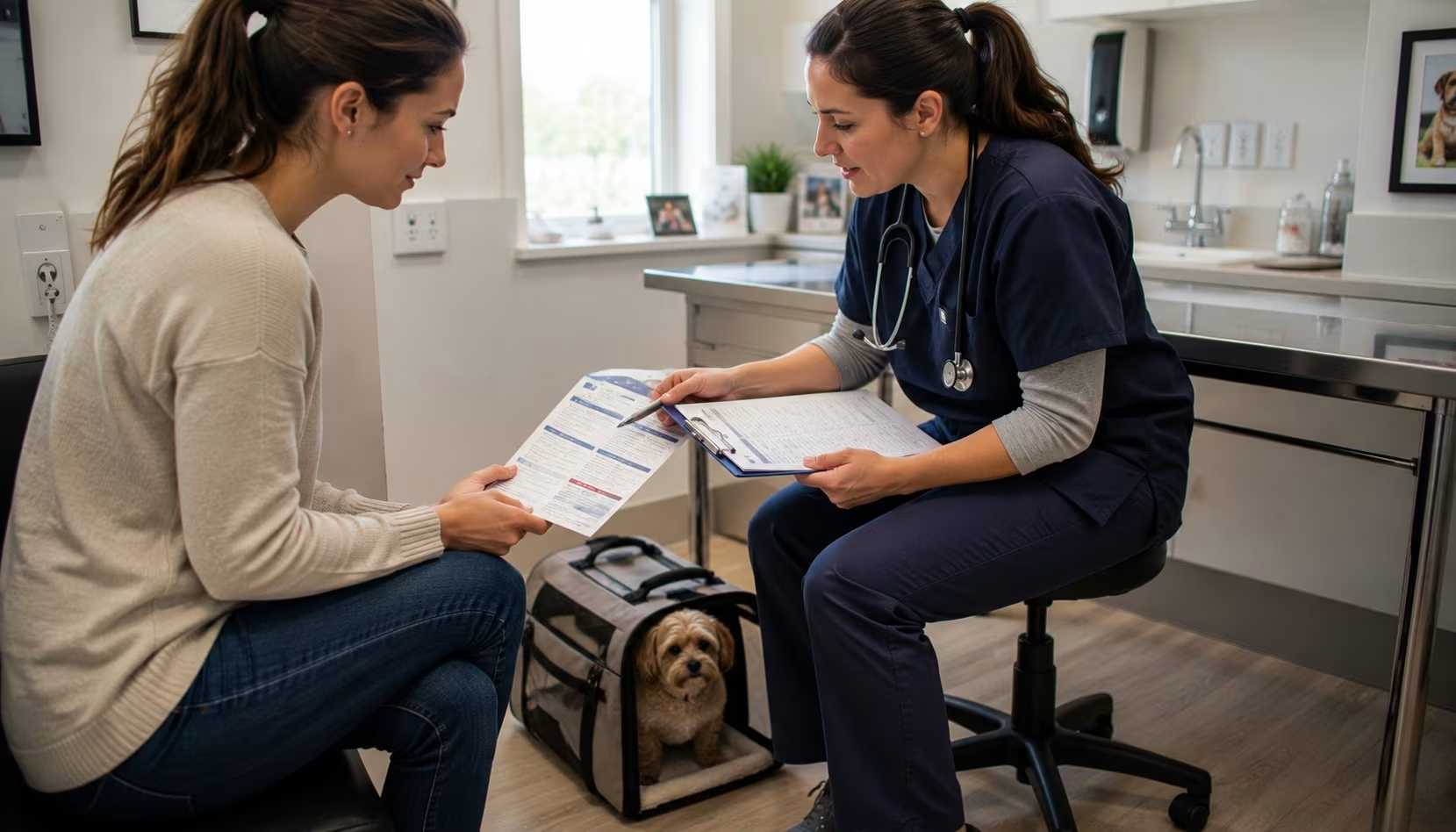
Paperwork is where domestic and international travel separate completely. A domestic flight may need nothing more than proof of rabies vaccination, and some carriers ask for no documents at all for a cabin pet. Cross a border and you are into health certificates with issue-date windows, microchip standards, rabies timing rules, parasite treatments and sometimes a government endorsement of the certificate itself. The window matters more than the document: a certificate issued too early is refused at check-in as readily as one that was never obtained.
Call your veterinarian early. Some documents must be issued within a certain window before travel. International travel can take much longer to prepare.
Not every clinic does travel paperwork, and for international trips you need one that is USDA accredited to sign the certificate, which is worth asking on the phone before booking an appointment. Choosing a veterinarian covers what else to look for.
| Item | Typical range | Notes |
|---|---|---|
| Cabin pet fee, each way | About $95 to $150 on US carriers | Charged per flight segment on some airlines, so a connection can mean paying twice in one direction |
| Same trip, round trip | Roughly $190 to $300 | Before any connections are counted |
| Airline-approved soft carrier | One-off purchase | Buy it early. It doubles as the training tool for the weeks before the flight |
| Veterinary paperwork | Varies by clinic and destination | Domestic trips may need nothing. International certificates cost more and must be issued inside a set window |
| Pet-friendly hotel at the other end | About $25 to $75 per night, or a flat $50 to $150 per stay | Your dog is a pet there too. An ESA letter does not remove the fee unless the property chooses to |
The whole point of the table is the last row. People budget for the flight and then discover the same rule waiting at the hotel, because after the 2021 airline changes an emotional support dog is a pet in both places.
Building comfort with the travel carrier
Do not introduce the carrier at the airport. Place it at home with the door open. Feed treats inside. Let your dog nap near it. Gradually build time inside with the door closed. Practice carrying it, walking through busy areas, and resting under a chair.
Carrier comfort is one of the biggest factors for a less stressful trip. A dog who panics in the carrier at home may struggle badly at the airport.
Your dog may need to move through crowds, security, elevators, loud announcements, rolling bags, and close seating. Practice calm exposure in pet-friendly public places before the travel day. Keep sessions short and positive.
Four cues carry a travel day: come, sit, settle and leave it. Settle is the one that matters at a gate, and leave it is the one that matters on a jet bridge covered in dropped food. Essential dog training commands covers how to build them.
Ask your veterinarian how to handle meals before travel, especially if your dog gets motion sick. Avoid a large meal right before the airport unless your vet says otherwise. Offer water, but plan for potty timing.
Use airport pet relief areas before boarding and during long layovers. Bring waste bags, wipes, absorbent pads, and a small water bowl.
Counting back from the flight
- Before you book. Read the airline's pet page, confirm a cabin pet spot is available on your exact flights, and check the carrier dimensions for that aircraft. Then buy the tickets, yours and the dog's together.
- Eight weeks out. Buy the carrier. Measure the dog standing: nose to base of tail, floor to shoulder, and across the widest point of the body. Compare against the airline's stated limits, not against the carrier's marketing size.
- Seven weeks out. Put the carrier on the floor at home with the door open and leave it there. Feed meals beside it, then inside it. Do not close the door yet.
- Six to four weeks out. Build up closed-door time from seconds to twenty minutes. Carry the dog around the house in it. Practice sliding it under a dining chair, which is the posture the dog will hold for the whole flight.
- Four weeks out, international only. Call a USDA accredited veterinarian. Health certificates have issue-date windows and some destinations need government endorsement, which adds days.
- Two weeks out. Take the carrier somewhere loud and busy. A hardware store, a train platform, a shopping street. Twenty minutes, then home.
- One week out. Reconfirm the pet reservation with the airline and get the confirmation in writing. Book the domestic vet visit if one is needed for the certificate window.
- Travel day. Small meal early rather than a full one, water available, relief area before security, and the carrier packed with an absorbent pad, waste bags, wipes and a collapsible bowl.
Deciding against sedation without vet input
Some owners want to sedate a dog for flying. Do not give medication, supplements, CBD, or human calming products without your veterinarian. Sedation can affect breathing, balance, temperature regulation, and stress response, especially during air travel.
If your dog has severe anxiety, talk with your vet well before the trip. A trial at home may be needed for any prescribed medication.
Airport security procedures can vary, but many travelers are asked to remove the dog from the carrier while the carrier is screened. Use a secure leash and collar or walking gear before opening the carrier. Practice lifting your dog calmly and returning them to the carrier at home.
Honesty about emotional support certificates
Even pets traveling under pet policies need to be under control. Barking, biting, escaping the carrier, soiling repeatedly, or blocking aisles can create problems. A service dog can also be denied if behavior is disruptive or unsafe.
If your emotional support dog cannot remain calm in a carrier, a flight may not be fair or safe. Consider driving, using a pet sitter, postponing travel, or working with a trainer first.
Online emotional support animal certificates, vests, badges, or instant registrations do not override airline policy. A paid document cannot turn an emotional support dog into a trained service dog for air travel.
Be honest with the airline. Misrepresenting a pet as a service animal can create problems for you and for travelers with trained service dogs.
Flights change. Aircraft change. Weather, pet limits, health paperwork, or destination rules can disrupt travel. Before the trip, decide what you will do if the dog cannot board. That may mean rebooking, driving, using a trusted pet sitter, or canceling the trip.
Here is what happens if you try it anyway. A gate agent asks the two questions the DOT and the ADA both allow: is the dog required because of a disability, and what task is it trained to perform. There is no answer to the second one for an emotional support dog, because the whole definition of an ESA is that it provides comfort rather than a trained task. The vest does not answer it. The certificate does not answer it. A registry number does not answer it, and no federal ESA registry exists to issue one.
What follows is not a debate. The dog is either rebooked as a pet, at the pet fee, if a cabin spot is still open, or it does not travel. Airlines also warn that knowingly making a false service animal claim can affect your ability to fly with them. Buying the pet ticket in the first place costs less and carries none of that.
Planning the return flight paperwork
Travelers often focus on departure and forget the return. Confirm that your dog is accepted on every flight segment, including the trip home. Check paperwork dates, carrier rules, layover times, and destination-to-home requirements. If you change airlines mid-trip, repeat the policy check with the new carrier.
International travel can involve import rules, microchips, rabies timing, parasite treatments, government endorsements, breed restrictions, quarantine, and return-entry requirements. Start months ahead when possible.
Do not rely on one airline page for international rules. Check the destination country's official requirements and your veterinarian's guidance.
If your dog is a trained service dog, follow DOT and airline service animal procedures. Airlines may require DOT forms, behavior compliance, and advance submission depending on flight length and airline process. A trained service dog is not the same as an emotional support dog.
A booking to departure day checklist
The order of operations is what people get wrong. Everything about the airline is checked before you pay for anything, because a booked seat with no pet spot left on the flight is a problem money cannot fix. Everything about the dog, the carrier training and the vet paperwork, happens in the weeks after, on a schedule set by the certificate windows rather than by convenience.
Travel day: arrive early, use relief areas, keep documents accessible, stay calm, and follow crew directions.
Flying with an emotional support dog is still possible for many small dogs, but it usually happens under pet rules. Plan from the airline policy outward, not from old assumptions.




0 Comments
No comments yet. Be the first to share your thoughts!
Leave a Comment