

Animals help mental health mostly by making care visible and repeatable. Feeding, walks and litter give a day its shape when symptoms have flattened it, and an animal that responds to your voice takes the edge off an empty room. None of that replaces treatment. In a crisis, 988 reaches trained people. The cat cannot.
Emotional support animals can help some people stay steadier because they make care visible and repeatable. Feeding, walking, litter cleaning, grooming, play, and bedtime routines give the day a shape. For a person dealing with anxiety, depression, grief, loneliness, or chronic stress, that shape can matter.
An ESA is not a cure, and the failure mode is specific enough to name. People stop attending appointments because the animal is helping, then lose the animal to a move or an illness and have nothing left in place. The animal is the part of the plan that can be taken away by a landlord, a vet bill or fourteen years of a dog's life. Keep the parts that cannot.
What comfort animals actually provide
An emotional support animal provides comfort through presence and companionship. The animal does not need public-access training like a service dog. The support may come from sitting nearby during panic, sleeping in the room, nudging a person back into a routine, or giving someone a reason to get outside.
The American Veterinary Medical Association describes the human-animal bond as a mutually beneficial relationship between people and animals. That phrase matters because the animal is not a medical device. The animal also needs rest, food, exercise, veterinary care, and a stable home.
The handler carries everything on the practical side: care, training, cleanup and the animal's behavior around other people. Nothing about the ESA label shifts any of that, which is worth knowing before the label becomes the goal. We set out what to expect from the animal itself in what emotional support animals are expected to do.

Many mental health problems disrupt time. Sleep drifts. Meals become irregular. Hygiene and chores pile up. A pet can create gentle external structure because the animal's needs arrive every day.
Morning feeding can become the cue for breakfast. A dog walk can become the cue to get daylight. A cat's evening play session can become the cue to shut down screens. These are not dramatic changes, but they are repeatable. Repetition is often the point.
Routine also reduces decision load. A person who is anxious may not want to plan a full wellness schedule. The animal's care schedule can become the framework: wake, feed, clean, move, rest, sleep. That framework should be realistic. A high-energy dog can add stress if the person cannot meet exercise needs. A quiet adult cat may fit a low-mobility apartment better.
Using a pet as a grounding tool
Some people use an ESA as a grounding focus. Feeling a cat purr, brushing a dog slowly, counting breaths while a pet lies nearby, or naming the animal's body position can pull attention away from racing thoughts.
This works best when practiced before panic peaks. If the only plan is "my animal will calm me down," the person may feel worse when the animal is sleepy, playful, scared, or unavailable. A better plan combines the animal with other coping tools: breathing exercises, sensory objects, therapist-approved scripts, medication instructions, and emergency contacts.
Practice the grounding on ordinary evenings, when nothing is wrong. A technique you have run fifty times while the dog is asleep on your feet is one you can still reach for at three in the morning. A technique you have only imagined is not. We look at how far the evidence actually goes in emotional support animals for anxiety.
Loneliness is not just being alone. It can be the feeling that no one expects you, notices you, or shares space with you. Animals can reduce that empty-room feeling because they respond to voice, movement, and routine.
The NIH's Power of Pets overview discusses research on pets, stress, social connection, and health. The evidence is not a promise that every pet will improve every diagnosis. It does show why animal companionship is taken seriously in health conversations.
For some owners, an ESA also creates small social bridges. A dog walk may lead to a short neighbor conversation. A cat photo may start a text exchange. A veterinary visit may create a reason to leave the house. These moments do not replace close relationships, but they can reduce isolation.
Why the animal's own welfare matters
The animal's welfare is part of the mental health plan. If the pet is under-exercised, untreated for pain, frightened, obese, or bored, the household becomes more stressful. A dog that barks all night can worsen sleep. A cat with an untreated urinary problem can make the home feel chaotic.
Choose an animal based on daily capacity, not fantasy. Ask how many walks, how much grooming, how much noise, how much training, and how much veterinary cost you can handle during a hard month. The answer may point toward an adult cat, a smaller calm dog, a bonded pair that already lives together, or no new animal until life is more stable.
The honest version of that question is not what you can manage on a good day. It is what you can manage on the worst week of a bad month, because that is the week the animal still needs feeding. A dog that can miss a walk without falling apart, or a cat that entertains itself, is worth more than any species ranking. Our guide to planning to get an ESA dog works through the same question for dogs specifically.
In the United States, emotional support animals are not the same as service animals. The ADA's service animal guidance explains that service animals are dogs trained to do specific work or actions for a person with a disability. Emotional support by presence alone does not create the same public-access rights.
That means an ESA does not automatically enter restaurants, grocery stores, workplaces, hotels, or airplane cabins as a service animal. Some places may allow pets by policy, but that is different from federal service-animal access.
A valid letter comes from a licensed mental health professional who is actually treating you, and it carries their license type, number and state. There is no federal ESA registry, so a certificate, badge, vest or registry number creates nothing at all. California has required a 30-day client relationship before a clinician issues a letter since 2022, and requires online sellers to disclose in writing that their product is not a service animal certification. Our page on ESA letter requirements covers what belongs in one.
For crisis situations, animal companionship is not enough. In the United States, people can contact 988 for suicidal crisis support by phone, text, or chat. A pet can sit beside someone in distress, but emergency support should still come from trained people.
| What you can realistically do | Reasonable fit | What tends to go wrong |
|---|---|---|
| Two or more walks a day, most days, including in bad weather | An adult dog, medium energy | Nothing, if the walks survive a depressive week. This is the plan that most often collapses first. |
| One short walk a day, sometimes none | A small or senior dog, or a cat | A young working breed. Under-exercised dogs get destructive, and the destruction lands on a deposit you now pay in full. |
| Feeding and litter, little else on hard days | An adult cat, ideally an existing bonded pair | A kitten. The first year is noise and disruption at the exact moment the household needs neither. |
| Care is unreliable and housing is unstable | No new animal yet | Adopting during a crisis. Rehoming later is harder on both of you than waiting was. |
Talking to a clinician about the plan
Bring concrete examples to the clinician instead of only saying the animal makes you feel better. Explain what symptoms change when the animal is present, what happens on days without routine, and what care tasks you can handle during a setback. If sleep, panic, depression, trauma reminders, or isolation are the main concerns, name them clearly.
Also ask what would show that the plan needs adjustment. A clinician may want to know if symptoms are getting worse, if the animal is becoming a reason to avoid all treatment, or if the animal's care is creating money, housing, or sleep stress. That conversation keeps the ESA plan tied to real mental health needs.
Housing is where this stops being abstract, and it moved recently. HUD withdrew its 2013 and 2020 assistance animal guidance in September 2025, and on May 22, 2026 its fair housing office told staff to stop pursuing complaints where the animal is an untrained emotional support animal. Only individually trained service animals are now presumed exempt from pet policies and pet fees at the federal level. A landlord can still ask for disability-related documentation when the need is not obvious, and can still refuse an animal that poses a direct threat or a documented risk of serious damage.
State law is now the part that matters most, because the May 2026 memo left every state and local fair housing statute intact. In a state with its own assistance animal protections, the request still works, and a refusal goes to a state or city agency rather than to HUD. Keeping the animal well behaved and the veterinary records current is not just good practice, it is what a state investigator will look at. Whether you qualify in the first place is a separate question, covered in what makes you qualify for an ESA.
Two questions are worth asking the clinician outright, because they turn a vague conversation into a documented one. First, would you be willing to write an ESA letter if housing requires it, and what would you need to see before you did? A clinician who has treated you for six months may still decline, and it is better to know that in March than in the week a lease renewal lands. Second, what would tell us this is not working? Naming that in advance is what keeps the animal from quietly becoming a reason to stop coming in.
Bring specifics to both questions. Sleep is the easiest thing to describe and the easiest for a clinician to write about: nights slept through with the animal in the room against nights without. Panic episodes are next, measured in how long they last rather than how bad they felt. A letter built from that kind of detail is the one that survives a housing provider's review, and the same detail is what tells you whether the arrangement is actually helping.
Building a realistic daily care routine
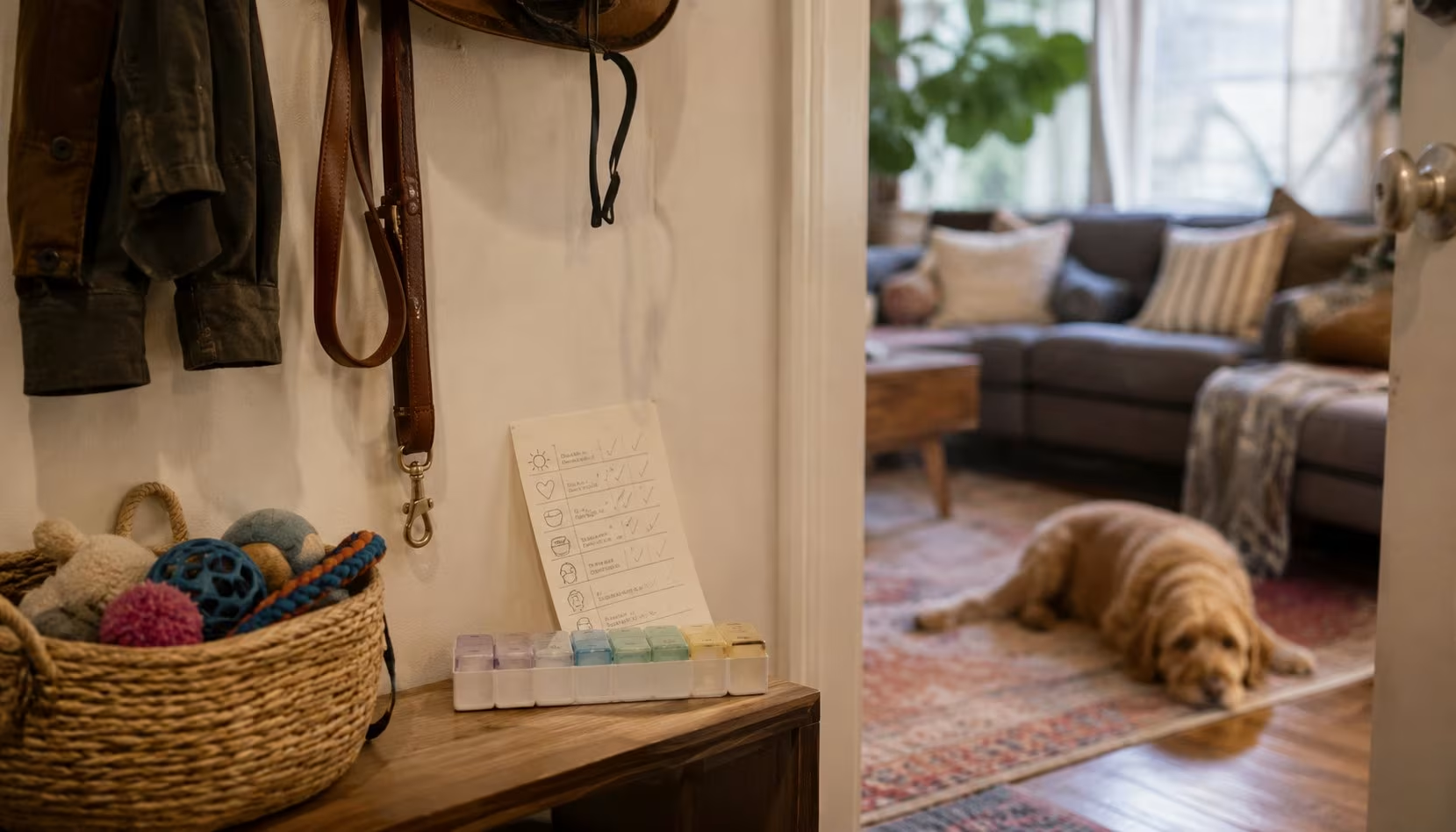
Write a routine that works on a low-energy day. A dog plan might include a morning bathroom break, measured meals, one longer walk, one short training game, and a quiet bedtime cue. A cat plan might include feeding, litter scooping, ten minutes of wand play, brushing, and a predictable sleep area.
Then add a backup plan. Who helps if you are hospitalized, working late, or too sick to walk the dog? Which clinic has the pet's records? What food does the animal eat? Where is the carrier? These details protect both the person and the animal.
A few signals mean the plan needs changing rather than more effort. Skipping appointments because of pet care. Spending past what the budget holds. Feeling worse when the animal does ordinary animal things like waking you or ignoring you. On the animal's side, persistent anxiety, aggression, destruction or an untreated illness. None of that means the person failed. It usually means the species, the age or the energy level was wrong, and a vet, a trainer or the clinician can help sort out which.

- Write the low-energy version first, not the ideal one. Feed, water, toilet or litter, one short movement, done. If the plan only works on a good day, it is not a plan.
- Attach each task to something that already happens. Coffee, the alarm, the end of a shift. Cues you already have survive worse weeks than new ones do.
- Keep two weeks of food and any medication in the house. The week you cannot leave the apartment is the week you find out whether you did this.
- Name one backup person and tell them. Not a mental list. Someone who has agreed, knows where the carrier and the food are, and could take the animal for three days.
- Write the clinic's name, the animal's medications and the food brand on one card, on the fridge. This is the card a friend or a paramedic reads when you cannot explain any of it.
- Set one date a year to review it. The animal ages, your circumstances change, and a routine written for a three-year-old dog stops fitting an eleven-year-old one.
Combining companionship with professional treatment
The mechanism is not mysterious. Something in the house needs feeding at seven, and that is a reason to be upright at seven. Over months, that accumulates into a shape a bad week cannot fully erase. Protect it by choosing an animal you can still care for at your worst, and by keeping the clinical support in place for the parts an animal was never going to reach.





0 Comments
No comments yet. Be the first to share your thoughts!
Leave a Comment