

An emotional support dog comforts by being present, with no task training, and that is the entire legal distinction. It has no ADA access to shops, restaurants or hotels, it flies as a pet, and since HUD's May 2026 memo its housing claim rests on state law. Basic manners, veterinary care and a named backup carer matter more than any paperwork.
An emotional support dog is a dog whose presence helps a person with a mental or emotional disability-related need. The support may be comfort, routine, companionship, grounding, or motivation. That role can matter deeply at home.
An emotional support dog is not the same as a trained service dog. It does not receive broad public-access rights under the ADA simply because it comforts someone. It also still needs training, veterinary care, exercise, and safe behavior.
Legal difference from a trained service dog
The ADA's service animal requirements state that emotional support, comfort, or companionship alone does not make a dog a service animal. A service dog is trained to perform work or tasks directly related to a disability.

Housing used to be the one place the label reliably worked. HUD's January 2020 assistance animal guidance set out how providers should evaluate these requests, and HUD withdrew it, along with its 2013 guidance, on September 17, 2025. On May 22, 2026 the department told its enforcement staff to stop pursuing complaints involving untrained emotional support animals and to treat only individually trained service animals as presumptively exempt from pet policies and pet fees. State and local fair housing laws are untouched, so in many states the accommodation still stands, enforced by a state agency instead of HUD.
The letter itself has not changed. It comes from a licensed mental health professional who is treating you, on their letterhead, with license type, number and issuing state, and it says that you have a condition that limits a major life activity and that the dog helps with its effects. Your diagnosis does not have to appear in it.
An ESA dog may help with routine, loneliness, stress recovery, grounding, sleep habits, and motivation to walk or care for another living being. Some people function better because the dog gives structure to the day.
That support should complement, not replace, mental health care.
Two of those failures are worth separating. Claiming a service dog you do not have collapses at the second of the two questions staff are allowed to ask, what task is the dog trained to perform, and some states penalize misrepresentation. The other is quieter and more dangerous: treating the dog as the crisis plan. A dog can sit with someone at three in the morning. It cannot call anyone, and in the United States 988 reaches people who can, by phone, text or chat.
| Setting | Emotional support dog | Trained service dog |
|---|---|---|
| Restaurants, shops, hotels | No ADA right of entry. Admitted only where the business allows pets. | Admitted under the ADA. Staff may ask two questions only: is the dog required because of a disability, and what task is it trained to perform. |
| Hotel fees | Treated as a pet unless the property decides otherwise. Roughly $25 to $75 per night, or $50 to $150 per stay. | No pet fee. |
| Flights on US airlines | Treated as a pet since the DOT rule took effect on January 11, 2021. Roughly $95 to $150 each way, under-seat carrier only. | Accepted with the DOT Service Animal Air Transportation Form. |
| Housing | Federal enforcement narrowed in May 2026. The claim now rests mainly on state and local fair housing law. | Presumed exempt from pet policies and pet fees. |
| Documentation | A letter from a licensed mental health professional who treats you. No registry, certificate or vest has any legal effect. | Training, not paperwork. No federal certification exists for service dogs either. |
Why documentation and training both matter
An ESA housing letter should come from a qualified professional who understands the person's condition and can explain disability-related need. Purchased certificates, ID cards, and registries are not the same as reliable documentation.
An emotional support dog should be house-trained, controllable, safe around neighbors, and able to settle. Barking, biting, destruction, poor hygiene, and roaming can create housing problems even with documentation.
A dog in pain cannot be steady company, and handlers miss this more often than they expect, because a dog that has become withdrawn or clingy reads as mood rather than illness. Keep vaccines, parasite prevention and dental care current, and treat any sudden change in behavior as a veterinary question first. Our writing on common health ailments dogs face covers the everyday version, and specific conditions like Mycoplasma in dogs, fleas and pancreatitis have their own pages.
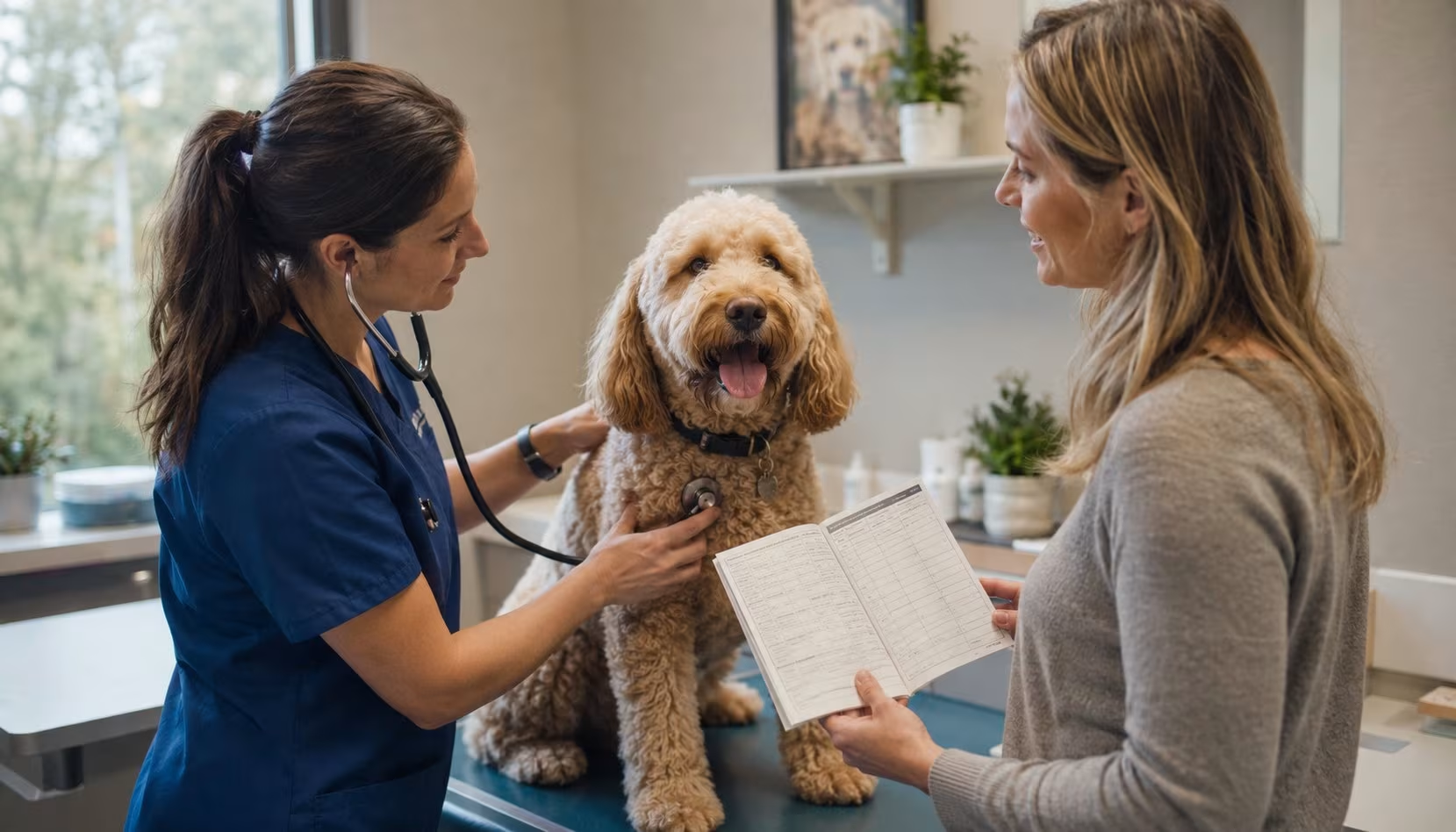
Not every dog is suited to be an ESA. A fearful, reactive, high-energy, or medically fragile dog may increase stress. A calm adult dog may be a better fit than a puppy for some people. Breed alone does not decide suitability.
Match the dog to housing, budget, exercise ability, noise tolerance, and support needs.
Meeting the dog's everyday needs
Emotional support dogs need what every dog needs, and sniffing time matters more than distance: twenty minutes of nose work tires a dog more thoroughly than a brisk mile. Boredom is what turns into barking and chewing, and in an apartment those are the two behaviors that generate the complaints that threaten housing. Give the dog a bed or crate where it can rest without being touched, since a support dog that is never off duty gets no recovery at all.
An ESA dog does not need to greet everyone or go everywhere. In fact, forcing a dog into stressful public settings can make behavior worse. Respect the dog's comfort and the law.
The harder scenario is the dog getting seriously ill, because the person loses their support at the moment they need it most and gains a treatment schedule and a bill. Conditions like mediastinal lymphoma arrive with no warning. This is the argument for naming a backup person and setting money aside before either is urgent.
The clinician's role is to assess the person's need, not to certify the dog as universally allowed everywhere. A good treatment plan may include therapy, medication review, sleep support, social support, and the dog.

Weighing costs before choosing a dog
Before choosing an emotional support dog, consider daily walks, grooming, vet costs, training time, noise, allergies, travel, and lease rules. A dog can reduce stress for one person and increase stress for another if the match is poor.
Even where a dog is allowed, public behavior matters. The dog should not bark repeatedly, jump on strangers, eliminate indoors, block aisles, or approach other animals without permission. Good manners protect access where pets are permitted and reduce conflict.
A backup plan is one named person who has agreed, not a mental list of people who probably would. They should know where the food, the leash and the carrier are, which clinic holds the records, and what the dog is given daily. Write it on a card and put it on the fridge, because the point of the card is that someone else can read it when you cannot explain any of it.
There is no federal ESA registry, so nothing sold as registration enrolls your dog anywhere. Badges, ID cards and certificates carry no legal weight in housing, in public or in the air, and a landlord who has seen a hundred of them treats the whole file as purchased. A plain letter from a treating clinician outperforms every product on those sites.
If the role changes, update the paperwork and training plan.
Reading stress signals in the dog
Watch the dog for stress: yawning, avoidance, shaking off, hiding, lip licking, barking, or refusing food. A dog who is overwhelmed cannot be steady emotional support. Adjust routines, add rest, or get training help.
The dog's emotional health matters too.
Apartment life can be stressful for dogs who bark at hallway noise, fear elevators, or need more exercise than the handler can provide. Before requesting an accommodation, make a realistic plan for potty breaks, enrichment, barking prevention, and neighbor contact.
Good management prevents complaints that can threaten housing.
A dog with pain, pancreatitis, infection, or cancer may need rest instead of emotional labor. During those periods, the handler should lean on human supports. PawDraft's dog health articles can guide questions, but the veterinarian should direct care.
Support roles may change as the dog ages.
An ESA dog should know name response, recall, settle, leave it, polite leash walking, and calm greetings. These are not service tasks; they are basic manners that keep the dog safe and manageable.
If training feels overwhelming, use a reward-based trainer.
Budgeting for care and unexpected costs
| Cost | Typical amount | Does an ESA letter help? |
|---|---|---|
| Pet rent or pet deposit | Set by the building | Only where state or local law still exempts assistance animals. Federal enforcement no longer presumes an exemption for untrained ESAs. |
| Flight, in cabin | About $95 to $150 each way | No. US carriers have treated ESAs as pets since 2021. |
| Hotel stay | Roughly $25 to $75 per night, or $50 to $150 per stay | No, unless the property chooses to waive it. |
| Damage to the unit | Actual repair cost | No. An accommodation covers the dog's presence, never what it destroys. |
| Veterinary care, food, prevention, training | Continuous, and the largest lifetime cost | No, and this is the line that most often decides whether the arrangement holds. |
Answering questions about the dog's status
Budget for food, preventive care, emergency visits, grooming, training, supplies, and pet deposits where lawful. Financial strain can undermine the benefit of an ESA if the handler is unprepared.
A support dog should not become an unplanned crisis.
Use accurate labels. A vest cannot turn an ESA into a service dog. If the dog is not task-trained, call it an emotional support dog in housing contexts and a pet where no accommodation applies.
Someone will eventually ask whether the dog is a service dog. The accurate answer is short: no, he is an emotional support dog, and it usually ends the conversation. Where pets are welcome you never needed a claim in the first place. Where they are not, the ESA label changes nothing outside housing, and pressing it turns a two-second exchange into a manager and a scene.
If the dog develops vomiting, pain, coughing, lameness, or behavior change, schedule veterinary care. A support dog who is unwell may act differently, and the handler may misread illness as mood.
- In a shop or restaurant, if asked: "No, she is not a service dog, she is an emotional support dog." If pets are not allowed, leave. There is no argument available to you here and the ADA is not on your side.
- With a landlord, do not say ESA first. Say you are requesting a reasonable accommodation for an assistance animal, in writing, with the clinician's letter attached and nothing else attached.
- If a landlord asks for proof, hand over the letter only. They may ask whether you have a disability and whether the dog provides disability-related support when that is not obvious. They are not entitled to your diagnosis or your records.
- If you are refused, ask for the reason in writing, then take it to your state or city fair housing agency. Since May 2026, HUD staff are not pursuing untrained ESA complaints, so the state route is the live one.
- At a hotel or an airline counter, book as a pet from the start. Raising the ESA label at the desk produces a delay and the same fee.
- Never say the word "service dog" about a dog that has no trained task. It is the one claim that turns an inconvenience into a legal problem.
Understanding what an accommodation covers
Most of what makes an emotional support dog work has nothing to do with its status. A dog that settles, that is healthy, that does not bark at the hallway, and that someone else can take for three days if you are hospitalized is the arrangement that survives contact with a landlord, a neighbor or a bad month. The letter is worth having where state law still backs it. The dog is worth having either way.





0 Comments
No comments yet. Be the first to share your thoughts!
Leave a Comment