



Shock collars are electronic collars that deliver a stimulus to the dog's neck. Some products call the sensation static, stimulation, correction, or e-collar pressure. The marketing language varies, but the training idea is usually the same: the dog changes behavior to avoid or stop an unpleasant sensation. That makes the tool aversive for many dogs, even when the dial is set low.
The question is not only whether a shock collar can interrupt barking, chasing, or leaving the yard. The question is what the dog learns, what side effects appear, and whether the owner can build the desired behavior without fear, pain, or confusion.
Suppressing behavior while fear stays hidden
The AVSAB position statements page says the organization does not support aversives in any context, regardless of tool or trainer experience. Its humane training statement advises reward-based methods and warns that aversive methods can damage welfare and the human-animal bond.
Shock collars can suppress visible behavior while leaving the emotion underneath unchanged. A dog who stops barking at other dogs may still be afraid of them. A dog who stops crossing a boundary may still panic if the collar fails. A dog who is shocked around children, strangers, bikes, or other dogs may associate the discomfort with those triggers.
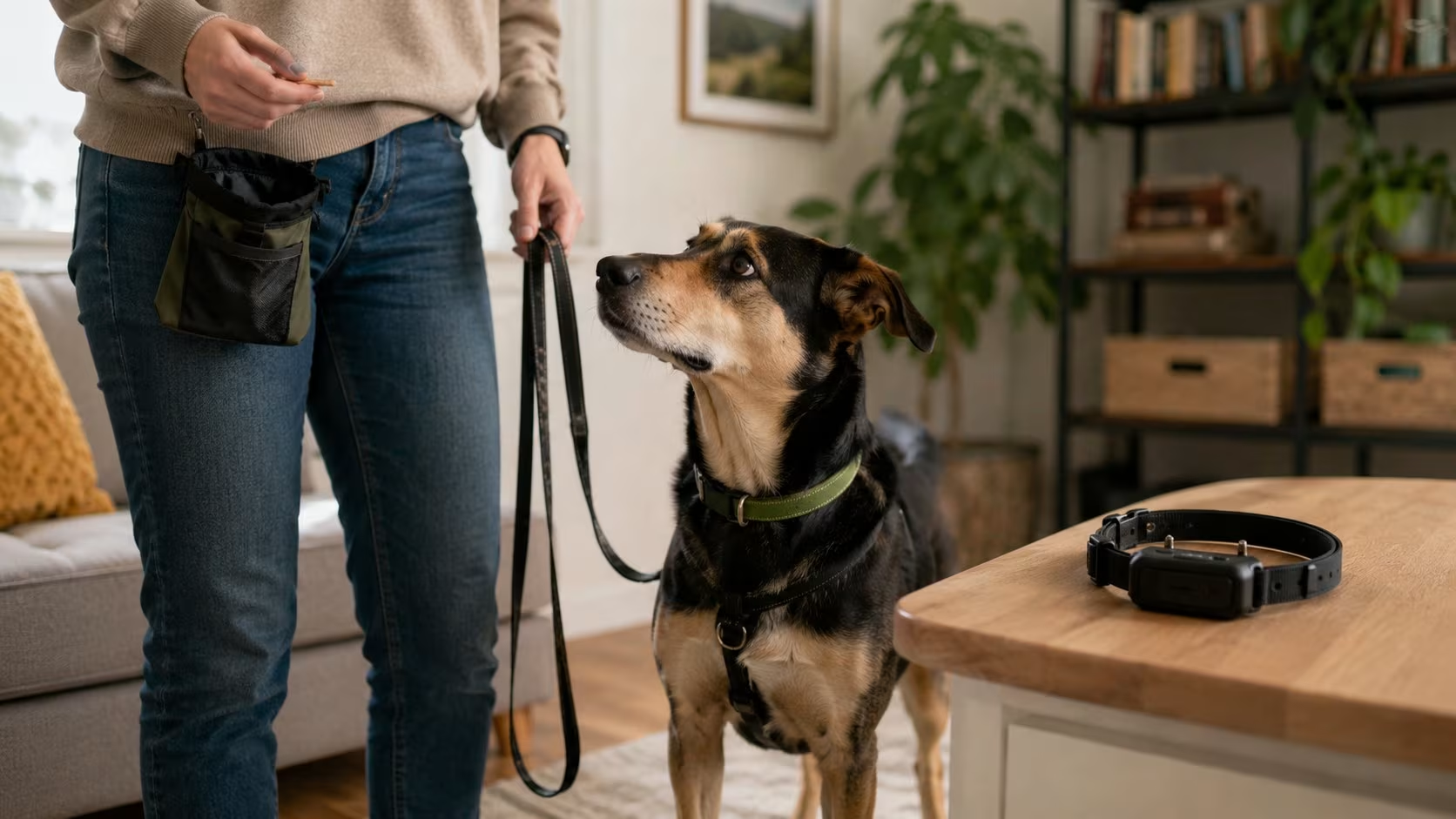
Pawdraft's article on e-collars can help readers separate medical recovery cones, electronic collars, and training claims because the same term is used in confusing ways.
Training depends on timing. If a shock happens a second late, the dog may connect it to the wrong thing: a child running past, the handler's cue, another dog, a sound, or the yard itself. Dogs do not read the owner's intention. They learn from what happens in the moment.
Unclear timing can create avoidance, freezing, aggression, or learned helplessness. Some dogs become quieter because they are calmer. Others become quieter because they are afraid to try anything. Those are not the same result.
Shock collars are often sold for barking, boundary training, and recall. Each problem has safer starting points. Barking needs trigger identification, enrichment, rest, management, and an alternative behavior. Boundary safety needs fences, leashes, long lines, and supervised training. Recall needs rewards, distance practice, and proofing.
Pawdraft's article on bark collars is a natural companion because automatic collars can punish a dog for barking caused by fear, pain, isolation, or outside triggers. Stopping sound does not automatically solve distress.
Alternatives that teach without aversives
Most dogs need clearer information, not stronger correction. A walking gear, leash, long line, marker word, treat pouch, mat, gate, crate, and safe chew plan can prevent problems while the dog learns. For deaf dogs, a vibration-only collar can be conditioned as a positive attention cue, but that is different from shock-based punishment.
Pawdraft's article on citronella collars shows another aversive category. Even when a tool does not shock, it may still work by startling or bothering the dog. Ask what the dog experiences, not only what the product promises.

For leash lunging, increase distance from triggers, reward check-ins, and teach pattern games. For jumping, manage greetings and reward four paws on the floor. For barking at windows, block visual access and reward quiet mat behavior. For chasing, use leashes, fences, long lines, and controlled recall games.
For aggression, fear, or bites, get a veterinarian and qualified behavior professional involved. Pain, thyroid disease, neurological issues, past trauma, and poor socialization can all affect behavior. A shock collar can make those cases riskier.
Prong collars, shock collars, and some bark collars all raise similar questions: what does the dog feel, what emotion is driving the behavior, and what replacement skill is being taught? Pawdraft's article on prong-type training collars can help readers compare tool categories without assuming stronger gear means better training.
Cooling bandanas, walking gear, leashes, treat pouches, and mats are not magic either, but they do not need to work through fear. Pawdraft's guide to cooling bandanas is unrelated to behavior correction, yet it reflects a safer gear principle: choose equipment that supports the dog's body rather than punishing normal signals.
Watching for hand-shy or avoidant behavior
Do not panic, but watch the dog honestly. Has the dog become hand-shy, collar-shy, less playful, more reactive, quieter in a tense way, or reluctant to enter certain spaces? Does the dog avoid the yard, handler, leash, or training sessions? These changes matter.
Stop and rebuild with reward-based work. Pair the collar area with gentle handling and treats. Teach the desired behavior from the beginning: recall, quiet, place, loose leash, leave it, or settle. If behavior worsened, get help.
Owners are often told the sensation is only a tap. The dog still decides whether it is unpleasant. If the dog changes behavior to avoid it, the tool is functioning as an aversive. Some dogs show obvious distress. Others become still and quiet, which can be mistaken for calm.
Watch the whole dog: ears, tail, breathing, willingness to train, appetite for rewards, and recovery after mistakes. A dog who looks smaller, slower, or less curious may be shutting down rather than learning confidently.
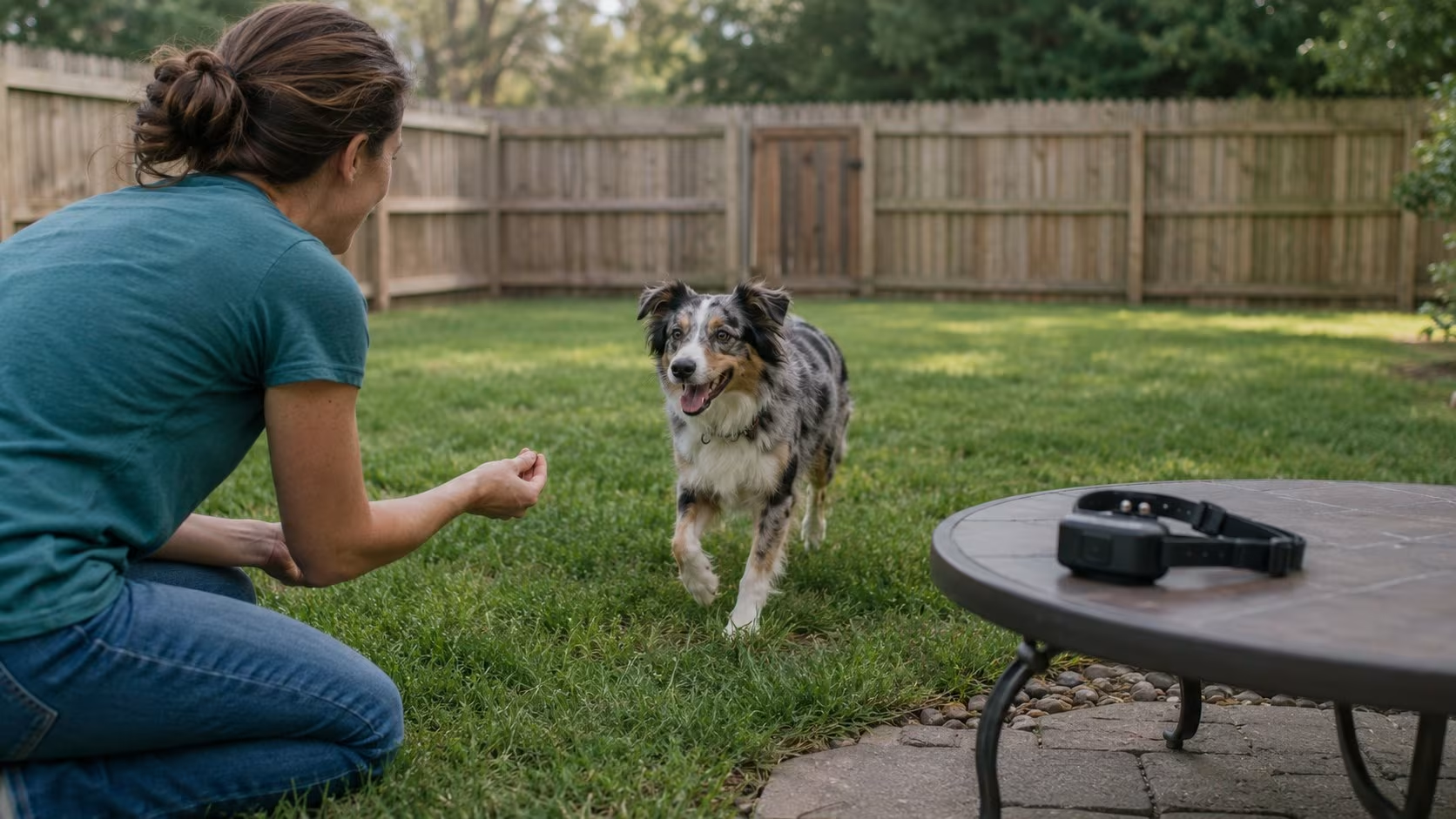
Electronic boundary systems can fail when batteries die, collars loosen, the dog runs through from high arousal, or another animal enters the yard. They also do not keep loose dogs, wildlife, children, or people out. A physical fence, leash, long line, and supervised recall training are often safer.
If a dog has already learned to bolt through a boundary, do not increase intensity as the main plan. Build real containment and recall. A stronger correction may only make the yard more stressful.
Risks in multi-dog households
In homes with several dogs, one dog may be punished for another dog's bark or movement if automatic tools are used. Even with remote tools, timing can be muddy when dogs cluster together. Stress can spill into fights.
Children should not control shock collars. They should not be asked to correct barking, chasing, guarding, or jumping with any aversive device. Adult supervision, management, and professional help are safer.
Ask a trainer what happens when the dog gets it wrong. Ask how fear, pain, and aggression are handled. Ask whether the trainer uses rewards, management, and gradual setups. A humane trainer can explain the learning plan without promising instant control.
If the dog is already aggressive, anxious, or self-injuring, involve a veterinarian. Behavior medication, pain treatment, or environmental changes may be part of the humane plan.
Many shock collars are sold as a path to off-leash freedom. True off-leash reliability is built from recall history, safe environments, distance work, distraction practice, and reinforcement the dog values. A dog who returns only to avoid stimulation has not learned the same joyful recall as a dog who has been paid heavily for coming back.
Use long lines while recall is still developing. Practice with easy distractions before hard ones. Reward check-ins the dog offers without being called. These habits create a dog who wants to stay connected instead of a dog waiting for correction.
Recognizing subtle stress signals early
Stress may show as yawning, lip licking, scratching, sniffing the ground, refusing food, freezing, tucked tail, avoidance, sudden quietness, or frantic movement. Some owners miss these because the unwanted behavior has stopped. The dog may be coping less, not learning more.
If training makes the dog less willing to approach, play, eat, or explore, the plan needs to change. Training should make behavior clearer and the dog more confident over time.
Stop using the collar as the main communication tool and rebuild cues with rewards. Choose one behavior first: recall, quiet, leave it, or place. Start in an easy setting, mark the correct behavior, reward well, and increase difficulty gradually.
Management fills the gap while the new habit grows. Use fences, leashes, gates, window film, distance, and safe routines. Removing the collar without adding a plan can let old habits return, so replace correction with structure.
Dogs repeat behavior that works. Instead of asking how to stop the dog as fast as possible, ask what the dog is getting from the behavior and what safe alternative can meet that need. A dog barking at windows may need distance from the window. A dog chasing wildlife may need leash safety and legal outlets for scent and movement.
That question keeps training practical. The answer may be a gate, a quieter route, a better reward, a vet check, or a slower setup rather than a stronger correction.
Rebuilding trust with reward-based methods
Shock collars can interrupt behavior, but they can also create fear, confusion, stress, and unsafe associations. Safer training starts by identifying why the behavior happens, preventing rehearsal, rewarding replacement skills, and using equipment that protects rather than punishes. For aggression, severe barking, escape, or chasing, work with a veterinarian and qualified reward-based trainer instead of relying on electronic correction.



Comments