

An ESA needs no training and no registration, and neither of those buys access. The only document that carries weight is a dated letter from a licensed professional who actually treats you, and it carries weight in housing alone. The ADA never covered ESAs, airlines have been free to treat them as pets since January 2021, and since May 22, 2026 HUD staff no longer pursue untrained ESA complaints.
Emotional support animal requirements changed in a meaningful way in 2026, and the details matter. An emotional support animal, or ESA, is not the same as a service animal under the Americans with Disabilities Act. ESA rules also depend on context: housing, public places, air travel, school, workplace, and state law can be different.
This article is general information for U.S. readers, not legal advice. If housing is at risk, talk with a fair housing attorney, legal aid office, disability rights group, or local fair housing agency.
ADA service animal rules versus ESAs
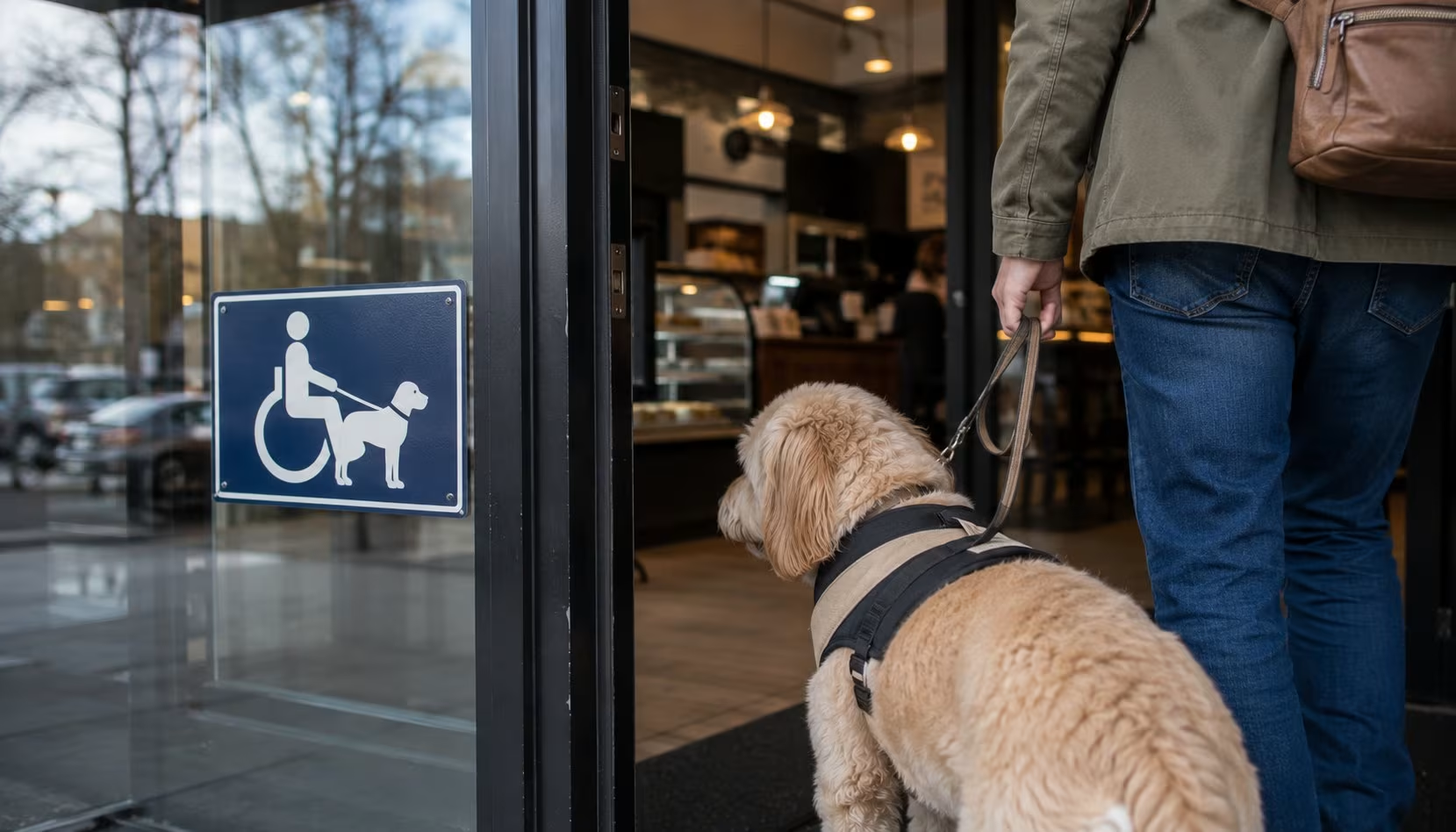
A service animal is trained to do work or perform tasks directly related to a person's disability. The ADA's official service animal requirements state that dogs whose only function is comfort or emotional support do not qualify as service animals under the ADA.
That distinction affects restaurants, stores, hotels, workplaces open to the public, hospitals, schools, and government buildings. A person may benefit deeply from an ESA, but comfort alone does not create ADA public-access rights.
The clinical case for an animal and the legal case are answered by different people. A therapist decides whether an animal belongs in your care plan, which is the ground covered in anxiety disorders and ESA animals. A landlord, an airline or a store manager decides whether the animal comes in, and none of them is bound by the first decision.

Housing rested on HUD's 2013 and 2020 assistance-animal guidance for years. HUD withdrew both documents on September 17, 2025, and the ground was unsettled until the May 2026 enforcement memorandum from Assistant Secretary Craig Trainor of HUD's Office of Fair Housing and Equal Opportunity, issued May 22, 2026 and effective immediately. It directs HUD staff to stop pursuing complaints where the animal is an untrained emotional support animal, treats only individually trained service animals as presumed exempt from pet policies and pet fees, and puts open ESA cases on hold for individual review. HUD noted that more than 20% of its fair housing complaints involved ESAs.
That does not settle every dispute. HUD's enforcement position is not the Fair Housing Act itself, and state and local fair housing laws are untouched by the memo, so a state that protects assistance animals still protects them. Court decisions and subsidized housing program rules also sit outside the memo. What has gone is the assumption a lot of older advice was built on, that an ESA letter alone reliably clears a no-pets policy and a pet fee.
Anything written on whether a landlord can deny an emotional support animal before mid-2026 describes the previous federal position, so read the date on it first.
When ESA documentation is accepted, it typically comes from a licensed healthcare professional who has a real therapeutic relationship with the person. The letter should connect the animal to a disability-related need without oversharing private medical records.
A weak letter says only that the person likes pets. A stronger letter explains that the person has a disability-related need for the animal as part of care. Housing providers may challenge unreliable online certificates, instant approvals, badges, vests, and registry purchases.
What sells as certification is not documentation, and how to get emotional animal support certification goes through the difference in detail. A registry number, an ID card and a vest are three products from the same shop, and none of them is the letter a housing provider can actually weigh.
| Setting | Rule that governs it | Emotional support animal | Trained service dog |
|---|---|---|---|
| Shops, restaurants, hotels, government buildings | ADA | No right of entry. Staff may apply the pet policy. | Must be admitted. Staff may ask only whether the dog is required because of a disability and what task it is trained to perform. |
| Rental housing, federal enforcement | Fair Housing Act, as enforced under HUD's May 22, 2026 memo | HUD staff no longer pursue complaints involving untrained ESAs. No presumed exemption from pet policies or pet fees. | Presumed exempt from pet policies and pet fees. |
| Rental housing, state and local | State and city fair housing law, unaffected by the HUD memo | Varies by state. Some still protect ESAs. This is now the decisive question. | Protected. |
| Housing outside the Act | Owner-occupied buildings of four units or fewer, single-family homes rented without an agent, some private club and religious housing | No federal protection. This exemption structure predates the 2026 memo. | No federal protection under the Act either. |
| Air travel | DOT Air Carrier Access Act final rule, effective January 11, 2021 | Treated as a pet. Under-seat carrier, typically about $95 to $150 each way. | Must be accepted. The DOT Service Animal Air Transportation Form may be required. |
| Workplaces and schools | Employer and institution accommodation processes | Decided case by case through the accommodation process. No automatic entry. | Decided case by case, on a much stronger footing. |
Fake registries and unofficial certificates
There is no official federal ESA registry that gives a pet legal status. Websites that sell certificates, ID cards, or instant approvals often use language that sounds official. A paid card may look polished but still fail when a housing provider asks for reliable documentation.
Do not misrepresent an ESA as a service animal. Many states penalize false service-animal claims, and fake claims can harm people with trained service dogs.
The ADA does not require businesses to admit emotional support animals as service animals. Businesses can ask the two ADA questions only when a service animal status is not obvious: whether the dog is required because of a disability, and what work or task the dog has been trained to perform. They cannot demand diagnosis details, but comfort alone is not a task.
The Department of Transportation's Air Carrier Access Act final rule was published in December 2020 and took effect on January 11, 2021. It lets airlines treat emotional support animals as pets, and American, Delta, United, Southwest, JetBlue and Alaska all did so in early 2021. Only trained service dogs must be carried, and the airline may require the DOT Service Animal Air Transportation Form. In practice your ESA flies as a pet in an under-seat carrier for roughly $95 to $150 each way, or it does not fly. Some international carriers still accept ESAs under their own rules.
Psychiatric service dogs are different if they are individually trained to perform disability-related tasks and meet airline documentation and behavior rules. Check the airline before booking because forms, timing, carrier rules, and pet fees can vary.
Behavior expectations for a manageable ESA
Even when an accommodation is available, the animal must be manageable. Aggression, repeated barking, property damage, unsanitary behavior, biting, or serious disturbance can create denial or removal issues. An ESA does not need task training, but it still needs basic manners, house training, parasite control, vaccination, and safe handling.
None of the benefits of having an emotional support animal survive a dog that lunges at a neighbor in a shared hallway. Housing providers can act on genuine safety and damage problems regardless of documentation, and that is the fastest way an approved accommodation is lost.
State law is now the part that decides most cases. California's AB 468, effective in 2022, is the clearest example on the documentation side: a licensed professional must have had a client relationship of at least 30 days before writing an ESA letter, subject to exceptions, and online ESA sellers have to disclose that their letter is not a service animal certification. On the housing side the question is simpler and more important. Does your state or city fair housing law still protect assistance animals now that HUD's enforcement does not. Your local fair housing agency will answer that in one phone call.
Before submitting a request, check current state law and the housing program involved. Use exact dates because ESA law and enforcement guidance have changed.

Put the request in writing. Identify it as a reasonable accommodation request if it is a housing request. Include documentation when required and keep copies. Stay factual. Explain the animal's species, size if relevant, behavior history if requested, and disability-related need in the way your clinician supports.
Three things sink otherwise reasonable requests. Sending a full medical file when a one-line statement of disability-related need was all that was asked for. Attaching a purchased certificate, which invites the provider to treat the whole request as a bought product. And threatening litigation before checking whether your state law still backs you, which since May 2026 is a question with a real answer either way.
The companionship is the reason any of this exists, and As a Friend: ESA Animals is about that side of it. The paperwork is judged separately and on its own terms, by people who will never meet your animal.
A credible ESA letter should come from someone qualified to evaluate the person, not from a form that approves every buyer. The clinician should understand the person's disability-related needs and the role the animal plays. Some states set rules for telehealth letters or require a provider relationship before an ESA letter can be issued.
Ask the provider what the letter says before you submit it. It should not reveal more private medical detail than needed, and it should not promise access that the law does not provide.
Handling housing disputes and denial letters
Housing disputes often become harder when the animal is poorly managed. Keep vaccination records, licensing, parasite prevention, and behavior notes. Clean up waste, prevent noise issues, and use safe containment. A well-managed animal does not guarantee approval, but it reduces avoidable objections.
Be skeptical of websites selling instant ESA registration, official-looking IDs, or lifetime certification. A vest or badge may identify your preference, but it does not create federal rights. Save money for a real clinical appointment or legal advice when housing is at stake.
Ask for the reason in writing. Compare the denial with current federal, state, and local rules. Contact a fair housing agency, legal aid office, or attorney if you believe the denial is unlawful. Do not escalate by mislabeling the animal as a service animal.
What to do in the first two weeks after a denial
- Reply the same day asking for the reason in writing. Keep it to one sentence. You are creating a record, not arguing yet.
- Check whether the building is even covered. If it is owner-occupied with four units or fewer, or a single-family home rented without an agent, the Fair Housing Act likely does not apply and the federal route ends there.
- Call your state or city fair housing agency and ask one question: does state law still protect assistance animals in housing. Since HUD's May 2026 memo this answer, not the federal one, usually decides the case.
- Read the stated reason against your own file. Missing license details, an undated letter or a letter from an online form site are fixable in a week. A bite record or damage complaint is not fixable by paperwork at all.
- If the reason is documentation, go back to your treating professional, not to a website. If the reason is the pet policy and your state offers no protection, the conversation is now about the pet fee and pet rent, so negotiate that instead.
- If you believe the denial is unlawful, contact legal aid, a fair housing organization or a tenant hotline before responding further. Fair housing complaints run to deadlines, so ask what yours is on that first call.
One thing not to do at any stage: describe the animal as a service animal. It is checkable, it is wrong, and some states penalize the claim.
Workplace and school rules differ from housing
ESA rules in workplaces and schools are not the same as housing rules. A workplace request usually goes through disability accommodation procedures with the employer. A school request may involve campus housing, classrooms, or disability services, and each setting may apply different policies.
Do not assume a housing letter will open every building. Ask the specific institution what process applies and what documentation is accepted.
Keep a dated file with the clinician letter, request email, landlord or institution response, animal records, and any follow-up. If a rule changes or staff turns over, dated records are easier to review than scattered text messages.
Some people with psychiatric disabilities may need a task-trained psychiatric service dog rather than an ESA. That is a different path. The dog must be trained to perform disability-related tasks, behave safely in public, and remain under control.
If that transition is needed, work with qualified trainers and clinicians before claiming access rights.
The changed 2026 ESA landscape
The short version is that the federal floor has dropped and the state floor has not. The ADA never covered ESAs. Airlines have been free to treat them as pets since January 2021. Since May 22, 2026 HUD staff no longer pursue complaints where the animal is an untrained ESA, and only trained service animals are presumed exempt from pet policies and pet fees. What is left is your state and city law, your treating professional's letter, and an animal that behaves well enough that nobody has a second reason to say no.
| Date | What happened | What it means now |
|---|---|---|
| December 2020 | DOT publishes its Air Carrier Access Act final rule | Airlines are permitted to treat ESAs as pets |
| January 11, 2021 | The DOT rule takes effect | Only trained service dogs must be accepted |
| Early 2021 | American, Delta, United, Southwest, JetBlue and Alaska end ESA acceptance | ESA air travel on major US carriers is over. Some international carriers still allow it. |
| 2022 | California AB 468 takes effect | A 30-day client relationship is required before an ESA letter, and online sellers must disclose that a letter is not a service animal certification |
| September 17, 2025 | HUD withdraws its 2013 and 2020 assistance-animal guidance | The documents most ESA housing advice was built on are gone |
| May 22, 2026 | HUD's FHEO issues the Trainor enforcement memo, effective immediately | HUD staff stop pursuing untrained ESA complaints, only trained service animals are presumed exempt from pet fees, open cases go on hold. State and local law is unaffected. |
If a page you are reading about ESA housing does not account for the last two rows, it was written for a system that no longer operates the way it describes.





0 Comments
No comments yet. Be the first to share your thoughts!
Leave a Comment