

Guard dog training is often misunderstood. Many owners picture a dog who can protect the home, scare away intruders, and still behave politely with family, guests, delivery workers, children, and neighbors. In real life, encouraging suspicion or aggression in a normal family dog can create bite risk, legal trouble, and a dog who is stressed instead of steady.
For most homes, the safer goal is not attack training. The useful goal is an alert dog with strong basic obedience, a reliable recall, a settle cue, calm greeting skills, leash manners, and the ability to stop barking when asked. A dog who alerts and then returns to the owner is far safer than a dog who decides on its own who is a threat.
Setting a realistic alert job for the dog
Before training, decide what the dog should actually do. A reasonable home alert job may be: hear a sound, bark a few times, move toward the owner, and settle behind a barrier. That is very different from chasing, biting, cornering, or lunging at people.
The dog should not be asked to judge complex human intent. Dogs can misread uniforms, hats, children running, guests entering, medical workers, or neighbors using shared spaces. The owner must be the decision-maker.
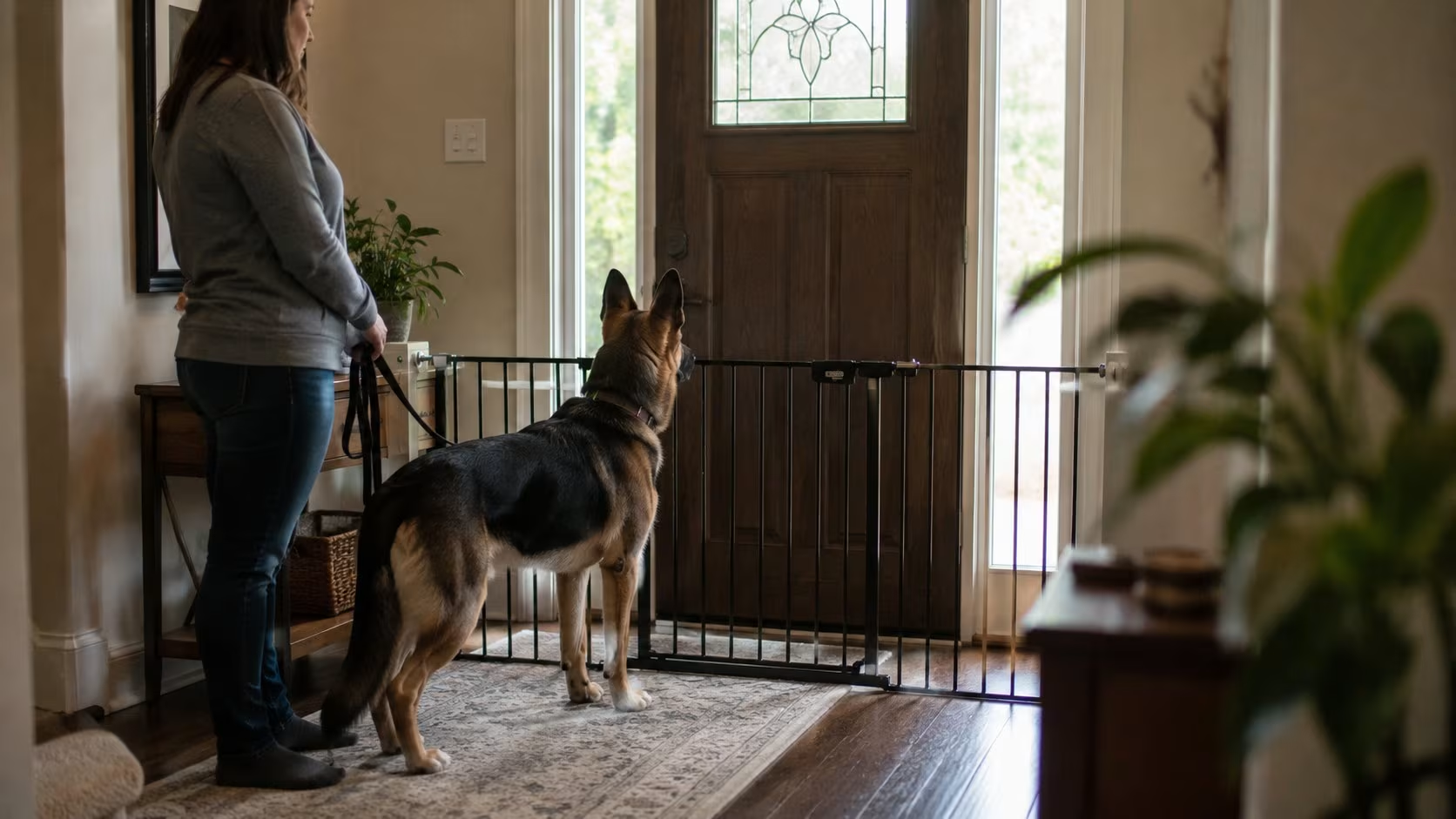
Pawdraft's dog training guide is the right foundation before any alert work because obedience and calm control come first.
A dog who cannot sit, stay, come, leave it, drop it, walk on a loose leash, and settle on a mat is not ready for alert work. Guard-style training without obedience is simply rehearsed arousal. The dog becomes louder and harder to interrupt.
Build daily practice around short sessions. Reward the dog for checking in, responding to their name, moving away from the door, and settling after excitement. These skills should work with food, toys, visitors, door sounds, and outdoor distractions.
The American Veterinary Society of Animal Behavior states on its position statement page that its current humane dog training position recommends reward-based methods for dog training and behavior modification. That matters for alert training because fear and pain can increase defensive behavior.
Punishing a barking dog near the door may suppress noise for a moment, but it can also make door events feel worse. A better plan teaches the dog what to do after the first alert: come to the owner, go to a mat, take a treat, and relax.
Teaching a cue that ends alert barking
Choose a simple cue such as "thank you" or "enough" for ending alert barking. Set up easy practice with a helper making a mild sound outside. Let the dog notice and bark once or twice. Then say the cue, show a treat, move away from the door, and reward quiet.
The point is not to forbid barking. The point is to put barking under owner control. A useful alert dog can start and stop. A dog who cannot stop is not trained; the dog is over threshold.
A station can be a mat, crate, bed, or gated area away from the door. Teach the dog to go there on cue before practicing with door sounds. Reward heavily for staying there while the owner handles the door.
Pawdraft's crate training guide can help owners build confinement comfort, but a station should not be used as punishment. It should feel predictable and safe.
A dog who is under-socialized may bark because normal life looks threatening. Hats, wheelchairs, children, umbrellas, delivery carts, bikes, and different body types can all trigger fear if the dog has not learned that they are ordinary.
Good socialization does not mean forcing contact. It means calm exposure at a distance the dog can handle, paired with rewards and escape options. If the dog is already fearful or reactive, work with a qualified professional instead of flooding the dog.
Managing doorways and stranger encounters
Avoid games that reward the dog for growling at strangers, rushing fences, guarding windows, or intimidating guests. Those behaviors are hard to control once they feel rewarding. They also put innocent people at risk.
A dog who barks at the window all day is not protecting the home. The dog is rehearsing stress. Use visual barriers, white noise, management, exercise, and training to reduce constant scanning.
Doorways are high-risk areas because people arrive unexpectedly. Keep the dog on leash, behind a gate, or on a station when visitors enter. Reward quiet, eye contact, and staying back. Do not allow the dog to rush guests "just to sniff."
If the dog has ever bitten, snapped, or blocked the door, use physical management before training. A closed door, gate, leash, or crate is not a failure; it is responsible safety.
Guard-style dogs often become leash-reactive if they practice staring, pulling, and barking at passersby. Teach loose-leash walking and disengagement from people, dogs, bikes, and noises. Reward the dog for turning back to the owner.
Pawdraft's article on stopping a dog from running away off leash is relevant because recall and owner focus matter more than bravado.
Household rules for visitors and children
Everyone in the household should use the same cues and management. Children should not be responsible for guard training, door handling, or interrupting an aroused dog. Visitors should not tease, test, challenge, or roughhouse with the dog.
Post simple house rules near the entry: dog behind gate before opening, no surprise introductions, no crowding the dog, and no reaching over barriers.
True protection training is specialized work with serious liability. It is not the same as teaching a family dog to bark at the door. It requires the right dog, expert handling, legal awareness, controlled decoy work, and strict obedience. Many dogs are not suitable.
If you want professional protection training, consult a credentialed trainer who uses humane methods and can explain risk clearly. Avoid anyone who promises to make a dog aggressive quickly or asks you to provoke fear.
Owners can be liable if a dog bites or threatens someone. Some housing policies, insurance policies, city rules, and breed restrictions may apply. A dog trained or encouraged to guard may be treated differently after an incident.
If your dog already shows territorial aggression, speak with a veterinarian, veterinary behaviorist, or qualified behavior consultant. Do not wait for a bite.
Practicing the alert pattern during calm times
Practice the pattern during calm times: sound, brief alert, owner cue, move away, reward quiet, settle. Keep sessions short. Stop before the dog becomes frantic. Use easy sounds first, then gradually make the setup more realistic.
Do not practice at midnight with real delivery workers or startled guests. Training should be controlled, boring, and repeatable.

Get professional help if the dog lunges, bites, growls over space, blocks exits, cannot calm down, redirects onto the owner, or barks for long periods after a trigger leaves. Pain, anxiety, genetics, lack of socialization, and prior trauma can all affect behavior.
Pawdraft's deaf dog training article shows why training plans must fit the individual dog. A dog with hearing loss, vision changes, pain, or anxiety needs adjusted methods.
Management supports training. Use window film, secure fencing, locked gates, leashes, baby gates, crates, and clear visitor routines. A dog cannot rehearse fence fighting if the fence line is blocked. A dog cannot rush the door if the dog is already on a mat behind a gate.
Pawdraft's article on preventing food stealing from the coffee table is a different training problem, but the principle is similar: set the dog up so the unwanted behavior is hard to practice.
Handling everyday visits like deliveries and repairs
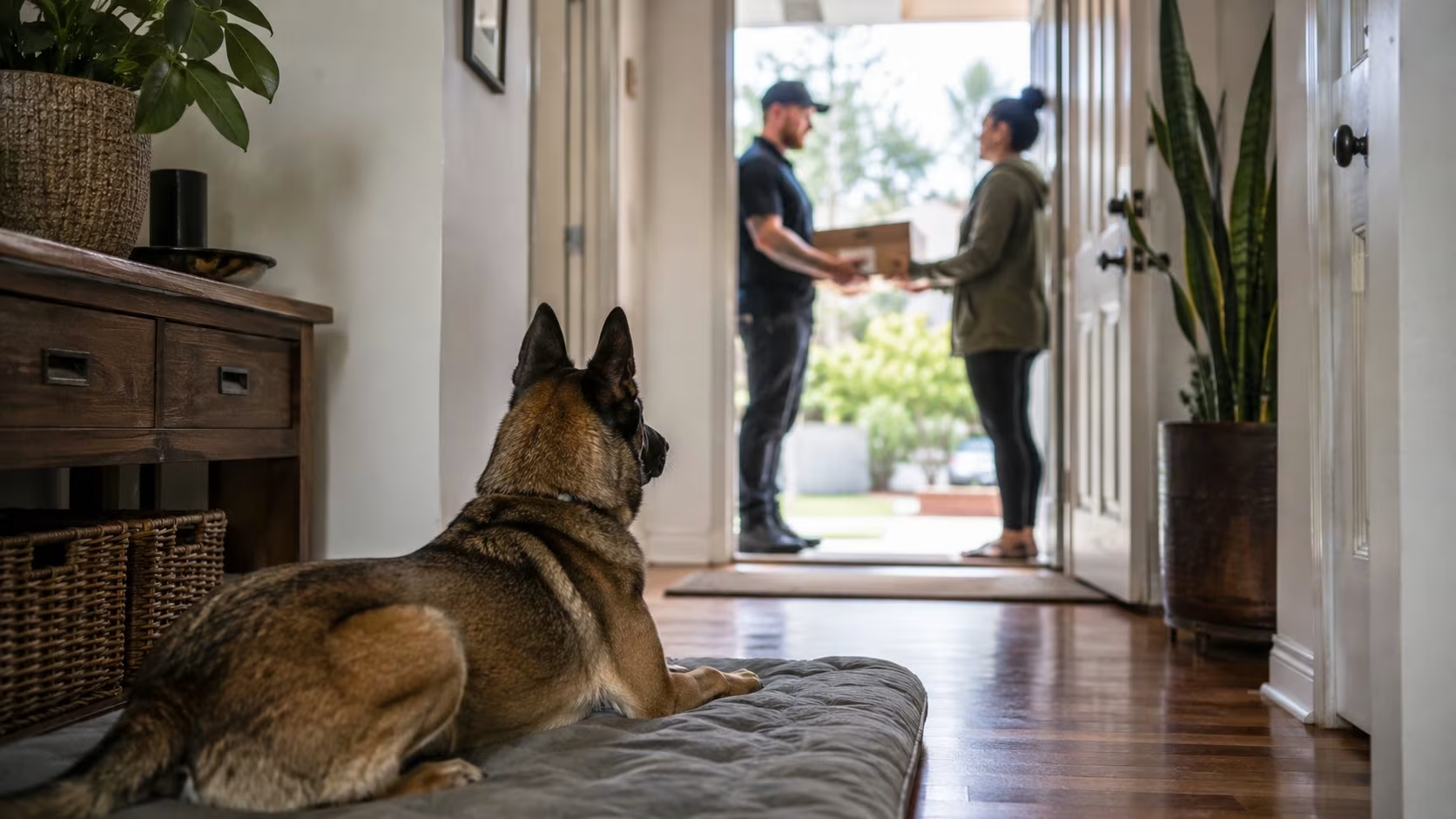
Most home alerts happen during ordinary visits: packages, repairs, meter checks, food delivery, friends, relatives, cleaners, and medical workers. Train for those normal events before worrying about rare emergencies. Put the dog behind a barrier before opening the door. Reward quiet. Let the visitor move without the dog crowding them.
If the dog barks, do not let the dog rehearse rushing forward as the door opens. The owner should collect the package, pay the worker, or greet the guest while the dog stays in the practiced station area.
Children should not test a guard dog, command a dog to bark, or handle an aroused dog near the door. Shared apartments, duplexes, sidewalks, elevators, and yards also make guard-style behavior risky because normal neighbors pass close by.
Teach the dog that people moving outside the property are background noise. Reward the dog for looking and turning back to the owner. A dog who can disengage is more useful than a dog who escalates.
A good alert routine ends calmly. If the dog stays tense for ten minutes after every sound, the training is incomplete. Practice recovery: bark, owner cue, move away, treat scatter, mat, quiet breathing, and rest. The dog should learn that the owner handles the event.
Keep practice easy enough that the dog can succeed. If the dog is already frantic, add distance, use barriers, lower the sound level, or pause and get professional help.
Balancing protection with safe obedience
Guard dog training for a home should mean controlled alerting, obedience, impulse control, recall, socialization, and safe management. Do not teach a family dog to attack or distrust normal people. Reward the dog for alerting briefly, returning to you, settling on cue, and staying behind barriers when visitors arrive. For bite risk or true protection work, hire qualified help before the dog practices dangerous behavior.





0 Comments
No comments yet. Be the first to share your thoughts!
Leave a Comment
Your name, email address and comment are processed to publish and reply to the comment; your email address is never published. Details: Privacy Notice.