


Prong collars, also called pinch collars, are metal training collars with inward-facing prongs that tighten around a dog's neck when pressure is applied. They are usually sold as tools for pulling, lunging, or controlling strong dogs. Some owners see quick behavior suppression and assume the collar solved the problem. The harder question is what the dog learned and what the collar cost the dog physically or emotionally.
Prong collars work by applying discomfort or pain to the neck. Even when a handler uses light pressure, the design concentrates pressure into small contact points. That makes the tool different from a flat collar, walking gear, or well-fitted head halter. For many family dogs, the better path is reward-based leash training, management, better equipment fit, and help from a qualified professional.
How the prong tightens and shapes emotion
A prong collar tightens when the leash tightens. The prongs press into the dog's neck. This may stop pulling because the dog wants to avoid the sensation. It may also cause the dog to associate pain with whatever it sees while pulling: another dog, a child, a bicycle, a stranger, a vet clinic, or the owner.
That association risk matters. A dog who is already worried about other dogs may become more worried if every sighting is paired with neck pressure. A dog who lunges from fear may look quieter while becoming less comfortable inside. Stopping the outward behavior is not the same as changing the emotional state.
Pawdraft's guide to remote collars belongs in the same welfare conversation. Tools that rely on discomfort can create quick suppression without teaching the dog what behavior should replace pulling or lunging.
The American Veterinary Society of Animal Behavior's position statements page says AVSAB supports reward-based methods and does not support aversives, regardless of the tool or trainer experience. Its humane training materials specifically warn against tools that involve pain, including prong collars.
The RSPCA page on why prong collars are harmful to dogs also warns that aversive tools can cause pain, distress, and compromised welfare. Owners do not have to agree with every word from every organization to take the risk seriously. A tool designed to punish pulling should not be treated as neutral gear.
Some trainers present prong collars as communication tools. The wording does not remove the mechanism. If the dog responds because the sensation is unpleasant enough to avoid, the method is aversive. A clearer training plan teaches the dog how to walk with a loose leash, check in around triggers, and move away safely.
Neck anatomy and injury risk factors
The neck contains skin, muscles, nerves, blood vessels, the trachea, esophagus, thyroid region, and cervical spine structures. Prong pressure can irritate skin, worsen existing neck pain, create bruising, or increase risk when a dog lunges hard. Dogs with tracheal collapse, respiratory disease, eye-pressure concerns, spinal pain, skin disease, or small body size need extra caution with any neck tool.
Risk increases when the collar is left on, fitted poorly, used with leash jerks, used on a reactive dog, or used by multiple handlers with different timing. A dog who bolts to the end of a leash can hit the collar with significant force. A child or frustrated adult can apply corrections too harshly.
Pawdraft's article on choosing a dog leash for comfortable movement is relevant because leash length, grip, and environment affect control. Equipment should support teaching, not replace it.
Prong collars can hide behavior rather than resolve it. A dog may stop lunging because lunging hurts, but the fear or frustration may remain. Some dogs shut down. Others redirect aggression. Some become more explosive when the collar is absent because the underlying trigger was never changed.
Timing is difficult. If the handler applies pressure a second late, the dog may connect discomfort to the wrong behavior. If the pressure happens while the dog looks at another dog, the dog may learn that other dogs predict pain. If the pressure happens while the dog turns back toward the owner, the dog may be punished for the very check-in the owner wanted.
For dogs who pull toward squirrels or bikes, Pawdraft's guide on stopping dogs from chasing squirrels and bikes is a better starting point than stronger corrections. Distance, pattern games, long-line safety, and reward history are safer than neck pressure.
Comparing harnesses collars and head halters
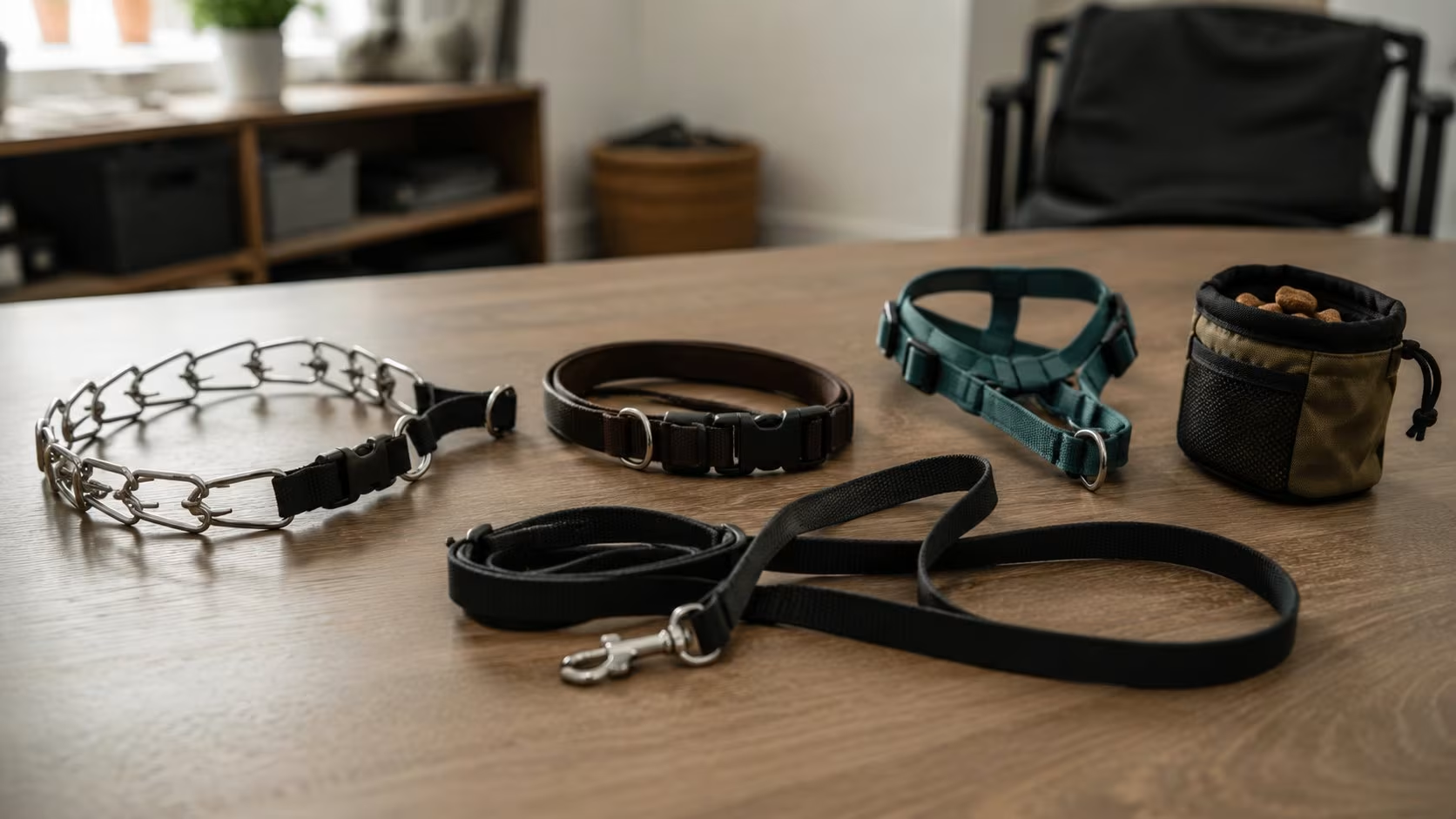
A well-fitted front-clip walking gear can reduce pulling force while training begins. A Y-front walking gear may protect shoulder movement better than restrictive designs. A back-clip walking gear can work for dogs who do not pull hard. A head halter can offer control for some dogs, but it also needs careful conditioning and should not be jerked.
Flat collars are useful for ID tags and light leash use. Martingale collars may help prevent slipping for narrow-headed dogs, but they should be fitted correctly and not used for choking. No tool is perfect. The question is which tool gives the handler enough safety while minimizing discomfort and supporting training.
Pawdraft's article on everything about e-collars covers another aversive category. If the owner feels every walk requires escalating equipment, the training plan needs review.
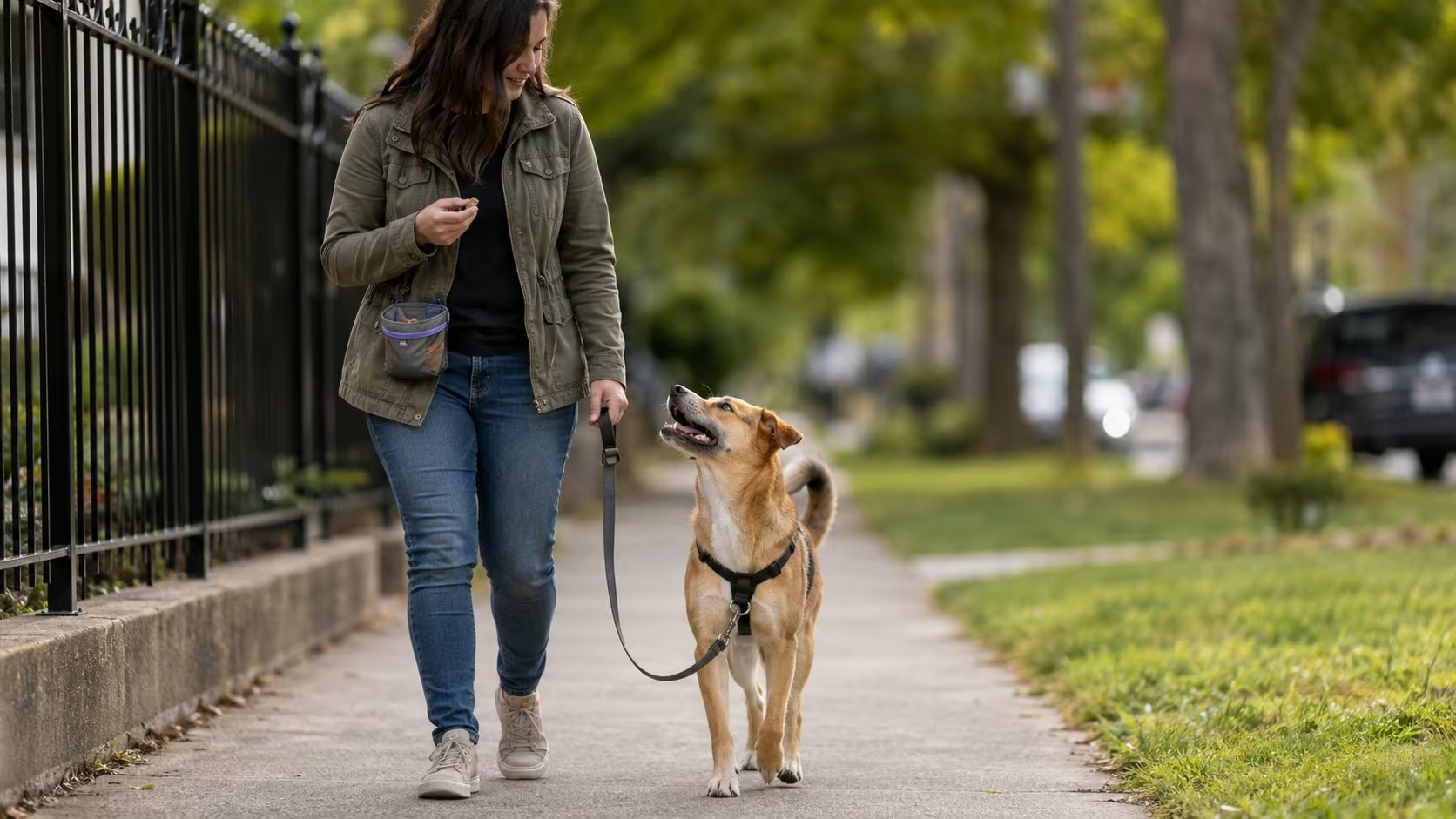
Start in a low-distraction place. Reward the dog for being beside you. Take one step, reward. Take two steps, reward. Change direction before the leash tightens. If the dog pulls, stop or turn calmly rather than yanking. Mark and reward when the dog returns to a loose leash.
Use sniffing as a reward. Many dogs pull because the environment is valuable. Ask for a few steps of loose leash walking, then release the dog to sniff. This teaches that cooperation makes the walk better, not worse.
Do not begin training in the hardest environment. A dog who cannot walk calmly in the driveway will not learn politely at a crowded market. Build the skill in layers.
Working with a reactive dog below threshold
For barking, lunging, growling, or panic around triggers, get help from a qualified reward-based trainer, behavior consultant, or veterinary behaviorist. Reactivity is often fear, frustration, or overarousal. Punishing the display may make the dog less likely to show early warning signs while the emotional problem remains.
Work below threshold. That means far enough away that the dog can notice the trigger and still eat, turn, and think. Reward looking calmly, turning back, moving away, or sniffing. Over time, the dog learns safer patterns.

Some owners reach for prong collars because the dog is large, the handler is injured, or walks feel unsafe. That urgency is real. The answer may include a front-clip walking gear plus backup clip, a waist leash only when appropriate, a head halter after conditioning, walking at quieter times, a fenced exercise plan, muzzle training for bite risk, and professional help.
Do not hand a powerful reactive dog to a child with a prong collar. Do not use the tool as insurance for uncontrolled environments. Safety plans should reduce risk without adding avoidable pain.
Transitioning a dog off the prong safely
If a dog is already wearing a prong collar, do not simply remove the only equipment that lets the handler stay safe without adding a plan. Fit a comfortable walking gear, add a backup clip if needed, and practice in quiet areas before returning to hard walking routes. The dog needs a new reinforcement history for walking near the handler.
Start by rewarding check-ins, U-turns, and leash slack in the driveway or hallway. Then practice on quiet sidewalks. Avoid known triggers at first. If another dog appears, increase distance instead of testing control. The goal is to make the non-prong setup predictable before the environment becomes difficult.
Keep sessions short. A dog who has spent months avoiding neck pressure may need time to learn that the walk is now a training conversation. Reward generously at first. Later, use sniffing, movement, and access to safe spaces as rewards.
Some leash problems are not leash problems. A dog may pull because it is under-exercised, anxious, adolescent, frustrated, in pain, overstimulated, or rarely allowed to sniff. A collar cannot solve those causes. If walks are the only enrichment in the dog's day, pulling may be partly a welfare signal.
Check pain too. Neck pain, back pain, orthopedic disease, ear pain, and vision changes can alter leash behavior. A dog who suddenly pulls, refuses walks, or reacts differently should have a veterinary review before the owner changes tools again.
For strong pullers, change the route while training catches up. Wider paths, quieter hours, and more sniff breaks reduce conflict. A calmer walk gives the dog more chances to learn than a daily battle on a crowded sidewalk.
Weighing pulling control against welfare cost
Prong collars can reduce pulling by making pulling uncomfortable, but they carry welfare, injury, fear, and timing risks. They do not teach loose leash walking by themselves and may worsen fear-based behavior. Most dogs are better served by reward-based leash training, suitable walking gear or head halters, environmental management, and professional help when pulling or reactivity creates safety concerns.



Comments