

People often use service animal, emotional support animal, therapy animal, and pet as if they mean the same thing. They do not. The difference affects public access, housing conversations, travel, training, and how honestly the animal should be described.
The safest way to understand the categories is to look at what the animal does, who the animal helps, and which rules apply in the setting.
Defining trained disability-related work
Under ADA public-access rules in the United States, service animals are dogs trained to do disability-related work for a person with a disability. Miniature horses have a separate assessment under ADA rules in some settings. The trained work must be connected to the person's disability.
The ADA National Network's guide to service animals and emotional support animals explains that emotional support, comfort, and therapy animals are not service animals under ADA Title II and Title III public-access rules.
Pawdraft's guide to emotional support animal requirements can help compare ESA expectations separately.
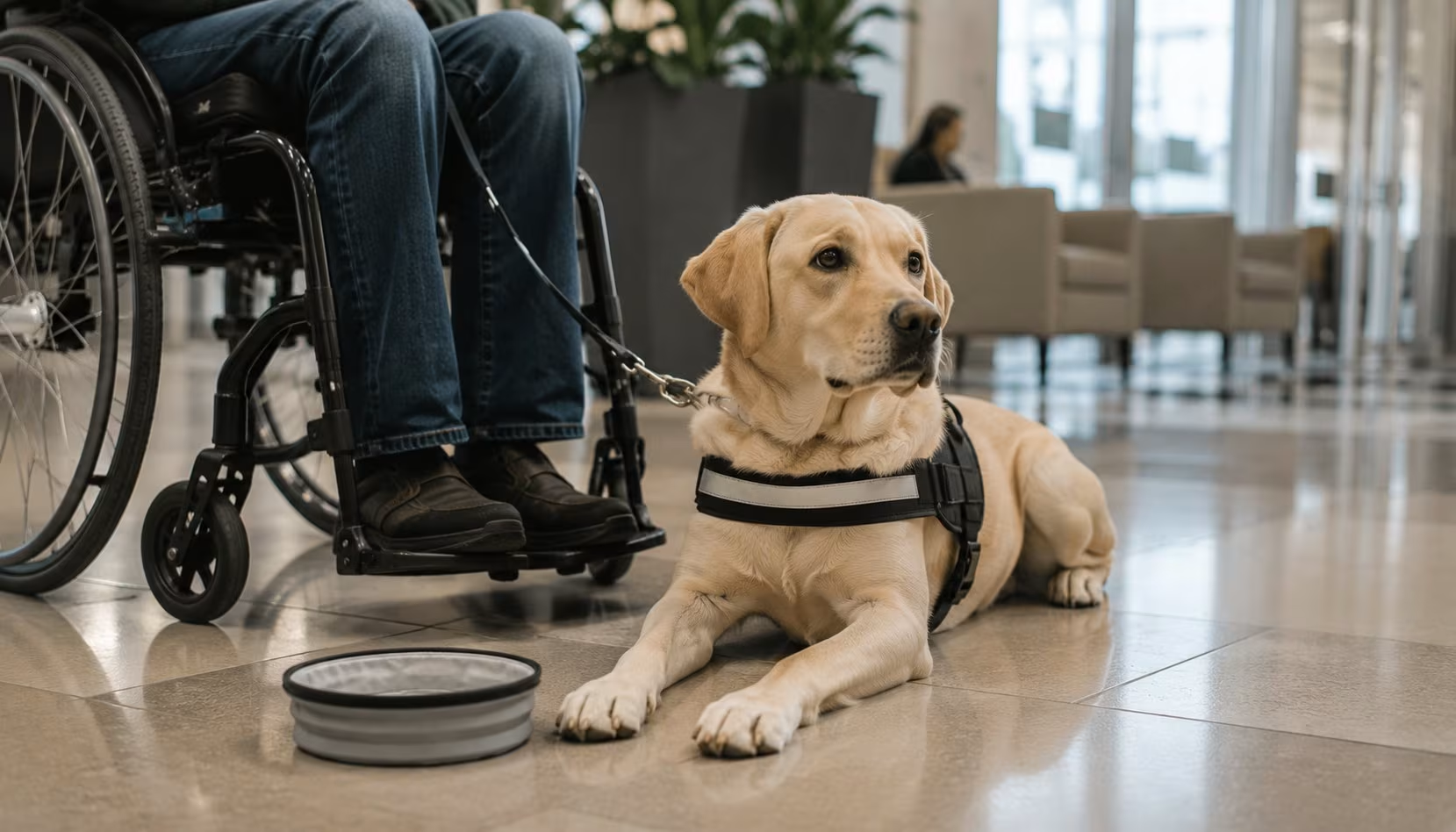
A psychiatric service dog is still a service dog when trained to do disability-related work. Examples may include interrupting self-harm behavior, guiding a handler to an exit during a panic episode, retrieving medication, or providing trained grounding behavior.
The difference is not the diagnosis. The difference is trained work versus comfort by presence.
An emotional support animal provides comfort, companionship, routine, or emotional support. ESAs can be deeply helpful at home, but they are not automatically public-access animals. They do not become service animals because they calm a person by being nearby.
Pawdraft's article on staying mentally healthy with emotional support animals discusses the support side without treating ESAs as service dogs.
Therapy animals versus service dogs
Therapy animals usually visit other people in settings such as schools, hospitals, libraries, or care facilities through organized programs. They may be tested or registered through a therapy organization, but they are not service animals for their handler's own public access.
A therapy dog may comfort many people. A service dog works for one disabled handler. An ESA supports its owner, usually at home.
A pet can provide love, routine, exercise, and companionship without being an ESA or service animal. Many pets support mental health in ordinary ways. That does not mean they have legal access rights beyond pet policies.
Respecting the pet category matters because overlabeling animals creates confusion and backlash.
Service dogs covered by ADA rules can usually accompany their handler in public places where the public is allowed, unless a specific safety or control issue applies. ESAs and pets do not have the same ADA public-access protection.
The ADA's service animal FAQ explains what businesses may ask and how service animal rules work in public places.
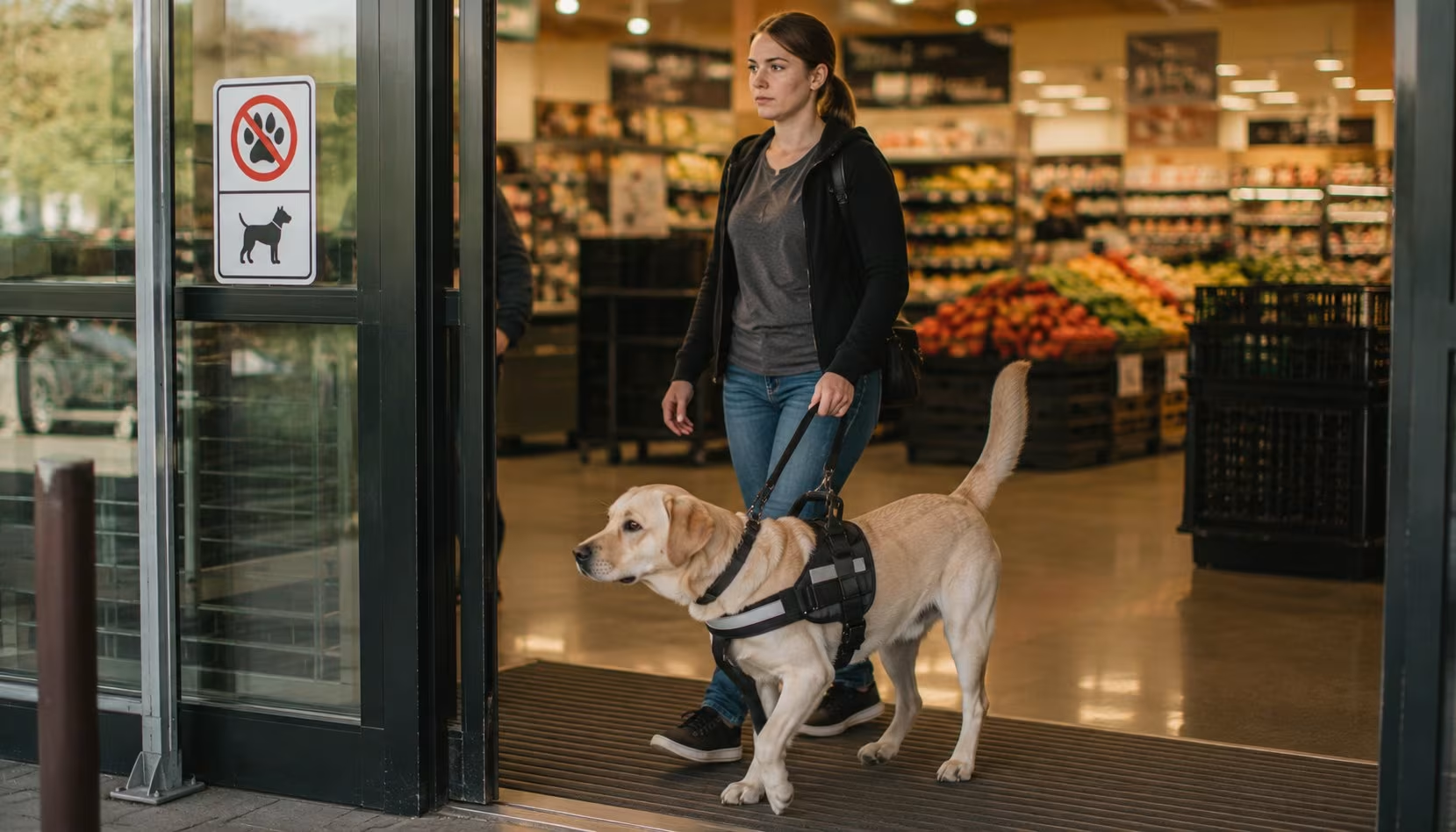
Housing may involve different rules from public access. Assistance animal requests can include service animals and, depending on current law and location, emotional support animals. In 2026, ESA housing enforcement guidance has changed, so people should check current official guidance and local advice.
Do not assume public-access rules and housing rules are identical.
Airline and public-access documentation rules
Airlines changed ESA policies in recent years. Trained service dogs and emotional support animals are not treated the same under current U.S. air travel rules. ESAs may travel only under pet policies if the airline allows it.
Check airline rules before booking and use accurate language.
ADA public access does not require a service dog ID card or online certificate. Businesses generally may ask limited questions when the disability-related need is not obvious. For housing or travel, different documentation may be requested depending on the setting.
Online cards can look official without creating rights.

Service dogs need reliable training for public behavior and disability-related work. ESAs still need good manners and safe behavior, especially in housing. Therapy animals need calm behavior around strangers and program-specific screening.
An animal who is fearful, aggressive, disruptive, or poorly controlled should not be pushed into public settings.
Matching labels to the animal's real role
A dog trained to guide a blind handler is a service dog. A dog trained to interrupt panic behavior may be a psychiatric service dog. A cat who helps a person feel less isolated at home may be an ESA. A dog visiting hospital patients with a volunteer may be a therapy dog. A beloved dog with no formal support role is a pet.
The labels should describe the real role.
Calling an ESA a service dog can harm legitimate handlers by increasing suspicion and conflict. It can also put an untrained animal into stressful settings. Honest wording protects access for service dog teams and sets fair expectations for ESAs.
Pawdraft's guide to best emotional support animals can help owners choose support animals based on home fit rather than public access hopes.
Be cautious with websites that promise instant service animal status, guaranteed access, or official registration. The real question is not whether a certificate looks convincing. The real question is what the animal is trained to do, what role the animal serves, and which rules apply.
If access or housing is contested, seek current local guidance rather than relying on marketing language.
ADA rules include a separate assessment for miniature horses in some public settings. They are not treated exactly like dogs, and practical factors such as size, control, safety, and facility operation matter.
This does not mean any species can become a public-access service animal under ADA rules.
Workplace and school accommodation processes
Workplaces can involve different accommodation processes from public businesses. An employee may need to request an accommodation through an employer process. The answer can depend on job duties, workplace safety, and disability law.
Do not assume the same rules apply in every setting.
A therapy dog visiting a school or hospital may be invited under a program. That invitation does not make the dog a service dog. The dog is there to support many people, not to provide trained disability-related work for one handler.
Programs may require screening, insurance, hygiene rules, and handler training.
Some states have penalties for misrepresenting a pet or ESA as a service animal. Rules vary, but the ethical point is simple: do not claim public access that the animal does not have.
Misrepresentation can create more scrutiny for legitimate teams.
Why legal categories still matter
Not every helpful animal needs a legal label. A pet can be deeply meaningful. An ESA can support home life. A therapy animal can help others through a program. A service dog can do trained disability-related work for a handler.
The right role is the one that matches reality.
Some service dogs are trained to alert to or respond to medical events such as seizures, blood sugar changes, mobility needs, or psychiatric episodes. The public may not always see the work. That does not make the dog less legitimate.
The handler also should not be pressured to disclose private medical details to strangers.
Saying an ESA is not a service animal does not mean the ESA is unimportant. Comfort, routine, and companionship can matter deeply. The point is that legal categories are different even when the human-animal bond is meaningful.
Respecting the category protects the support the animal truly provides.
A university housing office, a private landlord, an airline, a restaurant, and a workplace may all use different procedures. The same animal can be handled differently across those settings. That can feel frustrating, but it is why accurate language matters.
Before making plans, check the policy for the exact setting.
Questions staff can legally ask
Under ADA public-access rules, when the service need is not obvious, staff may ask limited questions about whether the dog is required because of a disability and what work the dog is trained to perform. They should not demand a demonstration, medical history, or certification as a condition of entry under those ADA rules.
Handlers can prepare calm, brief answers.
Even a legitimate service dog must be under control and housebroken. A dog that is out of control and not brought back under control can be removed from a public place. ESA, therapy, and pet animals also need safe behavior for their settings.
The label never replaces training and welfare.
Housing, air travel, public access, and workplace accommodation may ask different questions. Keep documents honest and current, but do not assume one paper applies everywhere. A service dog team may need airline forms for flying, while ADA public access in a store works under different rules.
Clear records help, but the animal's actual role still comes first.
Recap of the animal categories
Service animals are trained for disability-related work, ESAs provide emotional support, therapy animals help people in organized visit settings, and pets provide companionship without special access status.
Use the right term for the animal's real role. Clear categories make public access, housing, travel, and care decisions safer for everyone involved.




0 Comments
No comments yet. Be the first to share your thoughts!
Leave a Comment