

For some people, yes, and the mechanism is unglamorous. A cat creates a fixed daily obligation and a warm presence that asks nothing back, which helps most with isolation and evening anxiety and least with anything needing a trained response. Fit matters more than species, since a cat who hides from handling cannot do this job no matter how much you need it to.
Cats can be effective emotional support animals for some people. A cat's quiet presence, predictable routine, warmth, purring, and companionship may help with loneliness, anxiety, grief, or daily structure. That does not mean every cat is suited to the role or that an ESA cat has the same legal access as a trained service dog.
The best emotional support cat is not the most dramatic or clingy cat. It is a cat whose temperament, care needs, and living situation fit the person. The support should help the person without making the cat stressed, neglected, or forced into settings that cats usually find overwhelming.
Research on cortisol and loneliness benefits
The NIH article The Power of Pets notes that research on human-animal interaction is still developing and mixed, but some studies show animals can reduce loneliness, increase social support, improve mood, lower cortisol, and lower blood pressure. For cat owners, those effects may come through routine, touch, companionship, play, and the feeling of being needed.
They use litter boxes, need less outdoor activity, and may fit quieter households. A cat may help a person wake up, feed another living being, maintain a schedule, or settle during evening anxiety.

Age cuts both ways here. An older cat is the easiest to assess, because its personality is already fixed and a shelter can tell you exactly how it behaves with people. It is also the one most likely to need senior cat care within a couple of years, which means vet bills and, eventually, a loss you have deliberately built a support routine around.
Under current ADA rules, service animals for public access are dogs trained to perform disability-related tasks, with limited separate consideration for miniature horses. The ADA service animal FAQ says emotional support, therapy, comfort, and companion animals are not service animals when they provide comfort just by being with a person. Cats are not ADA service animals.
That means an ESA cat usually does not have a right to enter restaurants, grocery stores, theaters, hospitals, or other public places under ADA service-animal rules. A business may be cat-friendly by choice, but that is different from a service-animal right.
PawDraft's article on legal rights for emotional support cats should be read with this setting-by-setting distinction. Housing, public access, flights, and hotels are separate questions.
It is worth being straight about how strong that evidence is, because ESA marketing rarely is. The NIH piece the paragraph above draws on describes the research on human-animal interaction as still developing and mixed, and most of it studies pet owners generally rather than emotional support animals specifically. Nobody has run the study that would settle the question, which would compare people prescribed an ESA against people with the same conditions who were not.
What that means in practice is that the case for a cat rests on your own week rather than on a literature. If the feeding schedule gets you out of bed, if the evenings are less bad with something warm in the room, if you leave the house because there is a reason to come back to it, those are real effects you can observe directly. If you have had a cat for a year and none of that is true, no study is going to override that.
Cats and airline pet-policy limitations
The U.S. Department of Transportation's service animal guidance treats service animals as trained dogs. Emotional support animals are not service animals under current air-travel rules. An ESA cat usually travels under the airline's pet policy if the airline accepts cats on that route.
Air travel can be hard on cats. Carriers, noise, security lines, unfamiliar smells, and cabin pressure changes can cause panic or illness. Some cats travel quietly; many do not. A cat who provides emotional support at home may be miserable in an airport. The cat's welfare should be part of the decision.
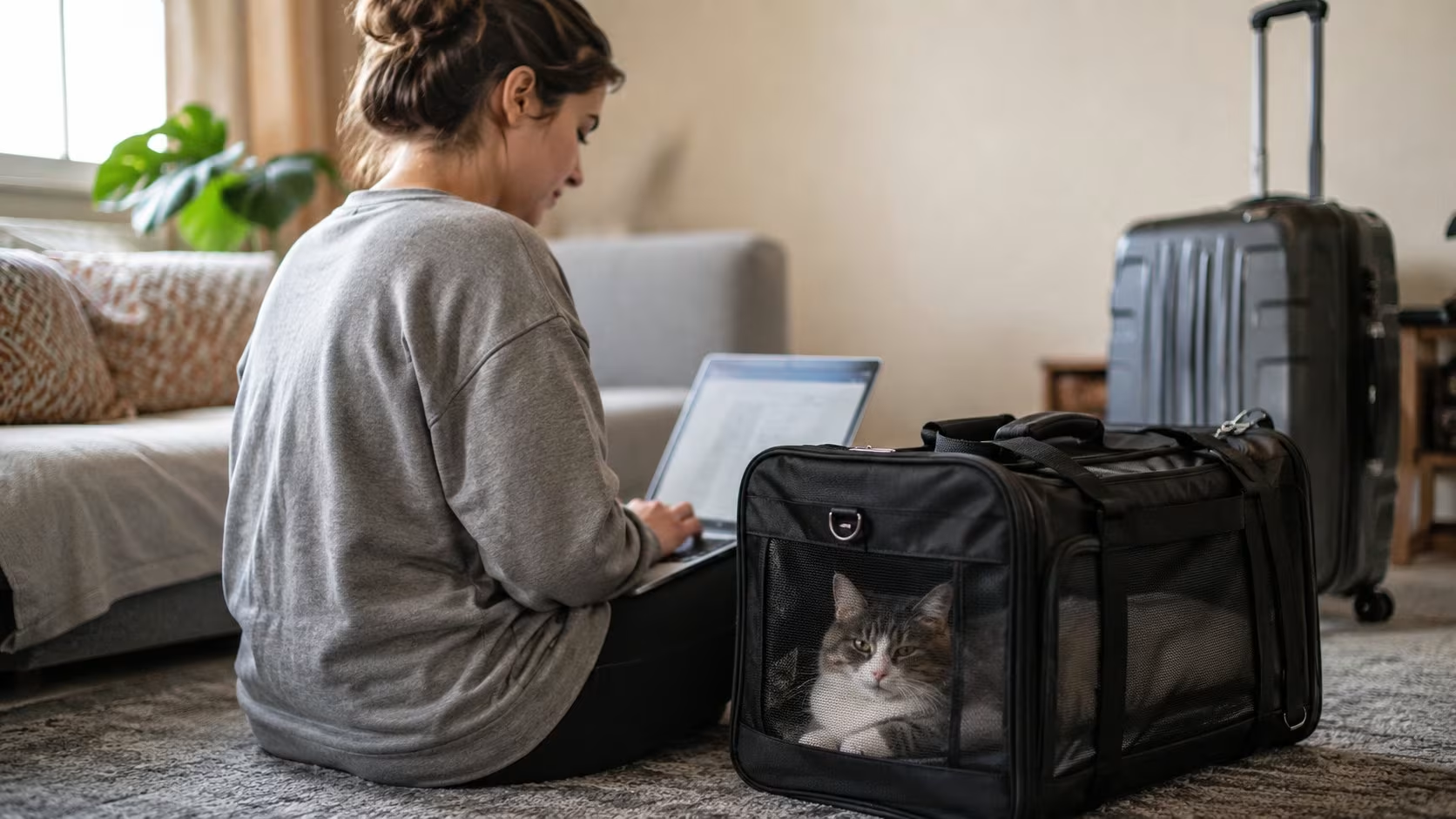
If travel is necessary, ask the veterinarian about the cat's health, vaccines, motion sickness, anxiety, microchip, carrier training, and destination requirements. Do not sedate a cat for travel without veterinary direction.
Housing is the one setting where the answer used to be strong, and it changed twice recently. HUD withdrew its 2013 and 2020 assistance-animal guidance on September 17, 2025, and on May 22, 2026 its fair-housing office told staff to stop pursuing complaints where the animal is an untrained emotional support animal. Only individually trained service animals are now presumed exempt from pet policies and pet fees, and a cat cannot be one. A request backed by reliable documentation is still worth making, but the venue has shifted: state and city fair-housing law is unaffected by the memo, and that is where a denied request is now more likely to get a hearing.
A housing provider may have practical concerns about litter odor, damage, allergies, number of animals, or safety during maintenance. A strong plan explains litter care, scratching surfaces, parasite prevention, veterinary care, and emergency backup. The cat should be legal to keep and manageable in the unit.
PawDraft's article on indoor vs outdoor cats matters here because many ESA cats are safest indoors. Indoor life needs enrichment, windows, scratching posts, climbing areas, and play to prevent stress.
Reading a cat's temperament and body language
Temperament matters. Some cats enjoy touch and routine. Others dislike being held, hide from visitors, or become stressed by constant handling. A cat can be emotionally supportive without tolerating hugs.
Look for a cat who is comfortable in the home, recovers from normal household noise, uses the litter box reliably, accepts routine care, and has a predictable social style. A fearful cat may still be loved, but it may not be fair to expect that cat to carry a heavy emotional role.
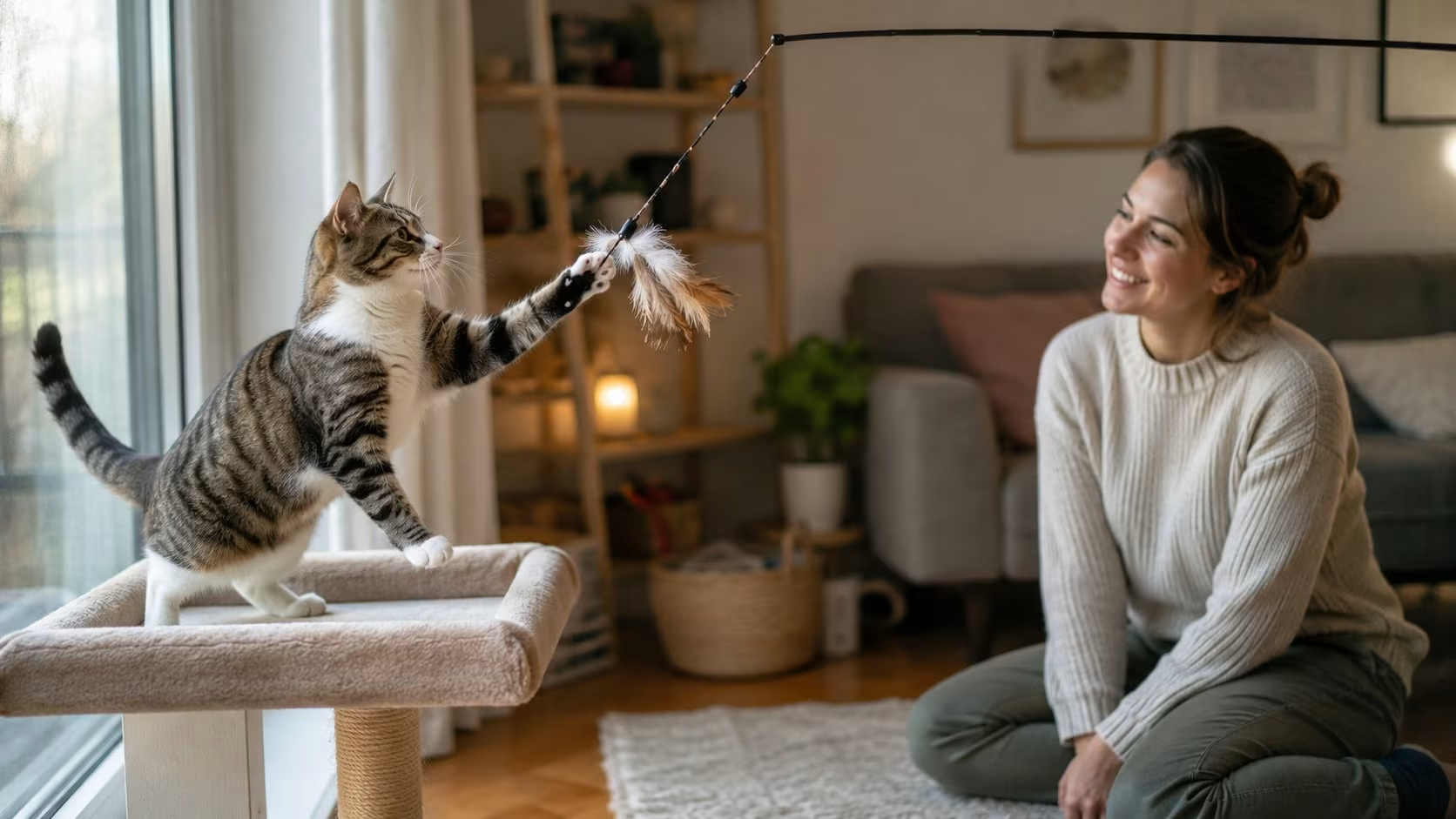
An under-stimulated indoor cat gets loud at three in the morning, scratches furniture and starts fights with other pets, and every one of those becomes a housing problem before it becomes a welfare problem. Fifteen minutes of wand play split into two sessions, ideally before meals so the sequence ends in hunting and eating, prevents most of it. The wider menu of cat enrichment toys and activities matters less than doing something short every day.
An ESA cat letter should come from a licensed professional who can assess the person's disability-related need. It should be limited to the setting, usually housing, and should not claim the cat can go everywhere. Online certificates and registries are often weak evidence and may be rejected.
Keep the cat's file and your own separate. Vaccines, microchip registration, parasite prevention and spay or neuter status answer a landlord's practical questions about sanitation and escape. They say nothing about your disability, and sending them instead of a clinician letter is a common reason a request stalls. Nail trimming belongs on that practical list too, since scratched door frames are the single most common cat complaint in a rental, and the cat grooming guide covers the technique.
A cat who hides more, stops eating, urinates outside the box, overgrooms, growls, bites, swats, avoids the owner, or becomes restless may be overwhelmed or ill. Emotional support should never mean forcing constant contact. Cats need choice. They need places to retreat, predictable litter access, quiet sleep, and handling that matches their tolerance.
If the person needs deep pressure, frequent travel, public access, or constant physical contact, a cat may not be the right support animal. Some cats enjoy lap time; others prefer sitting nearby.
| What you need most | Look for a cat that | Rule out a cat that | Honest verdict |
|---|---|---|---|
| Physical contact to settle after panic symptoms | Seeks laps unprompted with strangers present, tolerates being lifted, stays put when held | Tolerates stroking only on its own terms or leaves when approached | Workable, but only with a genuinely lap-seeking cat. Roughly the minority of cats. |
| Deep pressure during a panic attack | Nothing. No cat reliably provides this. | Not applicable | Wrong species. This is a trained-dog task. |
| A reason to get up and keep a schedule | Any cat with a normal appetite and a fixed feeding rhythm | A free-fed cat, which removes the fixed points from your day | The strongest case for a cat, and the one that works with almost any temperament. |
| Company without social demand | Sits in the same room without contact, comes and goes calmly | Constant vocalizers and cats that follow and paw for attention | Strong. This is what cats do better than dogs. |
| Night-time anxiety and broken sleep | Settles on or near the bed and stays down until morning | Crepuscular chaos, night vocalizing, dawn food demands | Depends entirely on the individual cat. Ask the shelter about nights specifically. |
| Support that travels with you | Nothing | Not applicable | Wrong species. No cat has public access, and most cats find travel distressing. |
Building a consistent feeding and play routine
A good ESA cat routine is simple and repeatable. Feed at consistent times, play before meals, keep litter boxes clean, offer scratching posts, provide vertical space, and schedule veterinary care. The owner's routine often improves because the cat needs steady care. That structure can be part of the emotional benefit.
Use enrichment to make the relationship healthier. Wand play, food puzzles, window perches, scent games, and brushing can create calm interaction without demanding the cat act like a dog. Senior cats may need ramps, soft beds, lower-sided litter boxes, and pain checks.
An ESA cat may not be enough during severe depression, suicidal thinking, panic disorder, psychosis, substance-use crisis, or domestic violence. The cat can be part of stability, but crisis care should involve people and professionals. If caring for the cat becomes impossible during symptoms, a backup caregiver should be arranged before a crisis.
If the owner is frequently hospitalized or traveling, write down feeding instructions, litter routines, medications, vet contacts, and who can enter the home. A support animal should not be left vulnerable when the person needs care.
When allergies make a cat a poor fit
Cats can be a poor fit when someone in the home has severe allergies, asthma triggered by cats, or fear of animals. A support need does not erase another person's health needs. In shared housing, discuss litter location, cleaning, bedroom access, furniture, noise, visitors, and emergency care before the cat arrives.
Allergy management may include cleaning, air filtration, keeping the cat out of certain rooms, grooming, and medical advice for the allergic person. It may also mean the cat is not a workable choice in that home.
Kittens are playful and adaptable, but they are also demanding, fragile, and unpredictable. Adult cats are easier to evaluate for temperament. Senior cats may be calm and affectionate, but they can need more veterinary care. The best ESA match is often an adult cat whose personality is already clear.
Meet the cat more than once if possible. Ask about litter habits, handling tolerance, medical history, play style, and fear triggers. A cat who hides during every meeting may still become a good pet, but it may not be the best emotional support match for someone needing frequent interaction right away. Adoption staff or the previous owner may know which cats seek touch calmly.
If a cat still looks like the right answer, test it before it becomes irreversible. A cat adopted and returned within a month is a bad outcome for everyone, and it is avoidable.
- Sit with the cat twice, on different days. A cat that hides at both visits is telling you something. A cat that hides at the first and approaches at the second is telling you something better.
- Ask the shelter four questions in this order. Does it seek out laps. How does it behave at night. Has it lived with other animals or children. Why was it surrendered.
- Foster first if the shelter allows it. Most do, and foster-to-adopt lets you find out how the cat behaves in your actual apartment rather than in a cattery.
- Settle the allergy question with evidence, not hope. If anyone in the household has asthma or a suspected cat allergy, get tested before adoption, not after the cat has been there a month and everyone is attached.
- Sort the housing before the cat arrives. Confirm what your lease allows and, if you are making an accommodation request, make it before the cat is in the unit. A request filed after a pet-violation notice is a harder conversation.
- Budget the first year honestly. Food, litter, vaccinations, parasite prevention and one unplanned vet visit. The unplanned one is the entry that people leave out.
Weighing companionship against the cat's welfare
The honest summary is narrower than most articles on this subject will give you. A cat is good at being present without asking anything, and that is worth a great deal to some people and very little to others. It cannot be trained to intervene, it has no access rights anywhere, and after 2026 it has less housing protection than it did. If what you need is company at home from an animal that will not make demands on a bad day, a cat is a reasonable answer. If you need the animal to come with you, or to do something, it is the wrong species.


0 Comments
No comments yet. Be the first to share your thoughts!
Leave a Comment