

Hotels are not required by the ADA to admit an emotional support dog, because comfort alone does not make a service animal. Most properties treat an ESA as a pet, which means a fee of roughly $25 to $75 a night or $50 to $150 a stay, plus weight and room limits. A trained service dog pays neither fee.
An emotional support dog can make travel feel more manageable, but hotel rules are not the same as housing rules. In the United States, hotels generally treat emotional support dogs as pets unless the property chooses to be more flexible. A trained service dog is different. A service dog has legal public-access protection under the Americans with Disabilities Act, while an emotional support dog whose only role is comfort does not qualify as a service animal under that federal public-access rule.
That distinction changes almost every travel decision: whether the dog can enter a no-pet hotel, whether pet fees apply, whether a size limit matters, and what a front desk can ask. The safest plan is to understand the legal line, check the property's written pet policy, and travel with a dog who can handle elevators, hallways, housekeeping noise, and unfamiliar rooms.
Why ESAs lack automatic ADA access
The ADA page on service animals says dogs whose only function is comfort or emotional support are not service animals under the ADA. That means an ESA dog does not receive the same automatic access in hotels, restaurants, lobbies, breakfast areas, or other public accommodation spaces.
Hotels can allow emotional support dogs as a courtesy or under their pet-friendly program. They can also set ordinary pet rules for ESAs, such as nightly pet fees, cleaning fees, weight limits, breed limits, room restrictions, vaccination rules, or a limit on the number of animals.
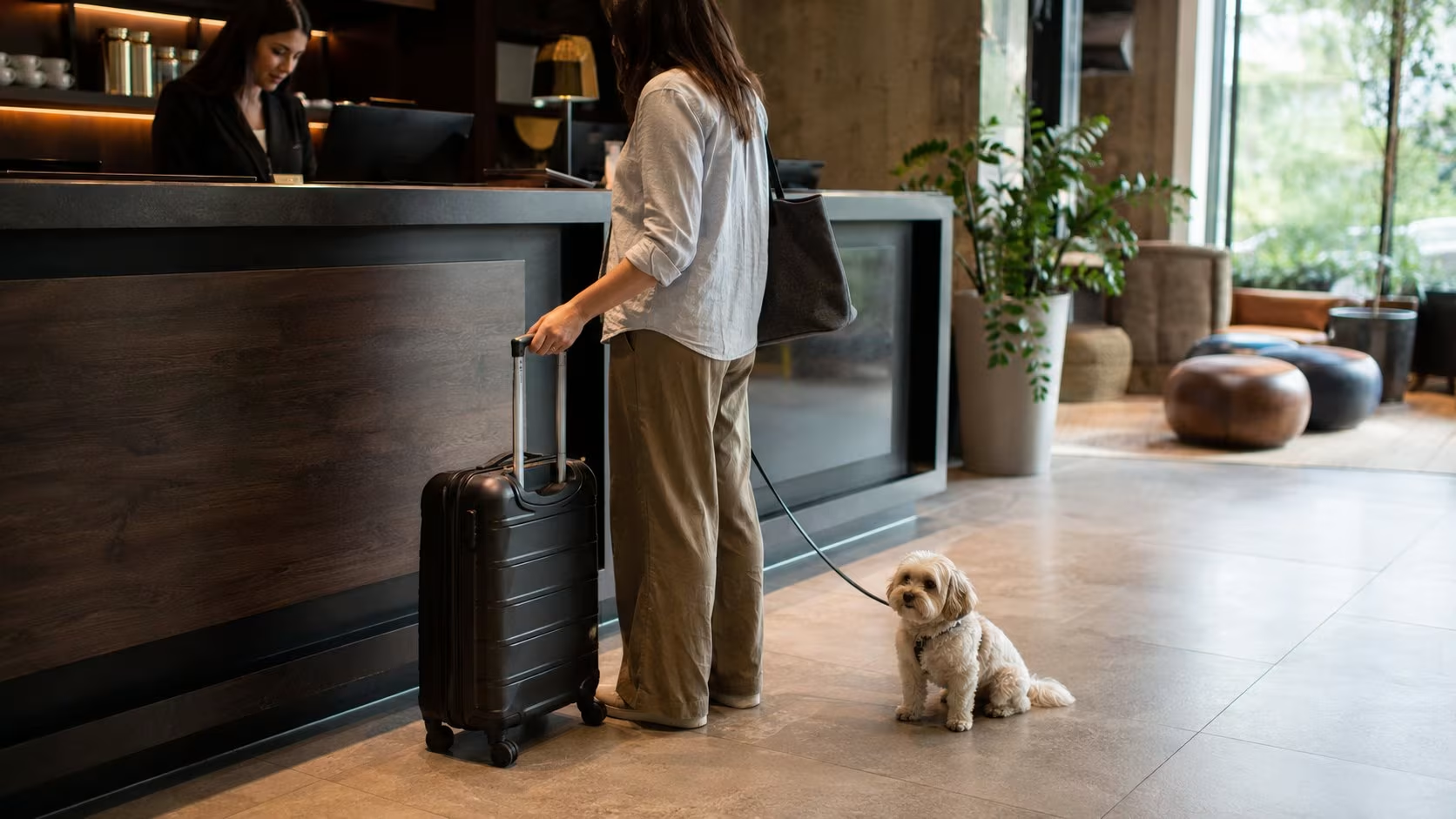
A hotel is three legal spaces stacked in one building. The lobby, restaurant and gym are public accommodations governed by the ADA. The guest room is closer to short-term lodging, where the property's own contract governs. The parking lot and pet relief area are usually just property rules. That is why a front desk can welcome a dog at check-in and a restaurant manager can turn the same dog away at breakfast, and the wider version of that problem is covered in whether ESA dogs are allowed in public places.
The ADA FAQ on service animals gives hotel-specific examples. A guest with a disability who uses a service animal must be allowed the same chance to reserve an available room as other guests, cannot be limited only to pet-friendly rooms, and cannot be charged a cleaning fee just because of the service animal. The hotel can charge for actual damage if it normally charges guests for damage.
Hotel staff are not allowed to demand a certificate, service-dog ID, medical record, or demonstration of the dog's task. If the service is not obvious, staff may ask only two ADA questions: whether the dog is required because of a disability and what work or task the dog has been trained to perform. A dog that provides comfort by presence alone is not a service dog under this rule.
The line that decides a hotel stay is training, not diagnosis. A psychiatric service dog trained to interrupt a panic episode, retrieve medication, or wake a handler from a night terror is a service dog, and the same mental health condition with an untrained emotional support dog is not. Two guests can have identical medical files and different rights at the same front desk. Cross a border and the categories change again, as traveling with a service dog in Europe shows.
Ordinary pet rules a hotel may apply
If the dog is an ESA rather than a service dog, the hotel may ask ordinary pet-policy questions: weight, breed, vaccination status, number of dogs, whether the dog can be left alone, whether a crate is required, and whether there is a pet fee. The hotel may ask for a signed pet agreement. It may also restrict the dog from restaurants, pools, gyms, breakfast rooms, or shuttle vehicles.
An ESA letter from a clinician may help explain the traveler's need, but it does not force a no-pet hotel to accept the dog under ADA public-accommodation rules. Some hotels may still make an exception, especially for a quiet dog and a returning guest. Others will follow the written pet policy without discussion.
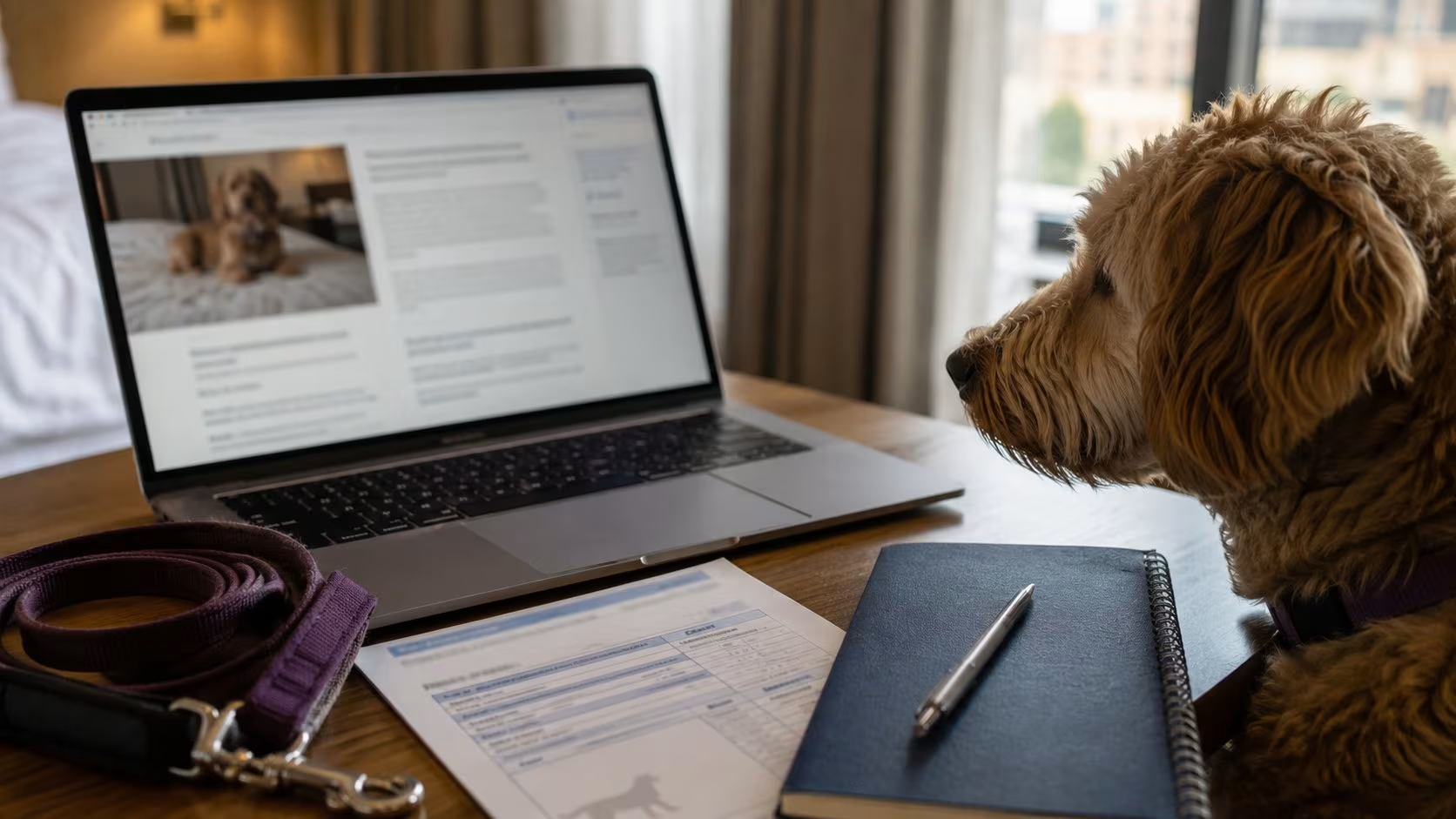
A vest or an online certificate buys nothing at a front desk, and an agent who has already been shown two of them that week will read a third as a reason to look harder rather than less hard. One sentence does the work instead: "This is an emotional support dog, not a service dog. Do you have pet-friendly rooms available, and what are the fees and rules?" Naming the category first tells the agent which rulebook to open, and it keeps the guest clear of the state statutes that make claiming service-dog status for a pet an offense.
| Limit | What it usually looks like | Why it matters |
|---|---|---|
| Weight | A per-dog cap, often combined across animals | The most common reason a confirmed booking fails at check-in. Ask for the number, not whether the dog is "small enough" |
| Number of animals | One or two per room | Two ESAs in one room is the case most likely to be refused. See the separate question of how many animals one person can reasonably keep |
| Room type | Dogs restricted to specific floors or wings | Often means no connecting rooms, no suites and no upper-floor views, which matters if the trip is not solo |
| Unattended in the room | Frequently prohibited outright, sometimes allowed if crated | Decides whether the trip works at all. A dog that cannot be left alone rules out any plan that involves a restaurant or a meeting |
| Off-limits areas | Restaurant, breakfast room, pool, gym, shuttle | An ESA has no ADA right to any of these. A trained service dog does |
| Documentation | Vaccination record, signed pet agreement | The property may require these of a pet guest. It may not require an ID or certificate from a service-dog handler |
Calling ahead to confirm the actual policy
Online booking filters can be outdated. Call the exact hotel, not only the national reservation line, and write down the name of the employee, date, and policy quoted. Ask whether dogs are allowed, whether emotional support dogs are treated under the pet policy, the nightly fee, the weight limit, room restrictions, cleaning rules, and whether the dog may be left unattended.
Ask about practical details too. Is there a grass area? Are there elevator restrictions? Are rooms with outside doors available? Is housekeeping required daily? Can the front desk note that a dog is in the room?
Advice written before 2021 is actively wrong on the travel half of this, because the Department of Transportation rule that let airlines treat ESAs as pets took effect on January 11, 2021 and the major US carriers dropped ESA acceptance within weeks. Anything older than that describing a free ESA seat in the cabin should be ignored, and traveling with an emotional support dog via flight covers what replaced it.
Even a sweet emotional support dog may bark at hallway sounds, scratch the door, pace all night, or panic when left in a strange room. Take the dog into elevators, walk calmly through busy entrances, reward quiet settling on a mat, and rehearse short stays in unfamiliar rooms if possible.
Pack a bed, crate or pen if the dog accepts one, food, bowls, medication, waste bags, cleaning wipes, vaccination proof, flea prevention details, and a towel. Bring a white-noise app or small fan if hallway sound triggers barking. Feed and walk the dog before check-in so the first hotel experience is not a burst of pent-up energy.
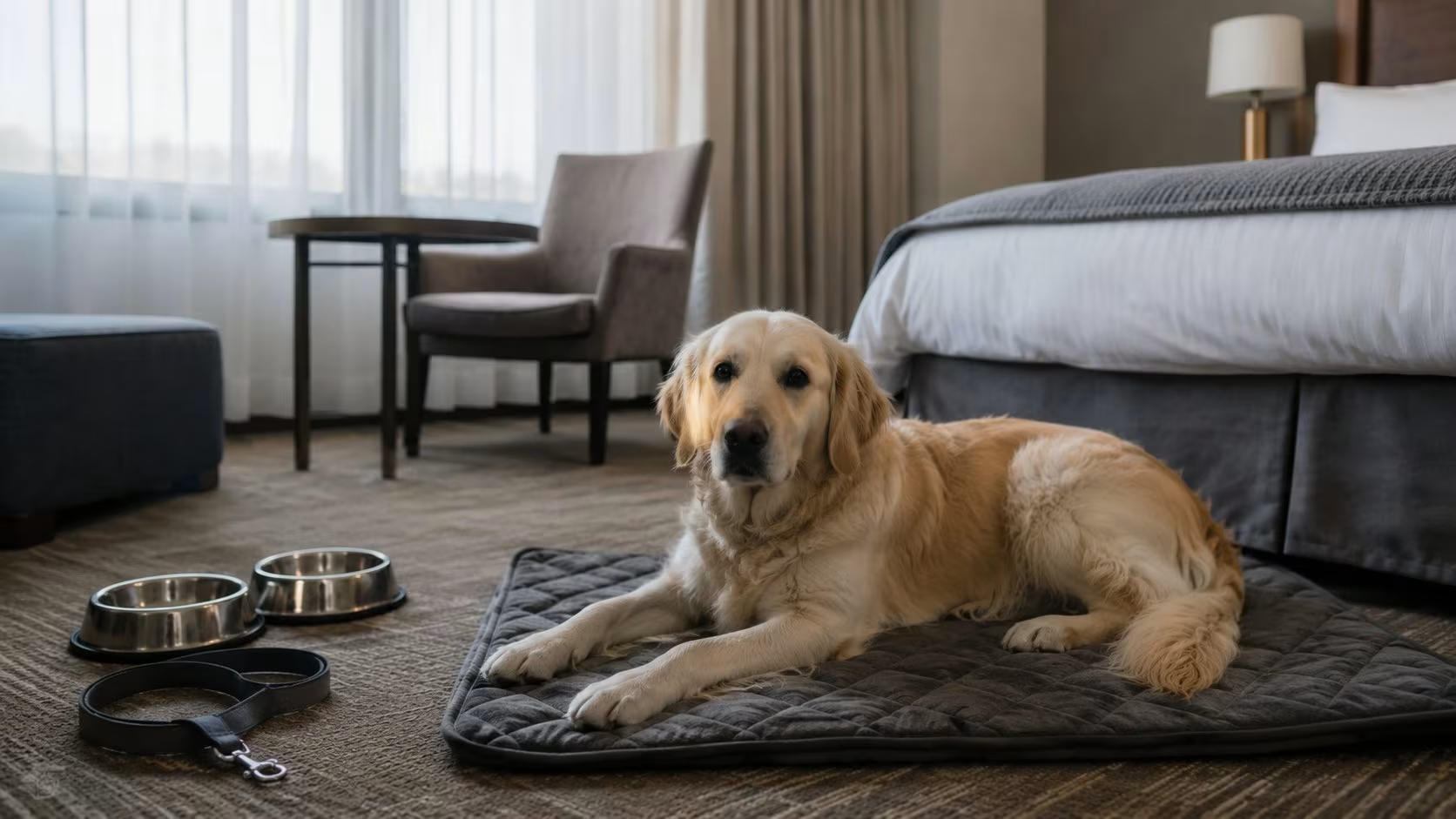
If your dog is likely to bark when alone, do not leave the dog alone. A hotel can ask a guest to address noise, disruption, or property risk even in pet-friendly rooms. The emotional support label does not excuse damage, unsafe behavior, or complaints that the owner ignores.
How pet fees differ for service dogs
For an ESA, pet fees are usually allowed because the hotel is treating the dog as a pet. Some properties charge a flat fee, some charge per night, and some charge a refundable deposit. Ask whether tax is added and whether the fee covers cleaning or only permission to bring the dog.
For a true service dog, a hotel may not charge a pet fee or cleaning fee because the dog is not a pet under ADA rules. The hotel may charge for actual damage if it has the same damage rule for other guests. This difference is one reason travelers should not blur the categories. Claiming ESA status as service-dog status can create conflict and can harm travelers who rely on trained service animals.
If money is tight, search for genuinely pet-friendly properties rather than arguing at check-in. Budget hotels, extended-stay hotels, vacation rentals, and some boutique properties may be more flexible than a luxury no-pet hotel. Read the current policy because chains often vary by location.
| Charge | Emotional support dog | Trained service dog |
|---|---|---|
| Nightly pet fee | Yes. Commonly around $25 to $75 per night at pet-friendly properties | No. The dog is not a pet under the ADA |
| Flat fee per stay | Yes. Commonly around $50 to $150 | No |
| Refundable deposit | Yes, and some properties use this instead of a fee | No |
| Cleaning fee because an animal was in the room | Yes | No |
| Charge for actual damage | Yes | Yes, if the property charges other guests for damage on the same terms |
| Restricted to pet-friendly rooms | Yes | No. The guest gets the same choice of available rooms as anyone else |
Two questions are worth asking before the card goes down. Is the fee per night or per stay, since on a five-night trip that is the difference between roughly $125 and roughly $75. And is the fee taxed, because at many properties it is treated as a room charge and appears on the folio with tax added.
Behavior expectations that keep a stay smooth
A hotel may remove or refuse an animal that is out of control, aggressive, destructive, not house-trained, or a direct threat. For ESA dogs, ordinary pet behavior rules apply from the beginning. For service dogs, ADA access still depends on the handler keeping the dog under control and housebroken.
Good hotel behavior looks boring: the dog walks on a short leash, ignores other guests, rides elevators calmly, settles on a mat, toilets outside, and stays quiet overnight. If the dog is fearful around strangers, choose ground-floor rooms, quieter properties, and short trips until the dog has more training.
A dog that can hold a down-stay on a mat for twenty minutes in a busy place is ready for a hotel. A dog that cannot is going to be tested by a housekeeping cart at 9 a.m. on the first morning. If the trip involves a flight as well, planning to take an ESA dog on a flight covers the part that has to be booked weeks earlier.
Species narrows the options further. Under the ADA a service animal can only be a dog, with miniature horses covered in limited cases, so emotional support cats can never reach service-animal status no matter how they are documented. Hotels compound it: many pet-friendly programs are written for dogs only, and a cat that is welcome at one property in a chain is refused at the next. Owners flying with one should read taking emotional support cats on a flight, since carriers apply their own species rules on top.
International travel adds another layer. Vaccines, microchips, import papers, quarantine rules, airline carrier rules, and hotel policies can all apply at once. Do not assume an ESA letter that helped in one setting will work in another country, airline, or hotel chain.
- Walk the dog before you park, not after you check in. The first ten minutes in a new building are the worst time to discover the dog needs to go out.
- Take the dog into the room before the luggage. Let it walk the perimeter on leash, then put the mat or bed down in the spot furthest from the door.
- Feed in the room on the first evening. A dog that has eaten somewhere tends to treat it as a place it lives rather than a place it is trapped.
- Tell the front desk there is a dog in the room and ask them to note it. Housekeeping opening a door onto a loose dog is how good stays end.
- Hang the do-not-disturb sign and decline daily housekeeping. Fewer strangers at the door means fewer chances to bark.
- Test being alone in short pieces before you need it. Leave for two minutes, then ten, then thirty, and listen from the hallway. If the dog barks at two minutes, it will bark at thirty.
- Run a fan or a white-noise app against hallway sound. Corridor traffic and elevator chimes cause more hotel barking than anything inside the room.
- Sweep the room for hazards before you relax: exposed cables, a minibar within reach, a gap under the bed, and whatever the last guest dropped.
Planning honestly for an ESA hotel visit
The practical shape of an ESA hotel stay is this. You are a pet guest with a fee, a weight limit and a shorter list of rooms, and the letter in your bag changes none of that. What it does change is the conversation, because a guest who says emotional support dog rather than service dog gets a straight answer about the pet policy instead of a defensive one about the ADA. Book the property that already wants dogs, get the fee in writing, arrive with a tired dog, and the category stops mattering for the rest of the stay.




0 Comments
No comments yet. Be the first to share your thoughts!
Leave a Comment