

An emotional support dog needs household reliability, not task work: settling on a mat, staying quiet in hallways, tolerating grooming and vet handling. None of that creates public access, and manners training alone never converts an ESA into a service dog. After HUD's 2026 enforcement shift, only individually trained task work carries legal weight in housing.
Training a dog to be an emotional support animal is mostly about manners, stability, and daily reliability. An emotional support dog is not automatically a service dog, and comfort alone does not create public access rights under the ADA. The dog still needs to be safe, clean, quiet, and manageable.
A good emotional support dog helps by being calm and predictable for its owner. That comes from temperament, health care, socialization, reward-based training, and realistic boundaries.
ADA task training versus comfort alone
The ADA's official service animal FAQ defines a service animal as a dog individually trained to do work or perform tasks directly related to a person's disability. Emotional support, comfort, or companionship alone is not the same as task training under ADA public access rules.
This distinction protects disabled handlers who rely on trained service dogs and helps ESA owners avoid misrepresenting a pet. A dog can be deeply helpful at home without being allowed everywhere a service dog can go.
Training and paperwork answer different questions, and a landlord will ask the paperwork one first. What the dog can do in a hallway matters at the moment a neighbor complains, not at the moment the lease is signed, which is why what ESA housing rules are is worth reading before the request rather than after the refusal.
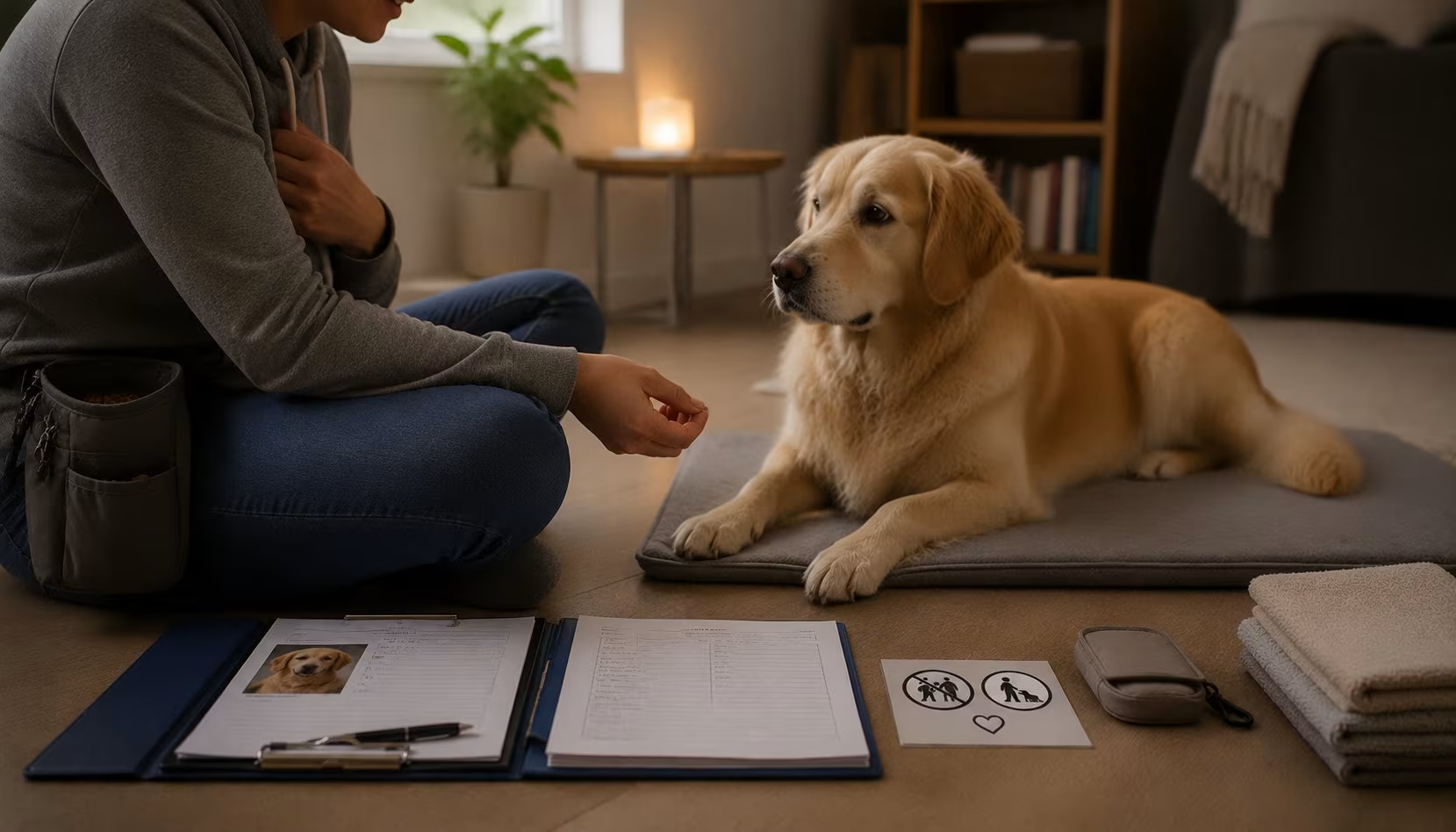
Housing rules are separate from ADA public access rules, and the housing side moved recently. HUD withdrew its 2013 and 2020 assistance-animal guidance on September 17, 2025, and on May 22, 2026 its fair-housing office told staff to stop pursuing complaints in which the animal is an untrained emotional support animal. Only individually trained service animals are now presumed exempt from pet policies and pet fees at the federal level. Tenants in subsidized housing should still start at HUD's page for housing choice voucher tenants for the program rules, but the animal question now runs through state and local fair-housing law, which the memo did not touch. What the emotional support animals letter has to contain is set by those state rules more than by federal ones.
Avoid online certificates that promise instant access. Documentation should come from an appropriate healthcare provider when legally needed. A vest, badge, or registration website does not turn a dog into a service dog.
Not every dog is suited to emotional support work. The dog should recover from normal household noises, enjoy gentle handling, tolerate routine care, and not show serious aggression, panic, or uncontrolled reactivity. A fearful or overwhelmed dog should not be pushed into a support role.
Before you train a behavior problem, rule out pain. A dog that has started snapping during grooming, resisting a collar, or refusing to settle at night is often telling you about ears, teeth, hips or skin, and no amount of mat work will fix that. The sequence is a vet exam first, then the training plan, which is the reason common dog health problems belongs at the start of an ESA plan rather than the end.
Training used to be a nice-to-have on the legal side and a requirement only on the service-dog side. That gap narrowed in 2026. Since HUD's enforcement memo of May 22, 2026, federal fair-housing staff treat individually trained service animals as presumed exempt from pet policies and pet fees, and step back from complaints involving untrained emotional support animals. The word doing the work is trained.
That does not mean an ESA owner should go looking for a task to invent. A task has to be trained, it has to be something the dog does on cue or on a reliable trigger, and it has to address a specific limitation the person actually has. A dog that lies down next to someone who is crying is not performing a task. A dog trained to fetch a phone during a panic episode, to interrupt repetitive self-harming movement with a nose touch, to lead a disoriented handler to an exit, or to wake a person from a night terror is. If one of those is genuinely relevant to the owner's condition, the honest route is to train it to reliability and be a service-dog handler. If none of them is, the honest route is an ESA with excellent manners and no public-access claims.
Teaching a calm mat settle cue
Four behaviors carry almost all the weight for an ESA, and the rest are optional. A dog that comes when called, walks without pulling, leaves food on the floor alone, and lies down on a mat until released can live in an apartment building without generating complaints. Sit and shake are irrelevant to that. Put the training hours into the four, in short sessions of five minutes, several times a day, rather than one long session on a weekend.
The AKC Canine Good Citizen program describes a 10-skill test focused on good manners and responsible ownership. Passing CGC is not required for ESA status, but the skills are a useful benchmark.
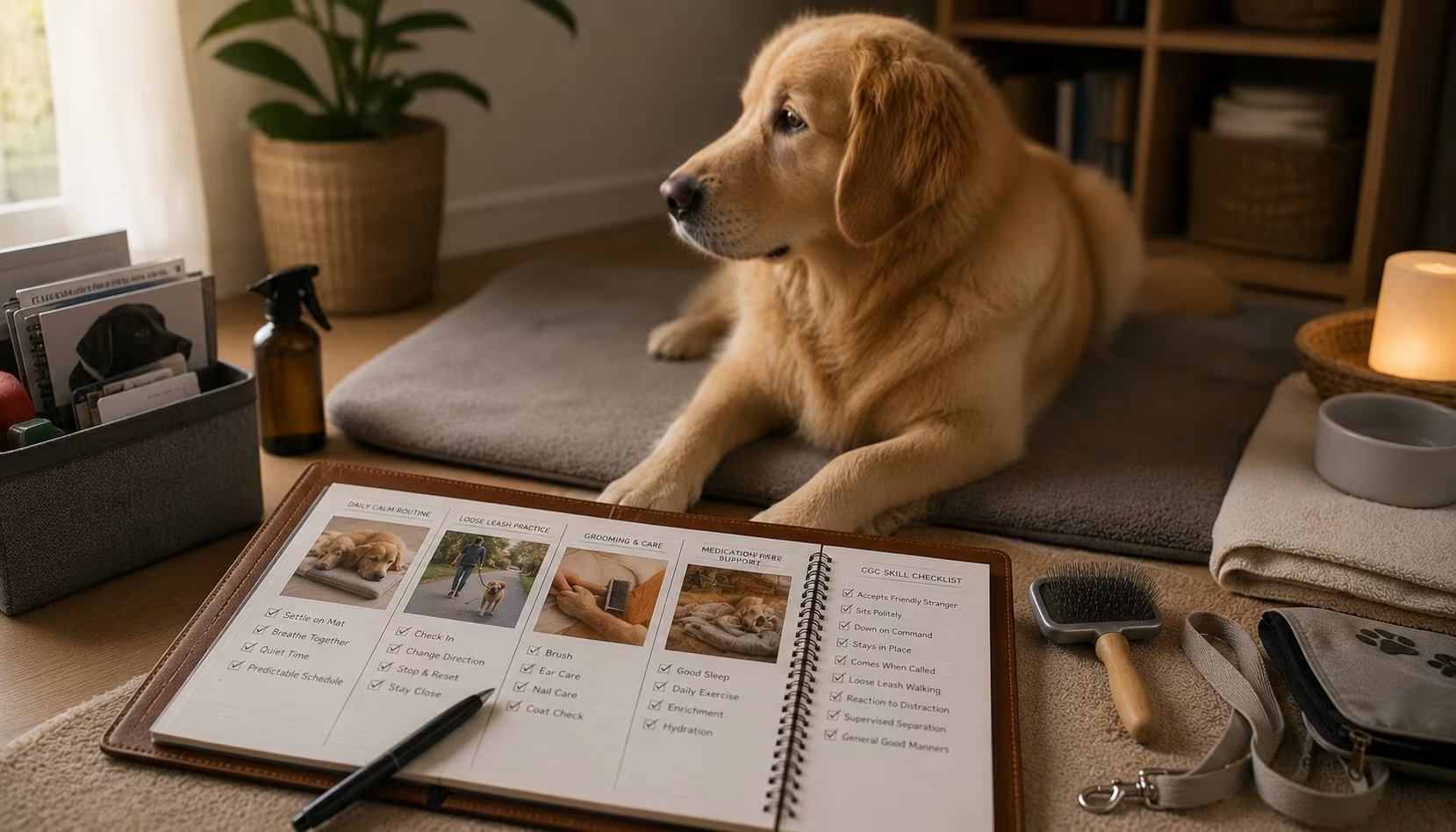
A support dog should be able to rest while the owner reads, works, sleeps, or has a hard moment. Teach a mat cue by rewarding the dog for lying down, relaxing the hips, resting the chin, and staying calm as the owner moves around.
Do not train the dog to become frantic whenever the owner is upset. Reward calm presence, gentle pressure only if the dog enjoys it, and moving away when cued. The dog needs agency and rest too.
Even without broad public access rights, an ESA may need good manners in pet-friendly places, building common areas, elevators, vet clinics, and travel situations where pets are allowed. The dog should not bark at people, rush other dogs, steal food, jump on strangers, or eliminate indoors.
Method matters more here than in ordinary pet training, because the whole point of the dog is that the owner's presence is calming. A dog that has learned to expect a correction when the owner's voice changes will start reading distress as a warning sign and leaving the room, which is the opposite of the behavior the arrangement depends on. That is the case for positive reinforcement dog training in this specific context, not just as a general preference.
- Put a mat down and mark and reward any interaction with it: a look, a paw, a step. Do not cue anything yet. Two or three sessions of two minutes.
- Reward only four feet on the mat, then only a down on the mat. Deliver every treat between the dog's front paws so the mat becomes where good things land.
- Count silently and reward at three seconds, then five, then ten. If the dog gets up twice in a row, you went too fast. Drop back to the last count that worked.
- Wait for the physical signs of actual relaxation rather than compliance: hip rolled to one side, chin down, a long exhale, ears loose. Reward those specifically, calmly, without excitement in your voice.
- Add a release word so the dog knows when it is off duty. Without one, the dog stays on watch and never fully rests.
- Start moving. One step away and back, then across the room, then out of sight for two seconds. Return before the dog breaks, not after.
- Add the household noise that actually happens: the kettle, the TV, a phone ringing, footsteps upstairs. One new thing per session.
- Move the mat. Kitchen, bedroom, hallway, then a friend's living room. A settle that only works in one room is not a settle.
- The target is thirty minutes on the mat while you work, without a treat every minute. Expect several weeks, not several days.
Building predictable daily routines
Build routines around feeding, walks, rest, grooming, medications, and quiet time. If the owner has difficult mornings or panic episodes, the dog should still have water, bathroom breaks, and a backup caregiver plan.
There is a useful line to notice here. Teaching a dog to shut a door, as in training a dog to close doors, is trick training if the owner just likes it, and task training if the dog is trained to do it because the handler cannot. The behavior is identical. What changes its legal status is whether it is trained to address a specific disability-related limitation, and that is the whole distance between an ESA and a psychiatric service dog.
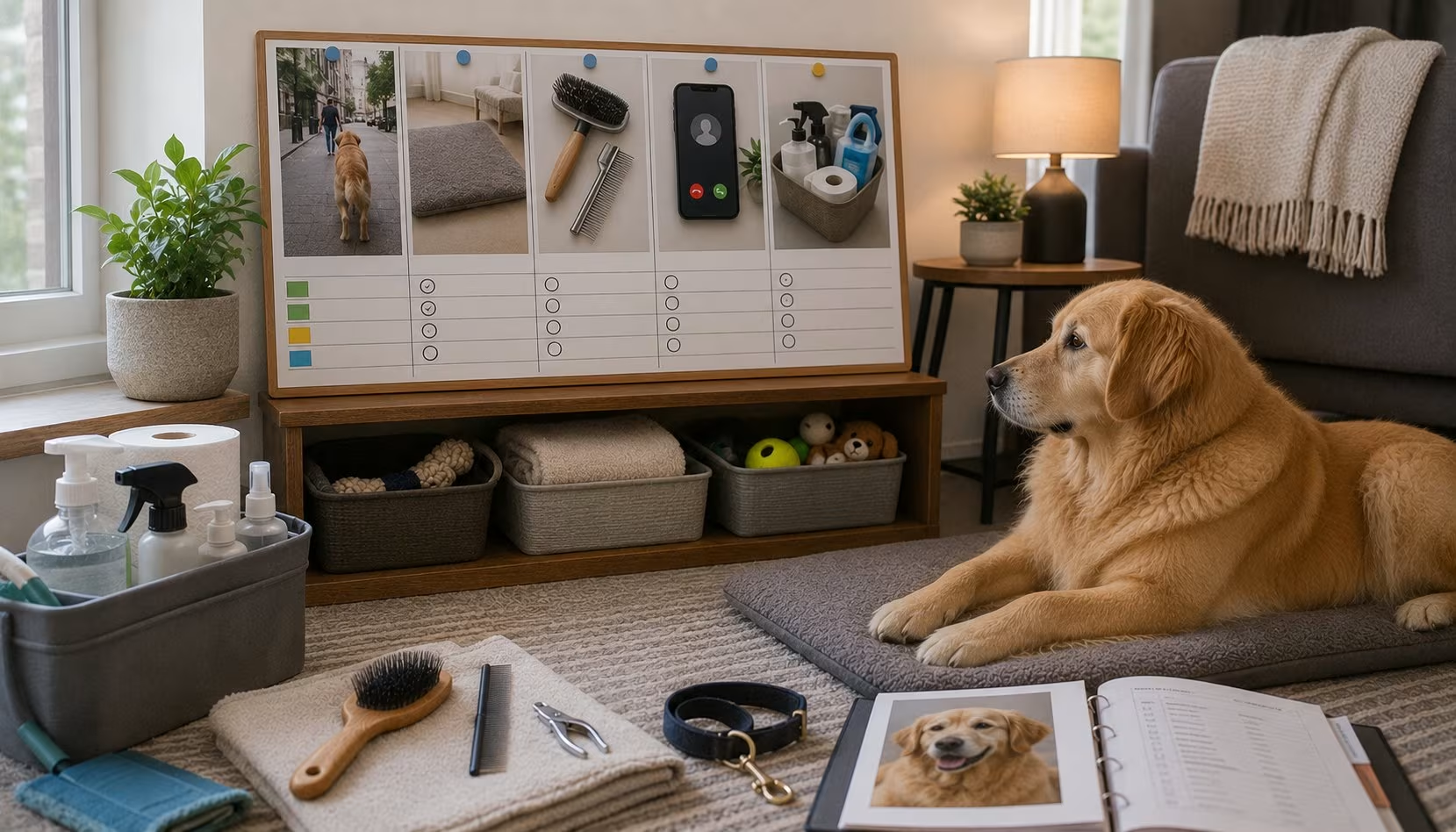
A support dog should tolerate brushing, nail trims, ear checks, bathing, collar handling, and vet care. Teach cooperative handling with rewards. Touch paw, reward. Lift ear, reward. Show brush, reward. Stop before the dog struggles.
If the dog guards its body, bites during grooming, or panics at the vet, get professional help. A dog under chronic stress cannot provide steady support without its own welfare suffering.
Separation anxiety, aggression, resource guarding, uncontrolled barking, house soiling, and severe fear need a behavior plan. Do not label the dog as an ESA to get around rules while problems remain untreated. That creates risk for the owner, the dog, neighbors, and legitimate assistance animal handlers.
Some dogs cannot learn while they are that far over threshold, and for those a vet may prescribe anxiety medication so that training can start at all. That is the order that works: medication lowers the arousal, the behavior plan does the teaching. Pet calming medications covers what a vet is likely to consider, and none of it is a substitute for the plan.
| Day | Focus | Time | What success looks like |
|---|---|---|---|
| Monday | Mat settle, indoors, no distractions | Three sessions of five minutes | Ten minutes down with the owner seated nearby |
| Tuesday | Cooperative handling: paws, ears, collar, brush | Two sessions of three minutes | Dog stays in position and takes food between each touch |
| Wednesday | Hallway and elevator manners | Two trips | Loose leash past a door, sits while the elevator opens, no vocalizing |
| Thursday | Mat settle with household noise added | Three sessions of five minutes | Holds the settle through one kettle, one doorbell recording, one dropped book |
| Friday | Loose leash past distractions: another dog at distance, a jogger, a stroller | One twenty-minute walk | Dog notices, looks back at the owner, keeps walking |
| Saturday | Alone-time practice in graded steps | Two minutes, ten minutes, thirty minutes | Silence at the door. If there is barking at two minutes, the whole week restarts here |
| Sunday | Nothing. Sniffing walk, no cues, no training | Forty minutes | A day off is part of the plan, not a gap in it |
Balancing the dog's own welfare needs
An emotional support dog is still a dog, not medical equipment without needs. The dog needs sleep, play, sniffing, veterinary care, consent-based handling, and time off. If the owner depends heavily on the dog, a human care network still matters.
Misrepresentation can damage access for disabled people and create conflict for the handler.
Socialization should mean good experiences, not flooding. Let the dog see people, surfaces, elevators, traffic, grooming tools, and vet handling at a distance where it can eat and think. Reward calm observation. Leave before the dog becomes overwhelmed.
A support dog does not need to greet everyone. Neutral behavior is often better than social excitement. Teach the dog to ignore strangers, walk past other dogs, and settle while people move around.
Many ESA conflicts start in hallways, elevators, laundry rooms, and outdoor potty areas. Teach quiet door exits, waiting at thresholds, loose walking in narrow spaces, and calm elevator behavior. Carry cleanup bags and clean accidents immediately.
If barking is a problem, track triggers and time of day. Barking at every hallway sound may need management, enrichment, sound masking, and a trainer, not only a warning from the landlord.
Backup care if the owner is hospitalized
The dog should not be the owner's only support. Build a plan that includes healthcare providers, family or friends if available, crisis resources, and backup pet care. If the owner is hospitalized or overwhelmed, the dog still needs food, walks, medication, and safe housing.
Keep vet records, vaccination proof, parasite prevention, microchip information, and emergency contacts organized. Good records help with housing requests, travel planning, and routine care.
If the dog hides, growls, stops eating, startles constantly, sleeps poorly, or avoids the owner during emotional episodes, the role may be too stressful. A support animal should not be required to absorb human distress without rest.
Work with a trainer or behavior professional if the dog struggles. In some cases, the kindest answer is to let the dog remain a pet while the owner seeks other support tools.
An emotional support dog supports its owner. A therapy dog visits other people in schools, hospitals, libraries, or care facilities through an organized program. A service dog performs trained disability-related tasks for its handler.
If the goal is therapy work, look for a recognized therapy dog organization with evaluation standards, health rules, insurance structure, and visit protocols. If the goal is service work, the training must focus on specific tasks and public reliability.
Practicing recovery after mild surprises
Use a weekly plan rather than random practice. One day can focus on mat settle, another on grooming, another on loose leash work, and another on quiet hallway manners. Keep sessions short and reward calm choices often.
Track what the dog can do during real life: stay quiet during a delivery, pass a neighbor dog, settle while the owner makes a call, or relax during a difficult evening. These are better measures than whether the dog knows many tricks.
A support dog should recover after surprises. Practice with mild noises, dropped objects, visitors, and routine changes at a level the dog can handle. Reward the dog for checking in and settling again.
If the dog stays upset for hours after small events, the training plan should slow down. Emotional support work should build confidence, not stretch the dog past its limits.
Keep the dog current on wellness exams, vaccines, parasite prevention, dental care, and grooming. A dog with itchy skin, sore ears, bad teeth, or pain may become restless or reactive.
If the owner has days when care is hard, a backup person should know the routine. Support dogs still need consistent bathroom breaks, food, medication, and exercise.
Honest limits of an ESA role
Here is the test that matters more than any of the exercises above. On the owner's worst day of the month, does the dog still get fed, walked and let out, and does the dog come toward the owner rather than away? If the answer to the first is no, the plan needs a second person in it. If the answer to the second is no, the dog is absorbing more than it can carry and the training is not the problem. Everything else in this article is in service of those two questions.





0 Comments
No comments yet. Be the first to share your thoughts!
Leave a Comment