

Settle three things before adopting. What the dog is meant to help with, what you can spend on it during a bad month, and what your building actually requires. Temperament beats breed, and an adult dog with a known history beats a puppy for anyone who needs stability now. The ESA label itself changes almost nothing outside housing.
Planning to get an ESA dog should start before adoption. An emotional support dog can add routine, companionship, grounding, and motivation, but the dog is also a living animal with needs, costs, behavior, health care, and legal limits. A rushed adoption can increase stress for the person and the dog.
An ESA dog is not a shortcut to public access, free travel, or avoiding every pet rule. It should be a realistic support relationship in a specific setting, most often housing. The dog should fit the person's symptoms, lifestyle, housing, budget, physical ability, and backup care plan.
Legal limits on public access and air travel
The ADA service animal FAQ says comfort-only emotional support animals are not service animals under ADA public-access rules. A psychiatric service dog is different because it is trained to perform disability-related tasks. If the dog is not task-trained, do not call it a service dog.
Air travel closed on a date. The Department of Transportation's final rule under the Air Carrier Access Act took effect on January 11, 2021, and its service animal guidance now recognizes only trained service dogs, carried on the DOT Service Animal Air Transportation Form. American, Delta, United, Southwest, JetBlue and Alaska all ended emotional support animal acceptance that year. A dog that fits under the seat flies as a pet for roughly $95 to $150 each way. A dog that does not fit may not fly in cabin at all, which is worth knowing before you choose a size. If flying matters to you, read how we cover support animals and mental health alongside the travel pages.

Housing is where the request actually happens, and it moved twice recently. HUD withdrew its 2013 and 2020 assistance animal guidance on September 17, 2025. On May 22, 2026 its fair housing office issued an enforcement memo, effective immediately, telling staff to stop pursuing complaints where the animal is an untrained emotional support animal, and to treat only individually trained service animals as presumptively exempt from pet policies and pet fees. State and local fair housing laws are untouched by that memo. So before adopting, find out two things about your building: whether your state protects assistance animals in housing, and whether the building is one of the exempt kinds, an owner-occupied property with four or fewer units or a single-family home rented without an agent.
A good ESA match is about temperament, not cuteness. A person with anxiety may benefit from a calm dog who settles easily. A person needing routine may do well with a dog who enjoys predictable walks. A person with low energy may struggle with a high-drive adolescent herding dog. A person with mobility limits may need a smaller or older dog rather than a powerful young dog.
Write down what the dog is expected to support. Sleep routine? Leaving the apartment? Grounding during panic? Reducing isolation? Adding daily structure? The answer guides age, size, energy level, grooming, noise tolerance, and training needs.
Budget the first vet visit into the adoption itself, not the month after. Shelter and rescue dogs commonly arrive needing a fecal check and deworming, and an untreated parasite load shows up as the diarrhea and lethargy that new owners mistake for stress from the move. Our page on roundworm treatment in dogs covers what that involves.
Budgeting for veterinary and daily care costs
An ESA dog needs food, veterinary exams, vaccines, parasite prevention, license, grooming, training, supplies, emergency care, boarding or pet sitting, and possible behavior help. Adoption fees are only the start. A dog who becomes ill can quickly create costs that strain the person the dog is meant to support.
Build a monthly and emergency budget before adoption. If money is tight, look for low-cost clinics, pet insurance, wellness plans, savings options, or community support before the dog arrives. Do not assume a housing accommodation removes normal dog-care costs.

If the dog is needed for housing, ask what process applies before adoption when possible. Some housing providers have forms. Some request reliable information from a licensed professional if the need is not obvious. Some state laws regulate ESA letters. A fake registry certificate is weak and may backfire.
A credible letter should connect the person, disability-related limitation, and support dog in the housing context. It should not claim the dog can enter every public place or fly as a service animal. Keep dog health records separate from accommodation documentation.
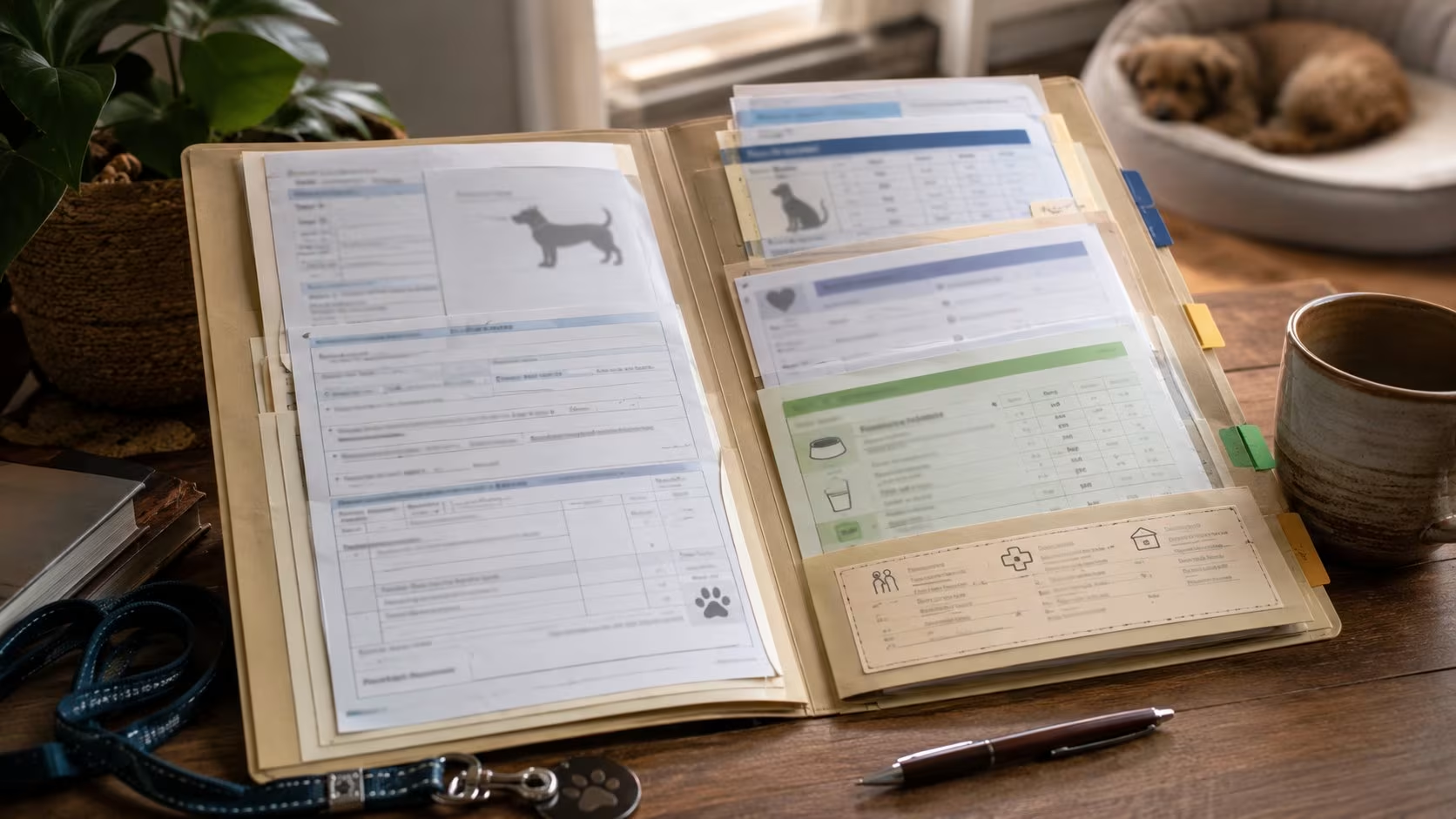
Keep the two files apart. Vaccination records, microchip papers and the dog's medical history belong in a care folder; the accommodation request needs only the clinician's letter about you. Sending a landlord a stack of veterinary paperwork does not strengthen the request and buries the one document that matters. The care folder earns its keep elsewhere, for instance when a dog will not leave a healing wound alone and you need the vet's instructions to hand, which we cover in preventing a dog from licking a wound.
An ESA dog does not need service-dog task training, but it does need manners. The dog should be house-trained, controllable on leash, safe around people and animals, able to settle, and comfortable being handled. Barking, destructive behavior, biting, and separation distress can turn a support plan into a housing conflict.
Adopt with behavior history when possible. Meet the dog more than once. Ask about noise, fear, other animals, children, crate history, leash skills, and medical issues. If adopting a puppy, expect months of training, accidents, chewing, and sleep disruption. A puppy may not be the best immediate support for someone already overwhelmed.
Ask specifically about chronic conditions, not just current health. A dog with ongoing respiratory disease, for instance, may need medication for life, cannot take long walks in heat, and will cost more than the adoption fee suggests, all of which changes whether the match works. Our page on COPD in dogs gives a sense of what a lifelong condition asks of an owner.
| Charge | Typical amount | Does the letter help? |
|---|---|---|
| Pet rent or pet deposit | Set by the building | Only where state or local law still exempts assistance animals. Federal enforcement stopped presuming an exemption for untrained ESAs in May 2026. |
| Flight, in cabin | About $95 to $150 each way | No. US carriers have treated ESAs as pets since 2021. |
| Hotel pet fee | Roughly $25 to $75 per night, or $50 to $150 per stay | No, unless the property chooses to waive it. |
| Boarding or a sitter while you travel | Per night, and higher around holidays | No. This is the cost people forget until the first trip. |
| Damage to the unit | Actual repair cost | No. An accommodation covers the dog's presence, never what it chews. |
| Food, prevention, routine and emergency veterinary care | Continuous, and the largest lifetime cost | No, and this is the line that decides whether the arrangement survives. |
Building a routine before the dog arrives
Plan daily routines before the dog comes home: morning bathroom break, feeding, medication if needed, walks, enrichment, grooming, quiet rest, and bedtime. Decide who can help during illness, hospitalization, travel, work emergencies, or mental health crises. A support dog should not be left without care when the owner needs help.
Write the care file for someone else to read, because that is who will read it. One page: the vet and the emergency clinic, what the dog eats and how much, any medication and its dose, the microchip number, and two people who have agreed to help. The week you cannot leave the apartment is the week this page does its job. Chronic conditions need their instructions written down rather than remembered, as anything long-running like lymphoplasmacytic rhinitis makes clear.
Wait if housing is unstable, the budget is not workable, the household disagrees, allergies are unmanaged, the person cannot provide daily care, or the chosen dog has behavior needs beyond the owner's capacity. Waiting is not failure. It prevents a rushed match that harms both sides.
Puppy versus adult versus senior tradeoffs
A puppy may seem appealing, but puppies need frequent bathroom breaks, training, nighttime care, chewing management, socialization, and veterinary visits. For someone who needs immediate emotional stability, a puppy can add more stress than support. Puppies can become excellent support companions later, but they do not arrive that way.
Adult dogs are often easier to evaluate. You can see size, energy level, social style, noise sensitivity, and handling tolerance. Senior dogs may be calm and affectionate, but they may need more medical care, ramps, dental work, or medication. The best choice is the dog whose real needs match the home.
Keep the first month quiet. Do not invite everyone to meet the dog. Do not start crowded public outings. Build a routine: bathroom, meals, sleep, gentle walks, short training, and rest. Let the dog decompress. Many behavior issues become clearer after the dog feels safe.
Book the first veterinary visit for the first week, before problems appear. Bring whatever paperwork came with the dog, and ask the vet to set a baseline weight, since weight change is the earliest signal you will get for most things that go wrong later. Storage matters more than people expect too: dry food kept warm and open can attract grain mites, which is a cheap problem to prevent and an unpleasant one to diagnose.
| Puppy | Adult, 2 to 7 | Senior, 8 and up | |
|---|---|---|---|
| Sleep | Broken for weeks. Night toileting is the norm at first. | Usually settled within days. | Settled, though some seniors wake more at night. |
| How predictable is the temperament | Unknown. What you meet at eight weeks tells you little about the adult dog. | Visible. Size, energy, noise sensitivity and social style are all on display. | Fully known, and usually the calmest option. |
| Training load | House-training, chewing, socialization, months of it. | Manners and any gaps from the previous home. | Light. Most know the basics already. |
| Main cost driver | Vaccination series, neutering, replacing what gets chewed. | Routine care. | Dental work, medication, more frequent visits. |
| Support available now | Little. The dog is the one needing support. | Immediate, once settled. | Immediate, with a shorter horizon. |
| Best fit for | A stable household with time and patience to spare. | Almost anyone who needs the arrangement to work this year. | Someone who wants company now and can face veterinary bills sooner. |
Questions to ask a shelter or breeder
Ask the shelter, rescue, breeder, or previous owner direct questions. Has the dog bitten anyone? How does the dog handle children, dogs, cats, men, visitors, grooming, crates, car rides, and being alone? Does the dog bark when left? Is the dog house-trained? What medical issues are known? What food is the dog eating?
Ask to see the dog settle after the first excitement of meeting. Many dogs are charming for ten minutes and then show a different energy level. If possible, walk the dog in a quiet area and watch recovery after seeing a trigger. A good ESA candidate does not have to be perfect, but the owner should know what work is coming.
If the dog is already home and the match feels wrong, get help in the first month rather than the sixth. Start with the vet, because pain masquerades as temperament more often than owners realize. Manners go to a reward-based trainer. Fear, aggression and separation distress go to a veterinary behaviorist, and separation distress in particular is a welfare problem to treat, not evidence of a close bond. Households that wait until everyone is exhausted end up choosing between worse options.
Returning a dog is painful, but sometimes it is kinder than keeping a dog in a home that cannot meet its needs. The goal is not to force the ESA label to work. The goal is a stable support relationship that is fair to both sides.
Keep the adoption paperwork, medical records, behavior notes, and housing correspondence in one folder. If a question comes up later, organized records reduce stress and help professionals give better advice.
- Visit twice, on different days. The dog you meet on a Saturday afternoon in a busy shelter is not the dog you take home.
- Watch for the settle. Give it ten minutes past the greeting and see whether the dog can lie down and switch off. A dog that never comes down from the greeting will not come down in your apartment either.
- Walk it somewhere quiet and watch a recovery. Let it see something startling, a bike, a stranger, another dog, and time how long it takes to return to normal. Recovery speed tells you more than the reaction did.
- Bring everyone who lives with you, including any resident animals if the shelter allows it. A match that works for one person and not the household is a return waiting to happen.
- Ask the questions that get avoided. Has this dog ever bitten? Why was it returned before? What happens when it is left alone, and has anyone actually tested that? Ask for the answers in writing where the rescue keeps records.
- Ask about a foster-to-adopt or a trial period. Many rescues offer one, and a fortnight in your actual apartment answers questions no meeting can.
Matching temperament to the household's needs
The dogs that work out are rarely the ones chosen from a photograph. They are the adult dogs whose owners knew what they were taking on, could pay for a bad year, and had somewhere to turn when it arrived. Get those three right and the paperwork is a formality. Get them wrong and no letter from any clinician will hold the arrangement together.





0 Comments
No comments yet. Be the first to share your thoughts!
Leave a Comment