

Yes, but only as a pet and only if the airline sells you a space. Since January 2021 no US carrier has to accept an emotional support cat, and none of the major ones do. Budget roughly $95 to $150 each way, book the pet space before the seat, and expect to carry the cat through security while the carrier is screened.
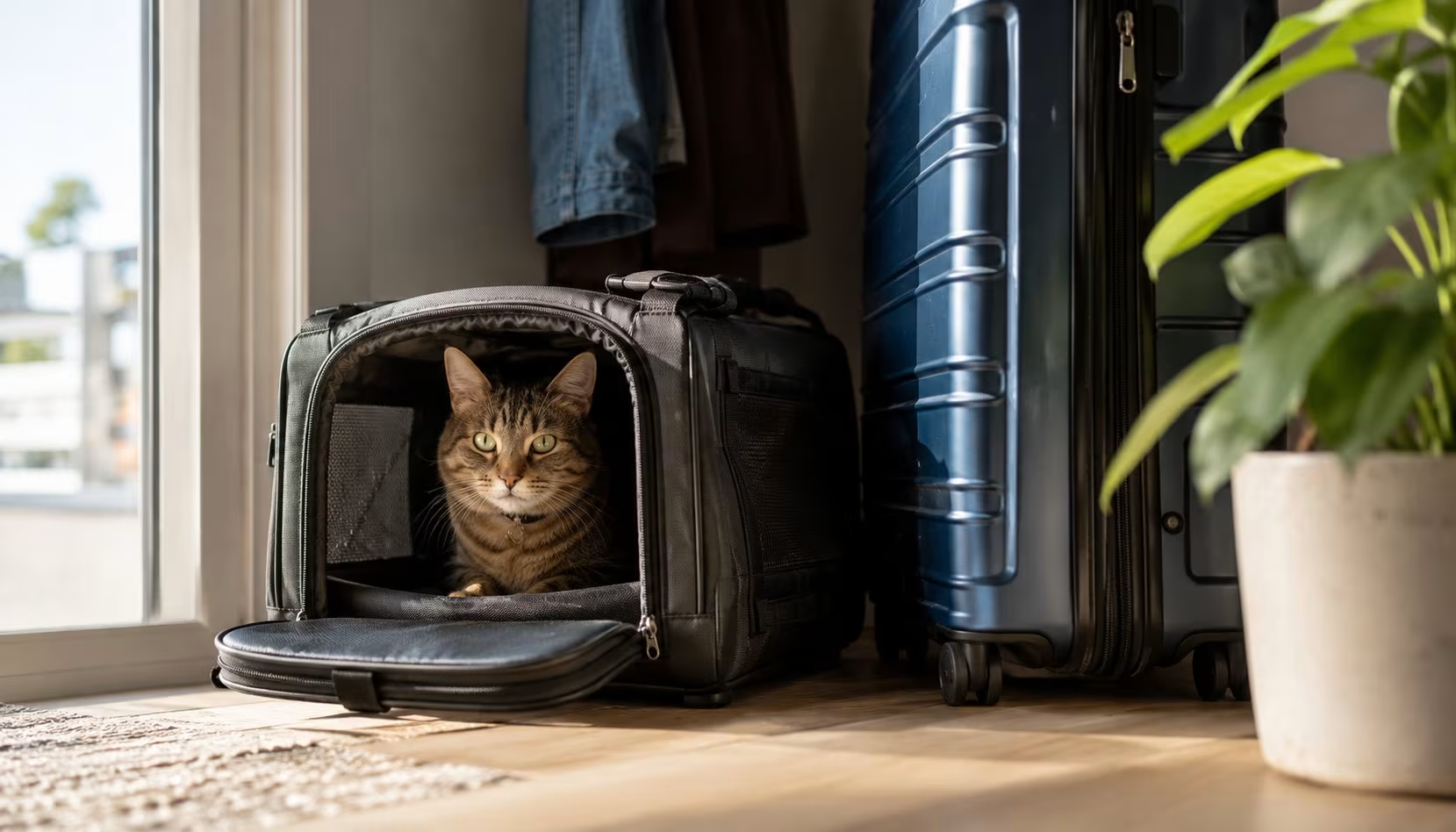
A cat can be deeply comforting in an airport hotel room, on the drive to the terminal, or after a hard landing day. That does not mean the cat has a federal right to sit in the cabin as an emotional support animal. Under current U.S. air-travel rules, emotional support cats are usually handled as pets if the airline accepts them at all. The successful trip starts with that fact, because the paperwork, fees, carrier size, and backup plan all change when the cat is traveling as a pet rather than as a recognized service animal.
Why cats do not qualify as service animals
The U.S. Department of Transportation's service animal guidance says that under the Air Carrier Access Act, a service animal is a dog individually trained to do work or perform tasks for a qualified person with a disability. It also says animal species other than dogs and emotional support animals are not service animals under that rule.
That advice went out of date on a specific day. DOT's Air Carrier Access Act final rule took effect on January 11, 2021, and American, Delta, United, Southwest, JetBlue and Alaska all stopped accepting emotional support animals during the months that followed. A mental-health letter still explains why the cat matters to you, and it will not move a check-in agent an inch. Emotional support cats now fly on the same terms as any pet: a fee of roughly $95 to $150 each way, a carrier that fits under the seat, and a place in the small per-flight quota of animals the aircraft will take.
Dog owners have one option here that cat owners do not. A dog trained to perform a task for a disability can still fly as a service animal, at no fee, using the DOT Service Animal Air Transportation Form, which is the fork described in planning to take an ESA dog on a flight and in the older guide to traveling with an emotional support dog via flight. There is no equivalent for a cat at any level of training. For a cat, the pet policy is the only door, which simplifies the planning considerably: stop reading about documentation and start reading carrier dimensions.
Confirming pet policy before booking
Airline pet rules vary by carrier, aircraft, route, destination, cabin, and season. Some allow cats in the cabin if the carrier fits under the seat. Some limit the number of in-cabin pets per flight. Some restrict pets in premium cabins or exit-row areas. International routes can add import rules, quarantine documents, microchip requirements, parasite treatments, or country-specific health certificates.
Call or use the airline's official pet-booking process before buying a nonrefundable ticket. Ask whether cats are allowed on that route, whether there is pet space on the exact flight, what the carrier dimensions are, what the fee is, whether the carrier counts as a personal item, and what documents are required. Then save the confirmation in writing if the airline provides one.
Codeshares can create trouble. The airline selling the ticket may not be the airline operating the aircraft. Pet policies follow the operating carrier, and a connecting itinerary may involve more than one set of rules. A flight that works on the first leg can fail on the second if the next carrier, country, or aircraft does not accept cats.
Choosing and training the carrier
Most in-cabin pet policies require a leak-proof, ventilated carrier that closes securely and fits under the seat. Soft-sided carriers often fit better, but exact dimensions matter. Measure the carrier when it is not collapsed, and check both length and height.
Start carrier training weeks before the trip if possible. Leave the carrier open at home with bedding inside. Feed treats near it, then inside it. Add short closed-door sessions, then brief car rides. A cat forced into a carrier for the first time at 4 a.m. on flight day is more likely to panic, soil the bedding, scratch, or vocalize through security.
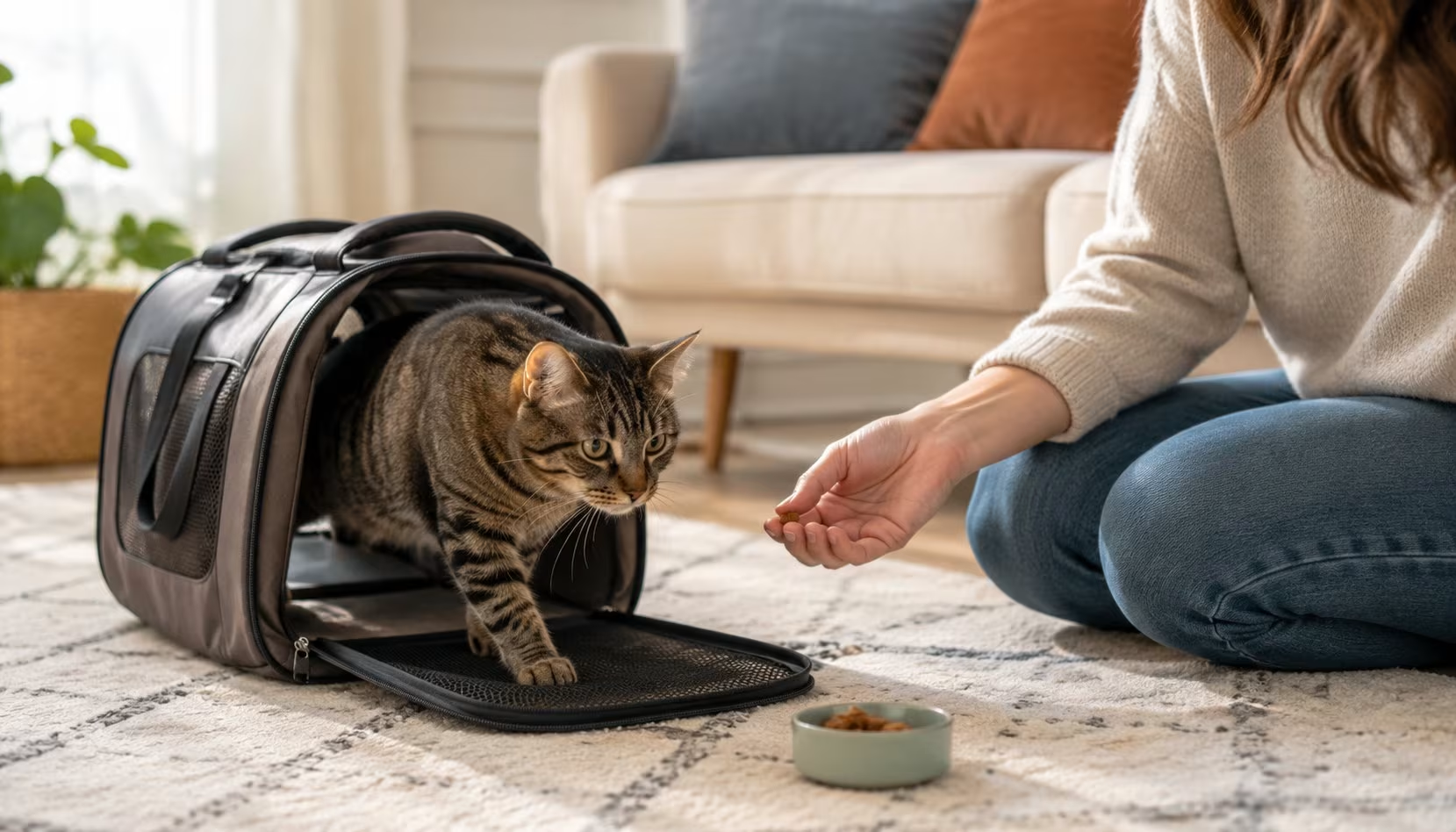
Use absorbent bedding, a small backup pad, and a secure walking gear only if the cat is already comfortable with it. Do not rely on a collar alone at security. Many airports require the cat to come out of the carrier while the carrier goes through screening, though private screening may be available if requested. Practice holding the cat calmly before the trip, and avoid opening the carrier in crowded gate areas.
Security is the point where cat travel differs most from dog travel, and it is where cats are lost. The carrier goes through the X-ray machine empty, which means the cat has to be out of it, in your arms, in a crowded checkpoint, near moving belts and unfamiliar noise. Plan for that specific ninety seconds.
- Harness the cat before you leave home, under a well-fitted H-style harness with a short lead clipped on, not a collar. A frightened cat backs out of a collar in one motion. Put the harness on days in advance so the checkpoint is not the first time it is worn.
- Ask for a private screening room when you reach the front of the line. This is available on request and it turns an open concourse into a closed space with a door. It is the single most useful thing in this list.
- Take the cat out yourself. Screening officers do not handle animals. Unzip the carrier only when you are asked to, hold the cat against your chest with the lead wrapped around your hand, and walk through.
- Send everything through in one tray. Carrier, bedding, jacket, phone. Fumbling for bins one-handed while holding a scared cat is how the lead gets dropped.
- Reload immediately on the far side, before you collect anything else. Put the cat back in the carrier and zip it, then pick up your bags.
Rehearse the whole sequence at home once. Harness on, cat lifted from the carrier, held for a minute, put back. A cat that has done this before behaves differently from one meeting it cold at five in the morning.
Pre-travel veterinary checks worth doing
A pre-travel veterinary visit is useful even when the airline does not require a health certificate. The vet can check breathing, heart health, weight, hydration, stress history, vaccination status, microchip registration, and any medication concerns. Senior cats, flat-faced breeds, cats with heart murmurs, cats with asthma, and cats who panic in carriers need special planning.
The CDC Yellow Book section on traveling with pets and service animals advises travelers to meet destination entry requirements and discuss travel safety with a veterinarian. That matters for domestic travel too, but it becomes critical for international moves. Import rules can require exact timing for vaccines, certificates, testing, and endorsements.
Sedation is not a simple fix. Some drugs can affect balance, temperature regulation, breathing, blood pressure, or anxiety in ways that are risky during travel. Never give human sedatives, leftover pet medication, cannabis products, or extra doses because the cat is crying. If medication is appropriate, your veterinarian should prescribe it, explain a test dose, and tell you what side effects mean the trip should be delayed.
Packing supplies for accidents and delays
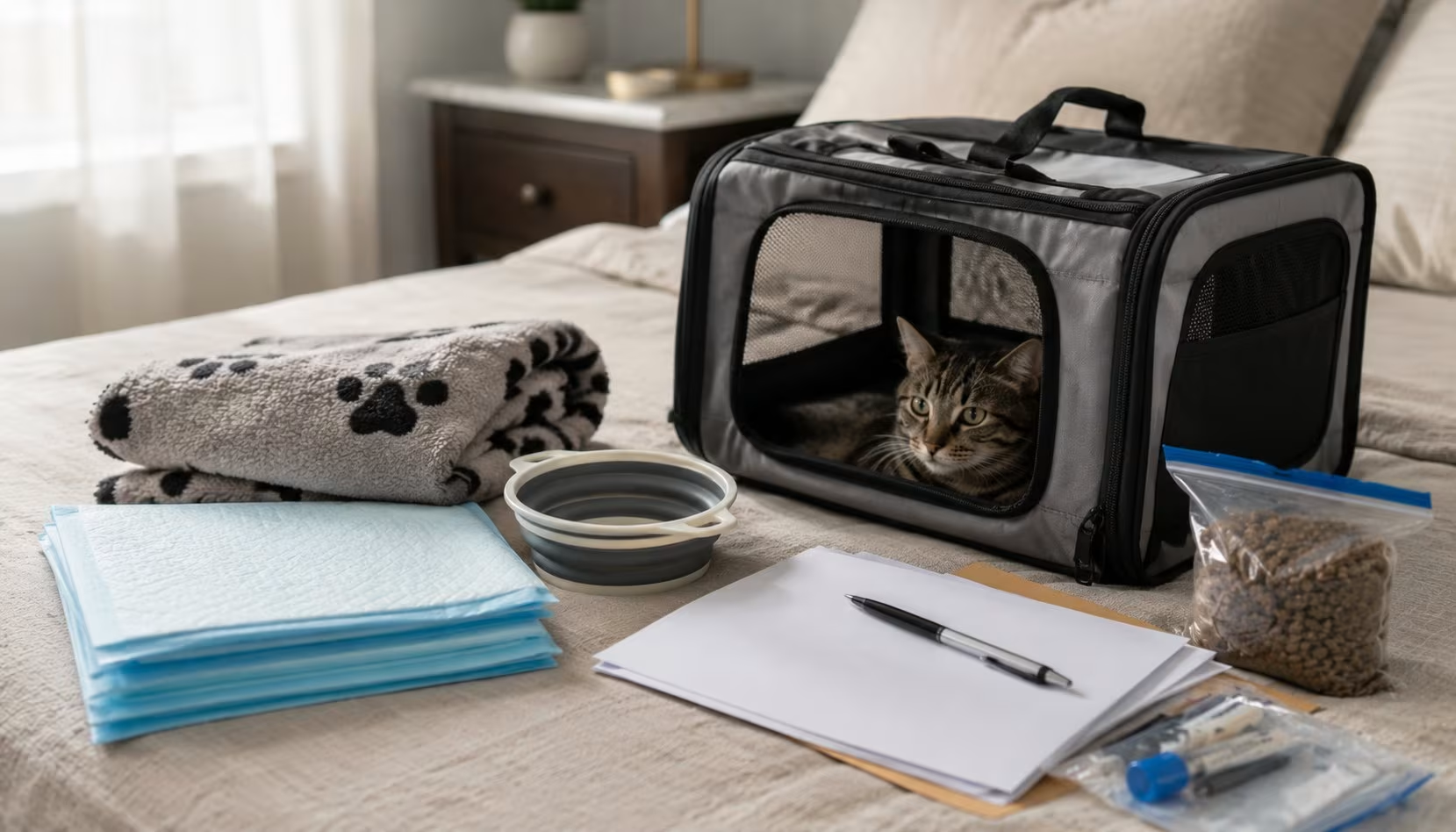
Most cats do best with a normal meal schedule adjusted to reduce nausea and accidents. Ask your vet whether to feed a smaller meal before travel based on your cat's health. Pack a collapsible water dish, a small amount of familiar food, medication, wipes, gloves, waste bags, absorbent pads, and a copy of medical records. Keep these in your personal bag, not in checked luggage.
Long layovers and delays are the hard part. Some airports have pet relief areas, but cats may not use them. A nervous cat may hold urine for hours, then urinate in the carrier after landing. Line the carrier with replaceable pads and bring spares. For very long trips, ask your vet about a travel litter plan, but do not assume you can safely let the cat loose in an airport restroom.
Book the overnight stop before you book the flight, because a pet-friendly room is scarcer than a pet space in the cabin. Hotels are not covered by the ADA for emotional support animals, so a cat is a pet unless the property decides otherwise, and pet-friendly properties commonly charge $25 to $75 a night or a flat $50 to $150 per stay. Ask two questions when you call: whether the cat may be left alone in the room, since many properties say no and that decides whether you can eat dinner, and whether the pet rooms are on a specific floor. The same policy logic applies to the rules for emotional support dogs in hotels.
| Total door to door | What to expect | What to bring |
|---|---|---|
| Under 4 hours | Most healthy adult cats hold comfortably. Accidents here are usually stress, not need. | One absorbent pad in the carrier, one spare, wipes, a sealable bag for the soiled pad. |
| 4 to 8 hours | Holding is likely but not certain. Many cats urinate shortly after landing rather than in transit. | Two spare pads, wipes, gloves, a spare blanket, and a plan for where you will change the pad without opening the carrier in an open area. |
| Over 8 hours, or any long layover | Assume at least one soiling. Cats rarely eat or drink in transit either, so dehydration matters more than the litter question. | Three or more pads, a collapsible bowl and water offered during any long ground stop, and a disposable litter tray only if you have a private space such as a family restroom or a lounge shower room. |
| Overnight stop | The cat needs a real box, which the hotel will not provide. | A disposable tray and a sealed bag of litter in your checked bag, set up in the bathroom before you let the cat out of the carrier. |
One rule holds across every row: the carrier stays closed anywhere the cat could get loose. Change a soiled pad in a locked cubicle, not at the gate, and never in a jet bridge.
Carrier rules during boarding and flight
Arrive early, but not so early that the cat sits in a noisy terminal for unnecessary hours. Keep the carrier closed except when airline or security staff require otherwise. Speak calmly and use a steady routine. If the cat soils the carrier, move to a restroom or quiet corner and replace the pad without letting the cat escape.
At the gate, confirm boarding instructions. Some airlines want pet carriers placed fully under the seat for taxi, takeoff, and landing. The cat usually must stay in the carrier during the flight. Opening the carrier to comfort the cat can violate airline rules and create an escape risk. A frightened cat loose in a cabin is a serious safety problem.
Claiming service-animal status for a cat fails immediately and expensively. Airline staff know the DOT rule specifies dogs, so the claim marks you as someone to scrutinize rather than help, and it makes life harder for handlers whose dogs genuinely qualify. The same confusion between access rights and travel rights shows up on the ground, which is why ESA dogs in public places is a useful companion read for anyone planning airside time between connections.
Planning for cancellations and entry rejections
Every cat flight plan needs a failure plan. Ask what happens if the airline refuses the carrier at check-in, the aircraft changes, the flight cancels, or the destination paperwork is rejected. Know whether you can switch to a later flight, drive, board the cat locally, or have a trusted person pick the cat up. Write down emergency veterinary clinics near your destination.
For international trips, start weeks or months ahead. Some countries require microchips before rabies vaccination, government-endorsed health certificates, parasite treatments, or waiting periods. A missed date can block entry.
Return travel needs the same attention as departure. A cat accepted on the outbound flight may face different rules coming home if the country, airline partner, or layover airport changes. Keep digital and printed copies of every certificate, vaccine record, microchip number, and airline pet confirmation. Store them where you can reach them without opening the carrier in a crowded line at check-in.
So the decision is not really about paperwork at all. It is about whether this particular cat can spend six hours in a closed bag, whether you can afford the fee both ways, and whether the trip is worth what it costs the animal. Plenty of cats fly without incident. Plenty of others would be better off with a sitter and a familiar apartment, and choosing that is not a failure of commitment to an emotional support animal. It is the same judgment you would make about any passenger who hates flying.
Price the trip before you commit to it, because the fee structure surprises people who assumed an ESA letter would waive something.
| Item | Typical cost | Notes |
|---|---|---|
| In-cabin pet fee, outbound | About $95 to $150 | Charged per direction, not per booking. Non-refundable on most carriers even if you cancel the animal. |
| In-cabin pet fee, return | About $95 to $150 | Booked separately. On a connecting itinerary operated by two carriers, some airlines charge per operating carrier rather than per direction. |
| Airline-compliant carrier | One-off purchase | Buy to the operating carrier's published dimensions, measured uncollapsed. A carrier that fits one airline may be refused by another. |
| Pre-travel vet visit | Consultation fee, plus any health certificate | Required by some destinations and some airlines. Certificates usually have a validity window measured in days. |
| Pet-friendly hotel, if the trip includes a night | $25 to $75 per night, or $50 to $150 flat per stay | Charged on top of the room rate. Confirm whether the cat may be left alone in the room. |
| Boarding or a sitter instead | Compare against the total above | For a short trip with a cat that panics in carriers, this is frequently both cheaper and kinder. |



0 Comments
No comments yet. Be the first to share your thoughts!
Leave a Comment