

A cat cannot perform trained tasks, so what it actually provides is routine and presence: a reason to get up and feed something, warmth on a bad evening, company that makes no social demands. That has real value at home and almost none in law. Cats are not ADA service animals, so no store, restaurant, hotel or airline has to admit one.
Emotional support cats do not provide services in the same legal sense as a trained service dog. A cat is not trained to guide, alert, pull, retrieve, or perform public-access tasks under the ADA. What an ESA cat can provide is emotional support through presence, routine, touch, companionship, and the steady rhythm of daily care.
That support can be meaningful for people living with anxiety, depression, grief, loneliness, PTSD symptoms, or stress. But it should be described accurately. A cat can be a powerful companion at home without being a service animal.
What an ESA cat offers
An ESA cat may help by sitting nearby, sleeping close, purring, responding to routine, and giving the person a reason to get up, feed, clean, and keep a schedule. Some people feel calmer when petting a cat. Others benefit from the quiet company of an animal who does not demand conversation.
Low-pressure company is the specific thing a cat is good at. A dog asks to be walked, greeted and engaged with, which on a bad day is one more demand. A cat that settles on the arm of a chair asks for nothing, and for some people that is the difference between tolerable company and more work, which is the practical case for whether cats are effective at emotional support.

The ADA National Network's guide to service animals and emotional support animals explains that emotional support animals, comfort animals, and therapy dogs are not service animals under ADA Title II and Title III. It also explains that other species beyond service animals are not considered ADA service animals for those public-access rules.
That means an ESA cat generally does not have the right to enter restaurants, stores, offices, schools, or public places simply because the cat comforts the person. A business may allow pets by policy, but that is different from service-animal access.
Housing is the one setting where an ESA cat has ever carried legal weight, and that weight dropped in 2026. HUD withdrew its 2013 and 2020 assistance-animal guidance on September 17, 2025. On May 22, 2026 its fair-housing office issued an enforcement memo telling staff to stop pursuing complaints where the animal is an untrained emotional support animal, to treat only individually trained service animals as presumptively exempt from pet policies and fees, and to hold open ESA cases for individual review. Since a cat can never be a trained service animal under federal definitions, an ESA cat now sits entirely outside that presumption at the federal level. State and local fair-housing law is untouched by the memo, and in a growing number of places it is the only protection left.
PawDraft's article on legal rights for emotional support cats is relevant, but housing disputes should be checked against current law and the specific facts.
| Emotional support cat | Therapy cat | Service animal | |
|---|---|---|---|
| Who it supports | Its own owner, at home | Other people, in a facility that invited it | Its own handler, everywhere |
| Training required | None | Temperament screening and handler certification by the visiting organization | Individually trained to perform a task tied to a disability |
| Can a cat hold this role | Yes | Yes | No. Under the ADA only dogs qualify, with limited provision for miniature horses. |
| Public access | None. Admission is the business's choice. | Only the facility that scheduled the visit | Stores, restaurants and hotels must admit it |
| Housing | Basis for a reasonable accommodation request, weakened federally since the May 22, 2026 HUD memo | No special status. It is a pet at home. | Strongest position, and the only category HUD staff now presume exempt from pet fees |
| Air travel | Pet, at roughly $95 to $150 each way | Pet | Only trained service dogs must be accepted, with the DOT form |
Legal limits without a vest or badge
No product makes a cat an ESA. There is no federal registry to appear in, so a vest, badge, certificate or registry number is decoration you paid for. What has any weight is a letter from a licensed mental-health professional who actually treats you, and several states now regulate even that. California's AB 468 has required a client relationship of at least 30 days before a letter is issued since 2022, and requires online ESA sellers to state plainly that what they are selling is not a service-animal certification. The registration guide for emotional support cats walks through the paperwork in detail.
Cats thrive on predictable care, and that routine can help the person too. Feeding, fresh water, litter cleaning, play, medication if needed, grooming, and vet appointments create anchors in the day. For someone whose symptoms make days blur together, the cat's routine may gently pull life back into structure.
Be honest about the floor. A cat needs a box scooped daily, food twice a day, and enough money for an unplanned vet visit, which for a blocked urinary tract or a dental extraction runs into hundreds of dollars. If the current bad weeks already end with dishes in the sink for four days, the litter box will go the same way, and the guilt of that becomes its own symptom.
Some people find purring, warmth, and soft fur calming. Others may find cat sounds, litter odor, or scratching stressful. Sensory fit matters. An ESA should lower stress more than it adds stress.

If allergies, sensory sensitivity, or sleep disruption are severe, a cat may not be the right support animal.
Grounding during anxiety and depression
For anxiety, a cat may help with grounding. Petting the cat, noticing the cat's breathing, or following a feeding routine can bring attention back to the present. The cat's calm presence may help during mild spirals or after a stressful day.
What the day-to-day support actually looks like, and what it does not, is covered in what emotional support animals are expected to do.
For depression and loneliness, a cat may make the home feel less empty. The need to feed and clean can create a small daily obligation. A cat who seeks affection can give warmth without social pressure. This can help some people maintain basic rhythms.
Still, an ESA cat should not be the only support for serious depression. Therapy, medical care, friends, family, crisis contacts, and practical help may all matter.
Flying is where the gap between what a cat does for you and what the law recognizes is widest. Since the DOT rule that took effect in January 2021, airlines have been free to treat emotional support animals as pets, and every major US carrier does. A cat rides in a closed carrier under the seat for a fee of roughly $95 to $150 each way, or it does not ride, and no letter changes that. The full picture on taking emotional support cats on flights covers carrier sizing and destination paperwork.
An ESA cat needs safe indoor space or controlled outdoor access, litter care, scratching outlets, enrichment, veterinary care, parasite prevention, and calm handling. A cat who hides constantly, stops eating, urinates outside the box, overgrooms, or becomes aggressive may be stressed or sick.
The routine only helps if it survives a bad week, so decide now what the minimum version looks like. Write it on the inside of the cupboard where the food is kept.
- Non-negotiable, every day. Fresh water, one measured meal, and the litter box scooped once. If nothing else happens, this happened.
- Pre-empt the hard part. Keep two weeks of food and litter in the house at all times so a bad stretch never requires a trip to the store.
- Lower the bar for play. Five minutes with a wand toy counts. Leave the toy out where you sit rather than in a drawer.
- Name the person. One friend, neighbor or family member who has a key, knows where the carrier and the food are, and has your vet's number. Ask them before you need them.
- Set the trigger. Decide in advance what tells you to call that person, for example two days where the box was not scooped. Waiting to feel capable of asking is how cats end up in shelters.
Managing a multi-cat household
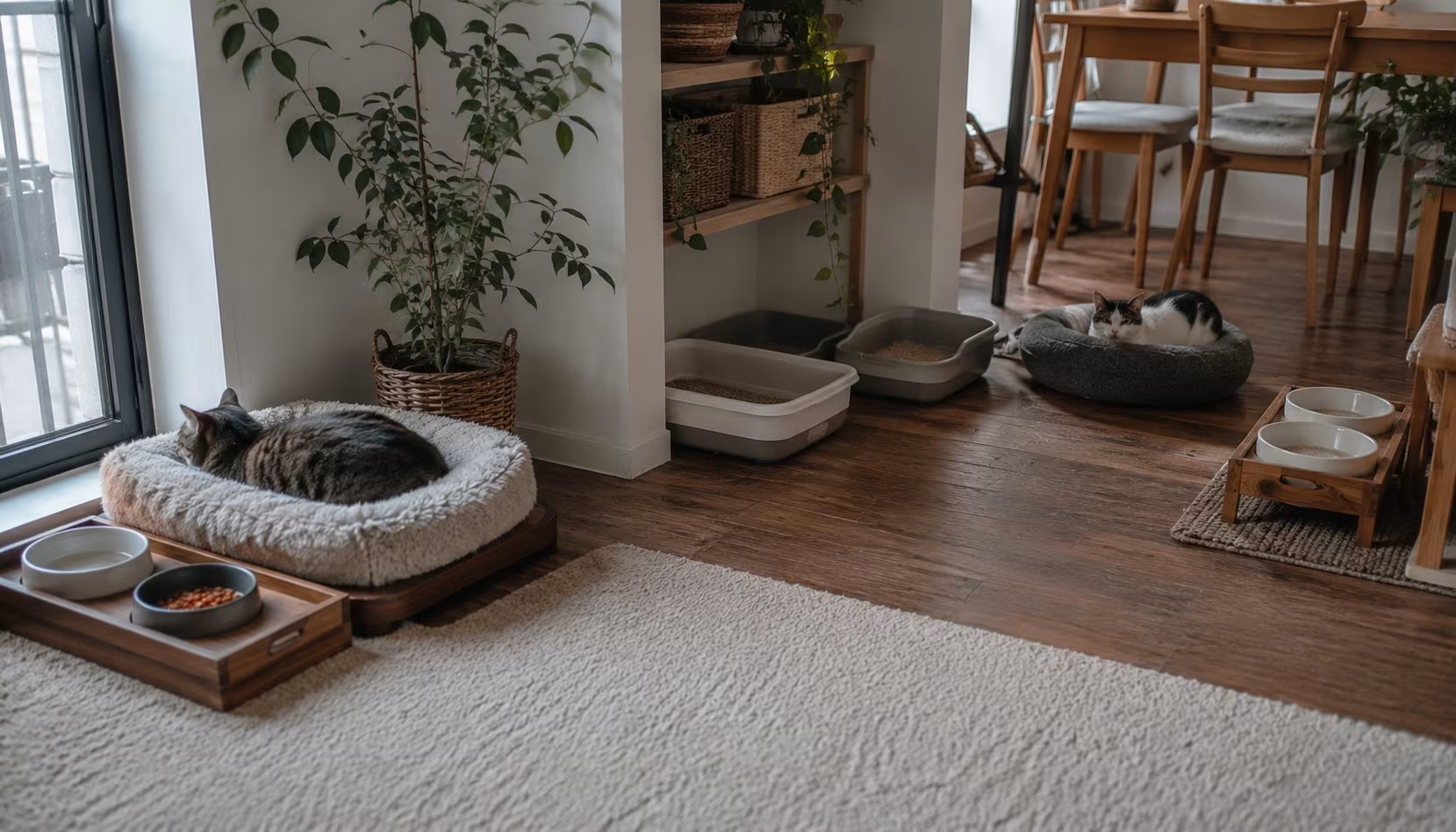
If one cat is an ESA, other cats still matter. Litter boxes, feeding stations, resting areas, and introductions should be managed to reduce conflict. A stressed multi-cat home can increase anxiety for both the person and the animals.
Use separate resources and watch body language. Hissing, blocking, chasing, hiding, and litter box problems are signs the setup needs work.
People who rely emotionally on a cat should have backup care. If the person is hospitalized, traveling, or in crisis, someone should know feeding, litter, medication, carrier location, and veterinarian contact information. Backup care protects the cat and reduces panic for the person.
A cat who is expected to provide emotional support still needs a cat-friendly home. Provide clean litter boxes, scratching surfaces, hiding places, vertical resting spots, water, and predictable feeding. If litter boxes are dirty or the cat feels trapped, stress can show up as hiding, urine marking, or aggression. That stress can make the person's symptoms worse too.
For many ESA cat teams, the most helpful support is a calm home routine. Keep food, litter, medication, and vet records organized so care does not become overwhelming during a hard mental health week.
Matching cat temperament to the person
Not every cat enjoys the same kind of contact. Some cats love lap time. Others prefer sitting nearby without being held. A good match depends on temperament, noise tolerance, grooming needs, age, health, and the person's daily capacity. A shy cat can still be a wonderful companion, but may not fit someone who needs frequent touch.
Meet the cat slowly if possible. Ask shelters or rescues about handling, hiding, litter habits, medical history, and whether the cat has lived with other animals.
If the cat stops eating, hides suddenly, urinates outside the litter box, overgrooms, vocalizes at night, or becomes aggressive, schedule a veterinary exam. Behavior changes in cats are often medical, stress-related, or both. Do not assume the cat is being spiteful.
An ESA cat can make daily life softer, but a person in crisis needs human help. Therapy, medication when prescribed, trusted contacts, peer support, and crisis resources may all be part of care. The cat can sit beside the person through hard moments, but the cat cannot assess risk, change medication, or arrange emergency support.
Talking to a clinician about function
If you are discussing an ESA cat with a clinician, describe how the cat affects daily function. Does the cat help you keep a schedule, sleep more consistently, leave bed, reduce isolation, or interrupt anxious spirals? Specific examples are more useful than saying the cat makes you feel better.
Also be honest about burdens. Litter care, cost, allergies, sleep disruption, or housing stress may affect whether an ESA cat is the right support.
Keep veterinary records, vaccination information, and a care plan organized. If a housing provider asks reasonable questions under current rules, clear records help show that the cat is cared for and that the request is serious. Do not send unnecessary private medical details; send what the process requires.
An ESA cat should not be forced into noisy public places, crowded events, or travel that causes panic just to prove support. The cat's value may be entirely at home. Respecting that limit protects the cat and keeps the support relationship honest.
Comfort and legal reality combined
Emotional support cats can provide comfort, routine, grounding, companionship, and a calmer home life for some people. They are not ADA service animals and usually do not have public-access rights. Housing requests may require current, legitimate documentation and should be checked against current rules. The best ESA cat relationship is honest about legal limits, realistic about mental health support, and serious about the cat's welfare.


0 Comments
No comments yet. Be the first to share your thoughts!
Leave a Comment