

An ESA dog flies as a pet on every major US airline. The Air Carrier Access Act rule that took effect in January 2021 lets carriers do that, and American, Delta, United, Southwest, JetBlue and Alaska all stopped accepting ESAs that year. Expect roughly $95 to $150 each way and a carrier that fits under the seat.
If you are planning to take an emotional support dog on a flight, start with the current rule: an ESA dog is usually treated as a pet by U.S. airlines, not as a service animal. That does not make the dog unimportant. It changes the paperwork, fees, carrier rules, cabin limits, and backup plan. The old advice about bringing an ESA letter to guarantee cabin access is outdated and can leave travelers stuck at check-in with a dog the airline is not required to accept as a service animal.
Pet policy replaces the ESA letter
The rule has a date, and knowing it saves arguments at a counter. DOT published its Air Carrier Access Act final rule in December 2020 and it took effect on January 11, 2021. The service animal guidance defines a service animal as a dog individually trained to do work or perform tasks for a qualified person with a disability, and excludes emotional support animals from that definition. American, Delta, United, Southwest, JetBlue and Alaska all ended ESA acceptance during the first months of 2021. If a page you are reading says to send your ESA letter to the airline, it was written before that and has not been updated since.
That means an ESA dog usually travels under the airline's pet policy if the airline allows the dog on that route. The airline may require a carrier, charge a pet fee, limit cabin pet spaces, restrict certain seats, or refuse pets on some international routes. A mental health letter does not override those pet policies.
There is one route that still puts a dog in the cabin without a pet fee, and it is narrow. The dog has to be individually trained to perform a task tied to a disability, not simply to be present during distress. Airlines may require the DOT Service Animal Air Transportation Form, submitted in advance rather than produced at the gate, and for flights of eight hours or more they may also ask for the relief attestation. Anything written about traveling with an emotional support dog via flight that predates 2021 describes a path that no longer exists on US carriers.
Ask the airline whether dogs are allowed in cabin on the exact route, whether pet space is available, what carrier dimensions apply, what the fee is, whether the carrier counts as a personal item, and whether there are breed, weight, age, or destination restrictions. Save confirmation if the airline provides it.
Codeshare flights are a common problem. The airline that sells the ticket may not operate every leg. A dog accepted by one carrier may be refused by another. International connections can add import rules, government forms, vaccine timing, and health certificates. If the trip crosses borders, start weeks or months ahead.
Cats sit one step further out. A dog at least has a path to service-animal status if it is trained for a task, while no cat qualifies under the DOT rule at all, which changes the planning for anyone flying with emotional support cats on flights. For a dog, the first question is which of the two routes you are on. For a cat, there is only the pet policy.
| Trained service dog | ESA or pet | |
|---|---|---|
| Legal basis | Air Carrier Access Act final rule, effective January 11, 2021 | The airline's own pet policy. The same rule permits carriers to treat ESAs as pets. |
| What the dog must do | Be individually trained to perform work or a task related to a disability | Nothing. Comfort by presence is enough to be an ESA and is not enough to be a service animal. |
| What you file | DOT Service Animal Air Transportation Form, submitted to the airline in advance | A pet reservation. An ESA letter has no role in the airline's decision. |
| Cost | No pet fee | Roughly $95 to $150 each way on US carriers |
| Where the dog travels | At the handler's feet, without a carrier, if it fits in the foot space | Inside a closed carrier that fits under the seat in front of you |
| Size limit | Must fit in the handler's own foot space or an available seat area | Carrier dimensions set by the operating carrier. Larger dogs move to cargo, where the airline allows it at all. |
Crate training before departure day
If the dog is traveling as a pet, carrier training matters more than the ESA letter. The dog may need to stay in the carrier under the seat for the full flight. A dog who has never spent 20 calm minutes zipped inside a carrier is not ready for a three-hour itinerary with security lines and boarding delays.
Start at home. Feed treats near the carrier, then inside it. Add short closed-door sessions. Practice carrying the dog in the carrier, setting it down, and rewarding quiet. Add car rides and background airport sounds if the dog is noise-sensitive.
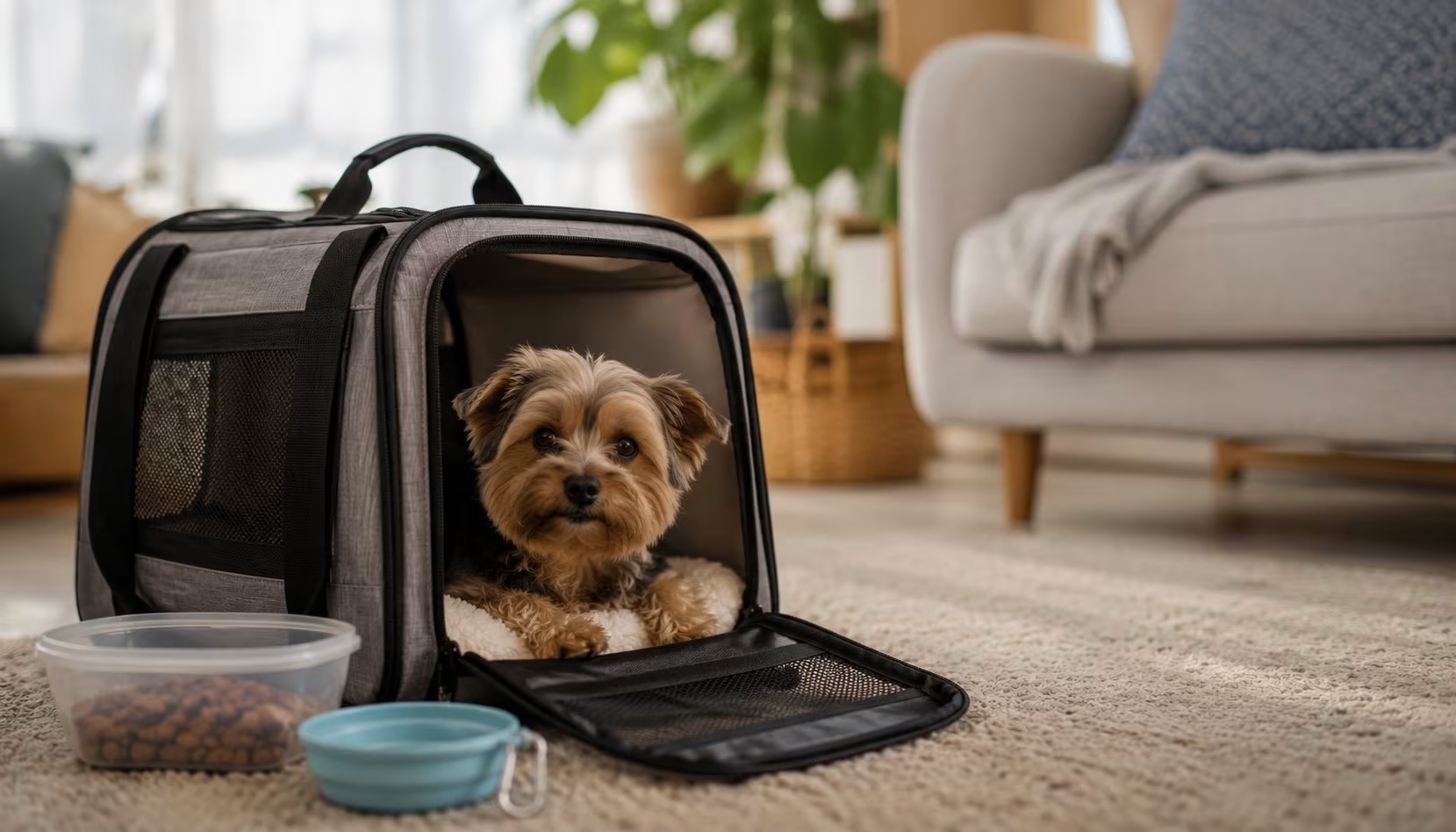
Choose the carrier by airline dimensions, not looks. It should be ventilated, secure, leak-resistant, and large enough for the dog to fit according to the airline's rules. Add absorbent padding and a familiar but not bulky blanket. Avoid toys that squeak, crumble, or create choking risks during turbulence.
Preflight checkup for sedation risks
A preflight veterinary visit can address vaccines, parasite prevention, anxiety, nausea, breathing risks, age, heart disease, and medication. Flat-faced breeds, seniors, puppies, dogs with heart or airway disease, and dogs with severe anxiety need extra caution. Sedation is not a casual travel tool; some medications can affect balance, breathing, blood pressure, and temperature control.
The CDC Yellow Book page on traveling with pets and service animals advises travelers to meet destination entry requirements and discuss animal travel safety with a veterinarian. That advice applies even when the destination is domestic, and it becomes essential for international travel.
Ask the vet what documents may be needed, how close to travel a health certificate must be issued if required, and whether the dog should eat normally before the flight. Do not restrict water without veterinary advice. A dog who is dehydrated, overheated, or stressed can become a medical problem before boarding ends.
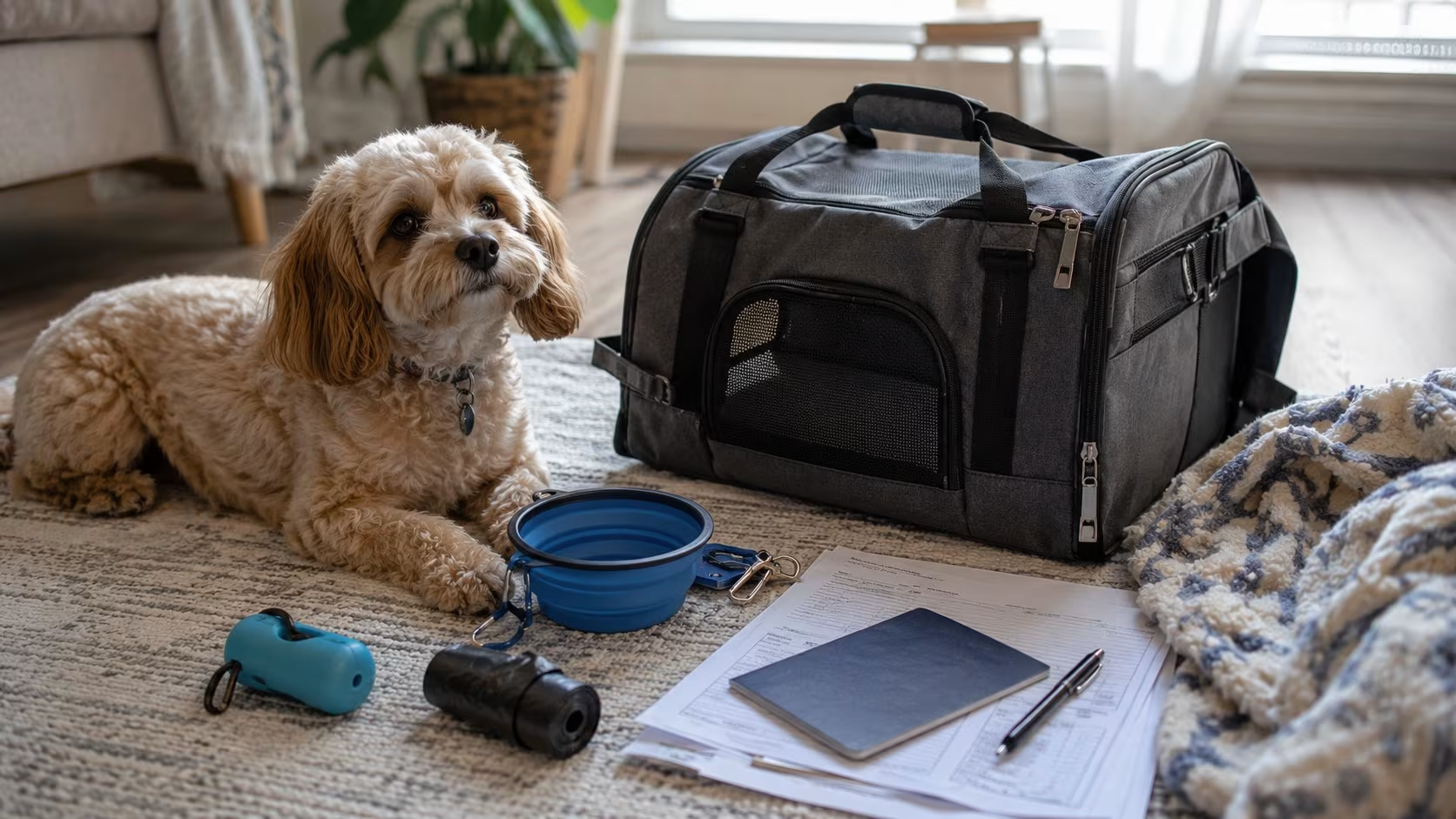
Plan the day around the dog's normal digestion. Feed according to your vet's advice and your dog's history with nausea. Pack waste bags, wipes, an absorbent carrier pad, a collapsible bowl, a small amount of food, medications, and medical records. Keep supplies in your personal item, not checked luggage.
Airport pet relief areas vary widely. Some are clean outdoor spaces; others are small indoor rooms that many dogs refuse to use. Practice potty cues before travel and build extra time into the schedule. For longer flights, ask the airline about relief rules and what happens during delays.
A long run on departure morning is a common mistake. A dog who arrives hot, thirsty and over-aroused settles worse in a carrier than one who had a normal walk and an hour of quiet at home. Keep departure day boring. It also helps to know before you go that a terminal is not neutral ground: the same limits that decide whether ESA dogs are allowed in public places apply to the shops and restaurants past security, so plan to keep the dog in the carrier rather than counting on being let into a sit-down meal.
Backup plans if boarding is refused
Have a backup plan before you leave home. Know whether you can rebook, drive, board the dog, use a trusted sitter, or change the itinerary. If the airline refuses the carrier size or route, arguing at the counter rarely fixes the problem. Written confirmation, correct carrier dimensions, and early booking are better protection.
If you believe the dog is a trained service dog and the airline mishandled the request, keep records and use the airline's disability complaint process. If the dog is an ESA traveling as a pet, the dispute is usually about pet policy, not service-animal access.
Hotels at the destination need checking too. A pet-friendly flight does not guarantee a pet-friendly room. PawDraft's guide to ESA dog hotel rules can help you ask about fees, unattended dogs, relief areas, and barking policies.
One exception is worth knowing before you write off an international itinerary. The DOT rule binds carriers on US routes, but some foreign airlines still accept emotional support animals under their own policies, and a few Latin American and European carriers are the usual examples. That does not create a right, it creates a shortlist worth calling. Two conditions apply and both catch people out: the policy has to hold for the operating carrier on every leg, so a codeshare that starts on a US airline usually ends the conversation, and the destination country's import rules apply regardless of what the airline allows in the cabin.
If you are comparing options, ask each carrier three questions in this order. Does your ESA policy apply to this specific route and aircraft. Which airline operates each leg. What documentation do you require and how far in advance. Get the answer by email if you can, because a phone agent's assurance is not something a check-in desk will honor.
Handling the leash through security lines
Airport security is easier when the dog is comfortable being handled and the carrier is organized. Follow the security officer's instructions, keep the leash secure, and avoid letting the dog greet strangers in line. A nervous dog can slip a collar in a noisy checkpoint, so use properly fitted gear and keep identification on the dog and carrier.
During boarding, move with the flow of the cabin. Place the carrier under the assigned seat as the airline requires and keep your supplies reachable without unpacking the whole bag. If the dog whines, stay quiet and calm rather than feeding attention to every sound. Soft praise, a familiar scent item, and trained settling behavior work better than repeated carrier opening.
Good travel manners help protect future access under pet policies. A dog that stays contained, clean, and quiet is far less likely to draw complaints than one whose owner treats the cabin like a living room.
International travel can be much harder than a domestic flight. Some countries require microchips, rabies vaccines given in a certain order, parasite treatment, government-endorsed health certificates, import permits, or waiting periods. A dog may be allowed on the plane but blocked by destination rules if the paperwork timing is wrong.
Return travel matters too. Rules for entering the United States with a dog can differ from rules for leaving, and disease-risk categories can change. Ask your veterinarian which government pages apply to the destination and return route. For complex itineraries, a professional pet shipper or airline cargo specialist may be safer than trying to solve every step during online booking.
Do not assume a layover is harmless. Even a short connection may trigger transit rules, kennel rules, heat restrictions, or carrier inspection. Direct flights are often easier on the dog and easier to document.
Checklist before heading to the airport
- Eight weeks out. Decide which route you are on, pet policy or trained service dog. If it is the service-dog route, request the DOT form from the airline now. If the trip crosses a border, ask your veterinarian which destination rules apply, because rabies timing and endorsement windows are the steps that fail.
- Six weeks out. Book by calling the airline's pet desk rather than clicking through checkout. In-cabin pet spaces are capped per flight and sell out separately from seats. Get the confirmation number for the animal, not just the passenger.
- Six weeks out. Buy the carrier to the operating airline's published dimensions, measured uncollapsed. Start carrier training the day it arrives.
- Two weeks out. Veterinary visit. Ask about airway and heart risk for the specific breed and age, whether any health certificate is required and how close to departure it must be dated, and what to do about nausea.
- One week out. Reconfirm the operating carrier for every leg. On a codeshare, the pet policy follows the airline flying the aircraft, not the one that sold the ticket.
- Day before. Pack pads, spare pads, wipes, waste bags, a collapsible bowl, medication and records into your personal item. Nothing the dog needs goes in checked luggage.
- Departure day. Normal walk, normal feeding per your vet's instruction, relief break before security, and no last-minute exercise.
So the letter is not the thing that gets you on the plane. The carrier dimensions, the pet reservation and the dog's ability to stay quiet under a seat for the length of the flight are what decide the trip. Budget for the fee, book the pet space before the seat, and start carrier training the week you buy the ticket rather than the week you fly.


0 Comments
No comments yet. Be the first to share your thoughts!
Leave a Comment