

No, not as a right. Under the ADA only dogs individually trained to perform a disability-related task count as service animals, so a comfort-only ESA has no federal access to stores, restaurants, theaters or hotels. A business can admit it as a pet if it chooses. Staff may ask only two questions, and neither one is about paperwork.
An emotional support dog may be essential to a person's daily stability and still be turned away from a restaurant, grocery store, or theater. That feels confusing because the dog may be allowed in housing discussions or welcomed by a pet-friendly hotel. Public-access rules do not treat every support animal the same way. In the United States, the strongest public-access protection belongs to service dogs trained to do disability-related work or tasks. ESA dogs that provide comfort by being present usually fall into a different category.
Task training versus comfort presence
The ADA service animal FAQ says emotional support, therapy, comfort, and companion animals are not service animals under the ADA when they provide comfort just by being with a person. A psychiatric service dog may help with a mental health disability, but it must be trained to perform a task, such as interrupting harmful behavior or guiding a disoriented handler to an exit.
An ESA dog does not need task training to be emotionally meaningful. The issue is access, not value. A dog who calms a person during panic symptoms at home may be a legitimate support animal in that person's life, but that does not make it an ADA service animal in a restaurant. Using accurate language prevents conflict and protects handlers with trained service dogs.
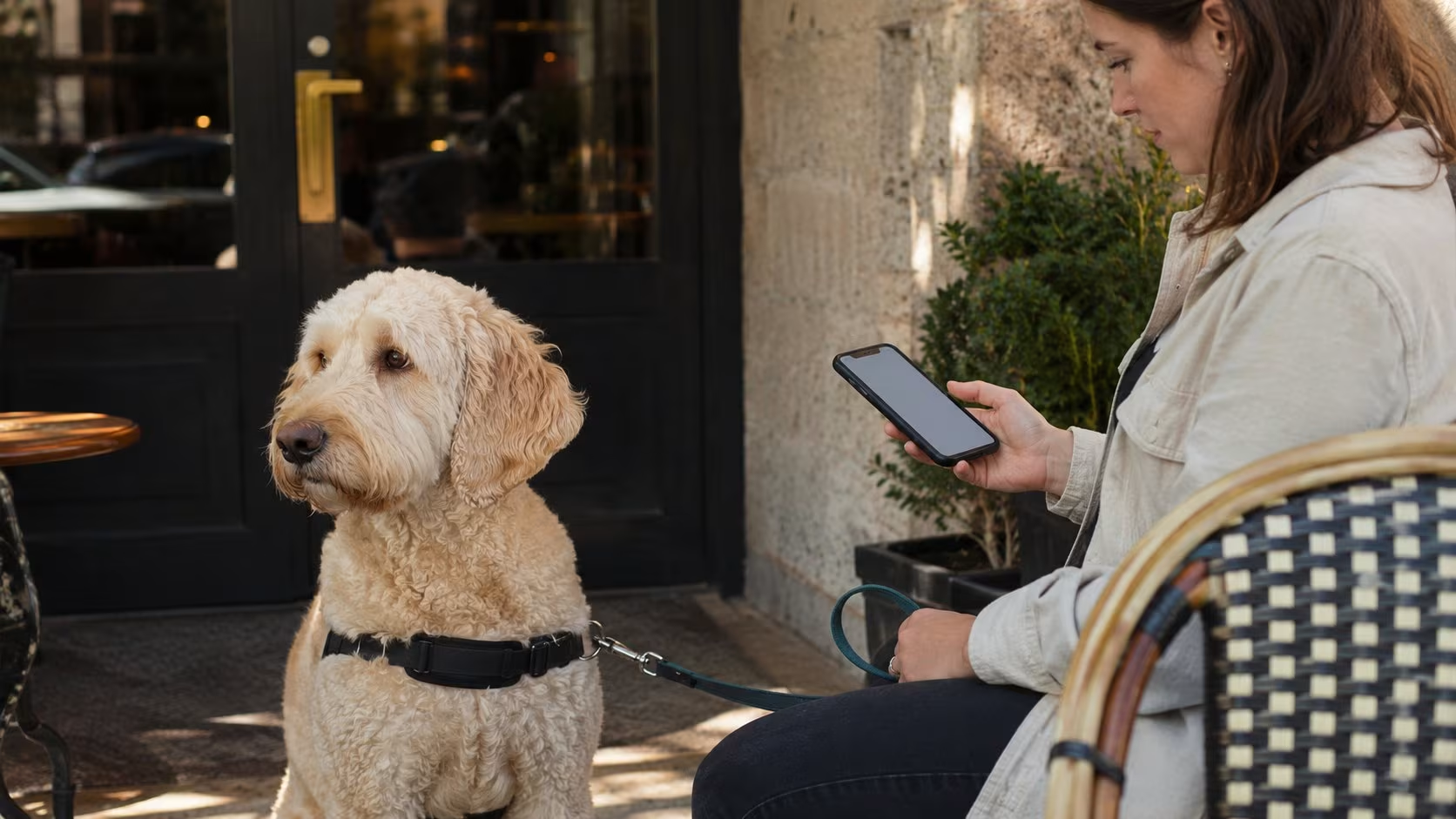
The four labels people use interchangeably are not interchangeable at a door. A service dog is trained to perform a task and is covered by the ADA. A psychiatric service dog is a service dog. A therapy dog is trained to visit other people, usually in hospitals or schools, and has no personal access rights at all. An ESA is none of the three. The gap widens once a border is involved, which is why traveling with a service dog in Europe runs on rules that have nothing in common with the ones in this article.
| Task-trained service dog | Emotional support animal | Therapy dog | Pet | |
|---|---|---|---|---|
| Training required | Individually trained to do work or perform a task tied to the disability | None required | Trained and usually certified to visit other people | None |
| Stores, restaurants, theaters | Admitted under the ADA. Dogs only, plus miniature horses in limited cases | No federal right of access | No right of access. Access is by invitation from the facility | No right of access |
| Rental housing | Presumed exempt from pet policies and pet fees | Depends on state and local fair-housing law since HUD's May 2026 enforcement memo | Treated as a pet | Treated as a pet |
| US flights | Accepted with the DOT Service Animal Air Transportation Form | Treated as a pet under the DOT rule effective January 11, 2021 | Treated as a pet | Pet fare, in cabin or cargo |
| What staff may ask | Two questions only: is the dog required because of a disability, and what task is it trained to perform | Anything, because admission is discretionary | Anything | Anything |
Store and restaurant admission policies
Restaurants, grocery stores, pharmacies, theaters, hospitals, and retail shops usually follow ADA service-animal rules for public access. If a dog is only an emotional support animal, the business generally does not have to admit it under federal ADA rules. Some businesses choose to allow well-behaved pets or ESAs, but that is a policy choice, not a guaranteed right.
Health codes can also matter. A restaurant patio may allow dogs while the indoor dining room does not. A bookstore may welcome leashed pets on quiet weekdays but refuse them during crowded events. A hospital may have separate rules for patient rooms, sterile areas, therapy animal programs, and service dogs.
Business staff are allowed to protect safety and operations. Even a trained service dog can be removed if it is out of control and the handler does not correct it, or if it is not house-trained. For an ESA dog, manners matter even more because access often depends on permission. Barking, lunging, sniffing food displays, or blocking aisles can end the visit quickly.
The ADA limits what a business may ask, and knowing the limit helps both sides. When it is not obvious what a dog does, staff may ask exactly two questions. Is the dog required because of a disability? What work or task has the dog been trained to perform? That is the whole list.
Staff may not ask about the person's diagnosis, may not ask for documentation, and may not ask the dog to demonstrate the task. There is no ID to produce, which is why the registries that sell one are selling an answer to a question nobody is allowed to ask. For an ESA handler this cuts the other way. A comfort-only dog has no honest answer to the second question, and inventing one is the misrepresentation that some states penalize.
A trained service dog can still be asked to leave, on two grounds only: it is out of control and the handler does not correct it, or it is not house-trained. The person stays. Only the dog goes.
Leash rules in parks and trails
Outdoor public spaces are a mixed category. City sidewalks, public parks, beaches, trails, transit platforms, and festivals may be governed by local leash laws, pet rules, permits, and seasonal restrictions. An ESA label usually does not override posted dog rules. If a park says dogs must be leashed or are banned from a wildlife area, the ESA dog is normally treated like a pet unless a specific disability-access rule applies.
For dog-friendly outdoor spaces, the practical standard is control. Bring waste bags, water, a leash, and enough distance from other dogs. A support dog who is overwhelmed in a crowded market may need quieter training steps before being taken into busy areas. Comfort for the handler should not come at the expense of the dog's stress level.
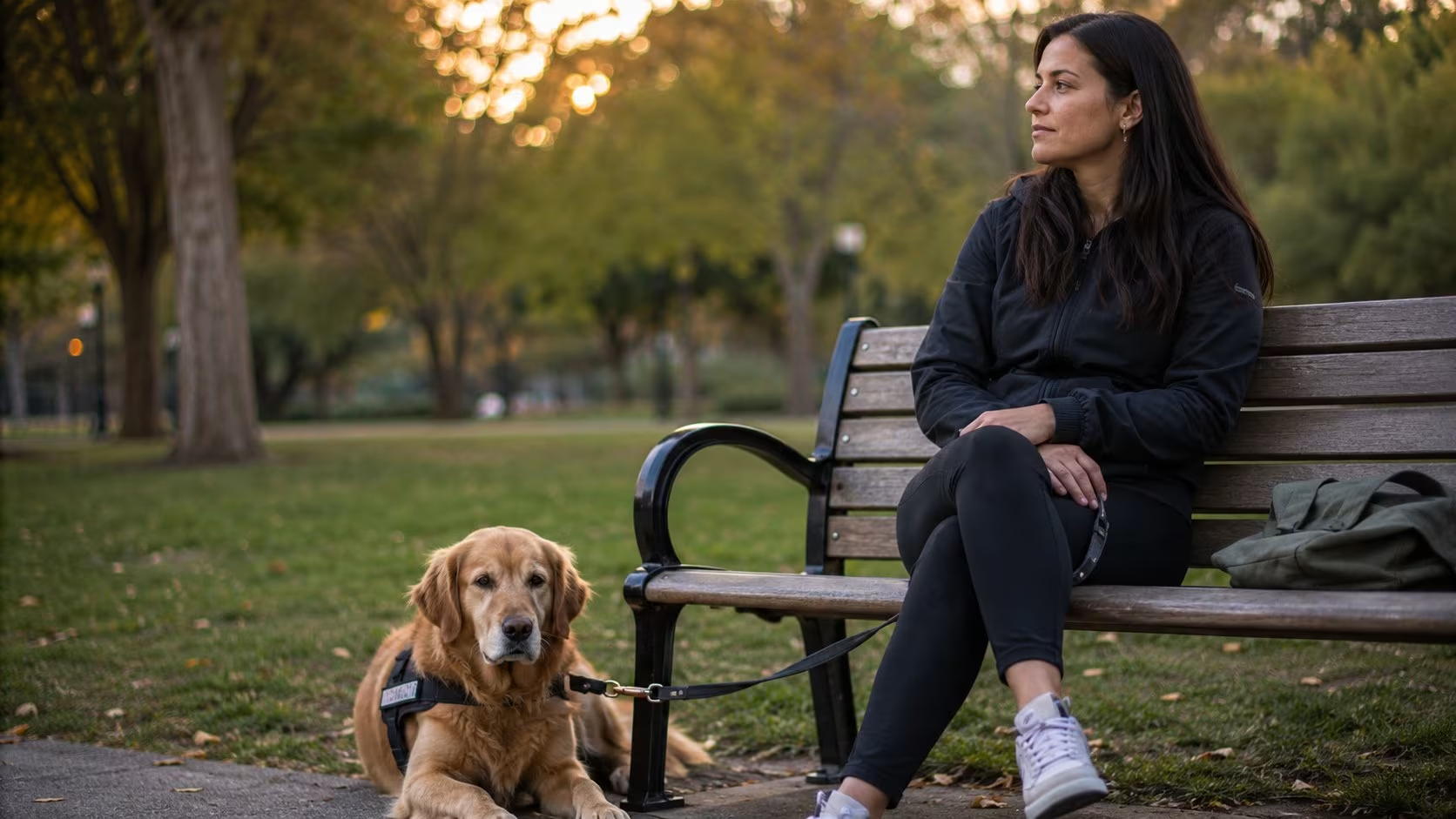
A trail is the easiest environment a dog will ever be asked to handle. There is space to move away, no hard floor to echo on, no queue to hold still in, and nobody standing over the dog with a clipboard. A dog that is perfect on a trail can still come apart in an airport line, and the handler who has only tested outdoors will not know until it happens. Hotels are the next step up in difficulty and they set their own terms, which is covered in more detail in ESA dogs in hotels.
Airline pet fees replace ESA status
Air travel changed sharply for ESAs. The U.S. Department of Transportation's service animal guidance says a service animal under the Air Carrier Access Act is a dog individually trained to do work or perform tasks for a qualified person with a disability. Emotional support animals are not service animals under that rule.
In practice that means an ESA dog flies as a pet or does not fly. American, Delta, United, Southwest, JetBlue and Alaska all stopped accepting emotional support animals in early 2021, within weeks of the rule taking effect. A pet fare on a US carrier usually runs about $95 to $150 each way, the carrier has to fit under the seat in front of you, and each cabin holds a small fixed number of animals, so the booking is first come first served. A letter from a therapist changes none of that. Anyone at the planning stage should start with planning to take an ESA dog on a flight and book the animal at the same time as the seat.
Trains, buses, ferries, rideshares, and taxis may have service-animal rules and separate pet policies. Ask the operator before travel. For local transit, check the agency's official accessibility and pet pages, not a social media comment.
Calling ahead before booking a room
Hotels are not the same as long-term housing. A hotel may be pet-friendly, pet-restricted, or service-dog-only. ESA status does not automatically create the same rights in a hotel that may exist in a housing accommodation process. A hotel can set pet fees, size limits, room restrictions, and cleaning rules unless another law applies.
Call before booking and ask exact questions: Are dogs allowed? Is there a pet fee? Are emotional support animals treated differently from pets? Can the dog be left alone in the room? Is there a relief area? What happens if the dog barks while the guest is away? Get the answer in writing when possible.
If the stay is connected to disability access, use accurate words. Do not say "service dog" unless the dog is trained to perform disability-related tasks. Misrepresentation can violate state law in some places and can make staff more suspicious of legitimate handlers.
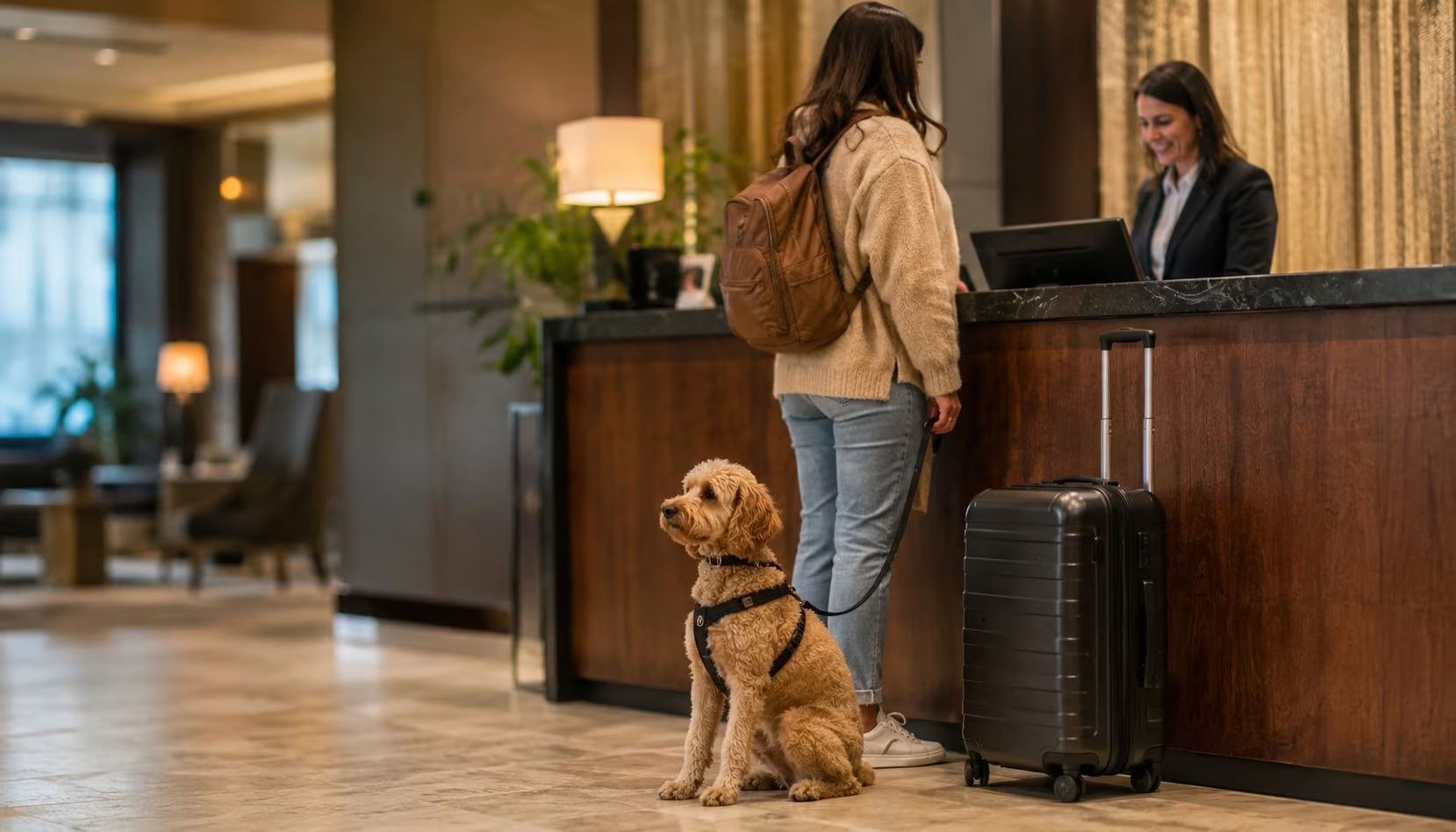
- Call the property directly, not the central reservations number or a booking site. Pet policies are set and waived at the property.
- Ask whether dogs are allowed at all, then ask for the fee in the form the property charges it. Pet-friendly hotels commonly bill roughly $25 to $75 per night or a flat $50 to $150 per stay.
- Ask for the weight limit and the number of animals per room. These are the two rules that most often kill a booking at check-in.
- Ask which room types take dogs. Many properties restrict them to specific floors, which can mean no connecting rooms and no upper-floor views.
- Ask whether the dog may be left alone in the room. Many properties say no outright, and a barking dog behind a locked door is the most common reason a stay ends early.
- Ask where the relief area is and whether the dog may cross the lobby or must use a side entrance.
- Get the answer by email and bring it. Say emotional support animal, never service dog, unless the dog is trained to perform a task.
State penalties for misrepresenting a pet
Two different kinds of state law sit on top of the ADA. Some states extend access to service animals in training or to handlers working with a training program, which the ADA does not require. Others make it an offense to pass a pet or an ESA off as a service animal, typically a low-level offense carrying a fine. The second kind catches ESA owners in a way that is easy to miss. You do not have to forge a document to break one of those laws. Saying the words "service dog" at a hostess stand can be enough, and the offense is the claim, not the paperwork. Check your own state's disability-rights page before you use that phrase anywhere.
The same caution applies to campuses, workplaces, hospitals, shelters, and government buildings. These settings may use different accommodation processes. An employee asking to bring an ESA dog to work is not making the same request as a customer entering a store. A student in campus housing is not in the same position as a guest visiting a dining hall.
Vests, patches, ID cards and online registry listings create no ADA access, and staff who deal with animals often know that better than the customer does. A vest can make things worse by inviting the two questions, because a dog in a service-dog vest whose handler cannot name a trained task looks like the misrepresentation the state law was written for. What actually gets a dog through a door is an email from the manager saying yes.
Asking staff about patio and carrier rules
The best request is short and specific. Say what kind of dog you have, where you want to go, how long you expect to stay, and whether the dog will remain on leash or in a carrier. If the dog is an ESA rather than a trained service dog, do not pressure staff with legal language that does not apply. Ask about the actual policy and accept that some places will say no.
For small businesses, timing can change the answer. A coffee shop may be willing to seat a calm dog on an outdoor patio at 10 a.m. but not during a lunch rush. A store may allow a carrier dog while refusing a large leashed dog near fragile displays. A clinic may allow a support dog in a waiting area but not in a treatment room. Those distinctions are ordinary operations, not always discrimination.
Keep proof of permission simple. An email, reservation note, or message from the property is often more useful than a generic ESA card. Bring vaccination records if the property asks for them, and carry contact information for someone who can pick up the dog if the visit fails. A backup plan protects the handler, the business, and the dog from a public argument.
Preparing calm behavior before a visit
If a business or property allows the ESA dog, prepare as if permission can be lost. The dog should walk on a short leash, ignore dropped food, settle under a chair, stay quiet around strangers, and leave when asked.
Build it in order of difficulty. A quiet hardware store on a weekday morning is easier than a garden center on Saturday, which is easier than a cafe patio at lunch, which is easier than a hotel lobby with luggage carts. Give each level several visits of ten to fifteen minutes and end while the dog is still settled, because the last thirty seconds are what the dog remembers. Elevators, automatic doors and shopping carts each need their own practice, since a dog that ignores all three separately can still panic when they arrive together.
The honest summary is that an ESA dog's access is somebody else's decision, every time, in every building. That decision gets easier to win with a phone call, a quiet dog and the accurate word for what the dog is, and harder to win with a vest and a certificate. Handlers who accept that early stop collecting refusals in public and start collecting written permissions in advance, which is the only version of this that works for the dog as well as the person.




0 Comments
No comments yet. Be the first to share your thoughts!
Leave a Comment