

Dog training basics are not about dominating a dog or waiting for mistakes. Good training teaches the dog what to do, makes the right behavior easier, rewards it at the right moment, and prevents rehearsal of behavior you do not want. A dog who understands the job is easier to live with than a dog who is only corrected after guessing wrong.
The American Veterinary Society of Animal Behavior's position statements page recommends reward-based training methods for all dog training, including behavior problems. That does not mean letting dogs do anything. It means using food, toys, access, play, praise, and smart setup to teach useful habits without fear-based tools.
Arranging the environment before teaching cues
Management means arranging the environment so the dog cannot practice the problem all day. Use baby gates, leashes, crates, pens, closed doors, covered trash cans, food storage, window film, and quiet resting areas. Management is not laziness. It gives training room to work.
A dog who sprints through the house may need more exercise, calmer greetings, blocked hallways, and practice settling. Pawdraft's guide on stopping a dog from running through the house fits this principle. Prevent the hallway racetrack while teaching an alternative.

If a dog is scared of surfaces, noises, or equipment, training should slow down. Pawdraft's article on dogs scared of shiny floors is a good example. Fear is not stubbornness.
Rewards are information. They tell the dog which behavior worked. Food is convenient because it is fast and repeatable, but rewards can also include toys, sniffing, greeting a person, going outside, or being released to explore. The reward should match the dog and the setting.
Use small pieces. Reward quickly. If the dog sits and the reward arrives ten seconds later after the dog has jumped, the dog may not connect the reward to sitting. Mark the moment with a clicker or a short word such as yes, then deliver the reward.
Do not bribe every behavior forever. In early training, the treat may be visible. Later, it should come from a pocket, counter, or reward station after the behavior. The goal is not a dog who obeys only when food is in hand. The goal is a dog who has a long history of being paid for good choices.
Picking one behavior for a quiet session
Choose one clear behavior, such as sit, down, hand target, wait, come, or go to mat. Do not train five new things in one tired session.
Train in a quiet room first. Add distance, duration, and distractions later. If the dog cannot succeed, the setup is too hard.
Mark and reward the behavior you want. If teaching wait at a food bowl, Pawdraft's guide on teaching a dog to wait for the food bowl shows why timing matters.
Why short sessions beat long drilling
Short sessions work. Two minutes of good practice beats twenty minutes of frustration. Stop while the dog still wants to play the game.
A cue is not a command shouted louder each time. Say it once, give the dog a chance, and help the dog succeed if needed. Repeating sit ten times teaches the dog that the cue is background noise. Use a hand signal, lure, or easier setup instead.
Keep words consistent. If down means lie on the floor, do not also use down to mean stop jumping. Use off for furniture or paws, and down for lying down. Families should agree on cue words.
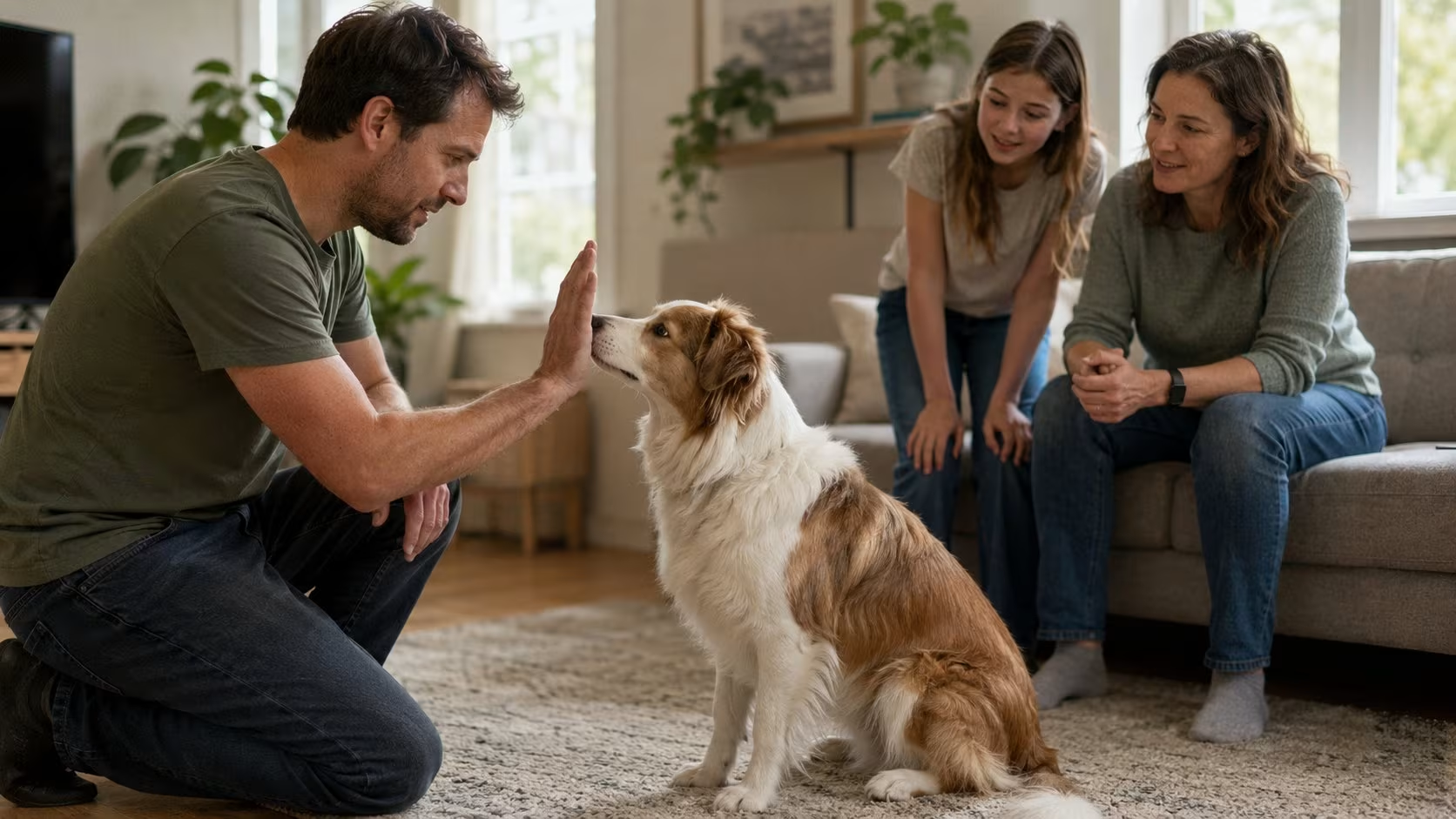
Pawdraft's guide on teaching a dog to roll over is a trick example, but the same basics apply: break the behavior into pieces, reward progress, and avoid forcing the dog into position.
Basic training should solve daily friction. Teach the dog to wait at doors, settle on a mat, walk on a loose leash, come when called, trade items, accept handling, and relax when people eat. These skills matter more than flashy tricks.
For face licking, teach a replacement. Ask for sit, hand target, or chin rest, then reward calm contact. Pawdraft's article on stopping constant face licking is a good example of redirecting rather than only saying no.
If the dog jumps on guests, leash the dog before the door opens, reward four paws on the floor, and give guests instructions. Do not wait until the dog is airborne.
Avoiding punishment-based tools and mixed cues
Do not train when angry. Do not punish a dog for coming back slowly; that teaches the dog that returning can be unpleasant. Do not call the dog only for nail trims, baths, or leaving the park. Do not use cues before the dog understands the behavior.
Do not rely on equipment to replace teaching. Prong collars, shock collars, leash pops, spray bottles, and yelling may suppress behavior while adding fear or confusion. A dog who avoids punishment is not the same as a dog who understands.
Socialization is not letting every person and dog crowd the dog. It is careful exposure to normal life at a level the dog can handle. Puppies and new adult dogs need calm experiences with surfaces, sounds, people, vehicles, handling, alone time, grooming tools, and household routines. Pair new things with food, play, and distance when needed.
If the dog tucks its tail, hides, growls, freezes, refuses food, or tries to escape, the exposure is too intense. Move farther away or stop. Confidence grows when the dog feels safe enough to learn.
Getting household agreement on the rules
Training fails when every person uses different rules. Decide whether the dog can be on furniture, where the dog eats, how guests greet the dog, which cues mean what, and who handles walks. Put the rules where children and guests can see them.
If one person rewards jumping and another scolds it, the dog gets mixed information. If one person repeats come before clipping a leash and leaving the park, recall becomes weaker. Consistency is not about being strict; it is about being understandable.
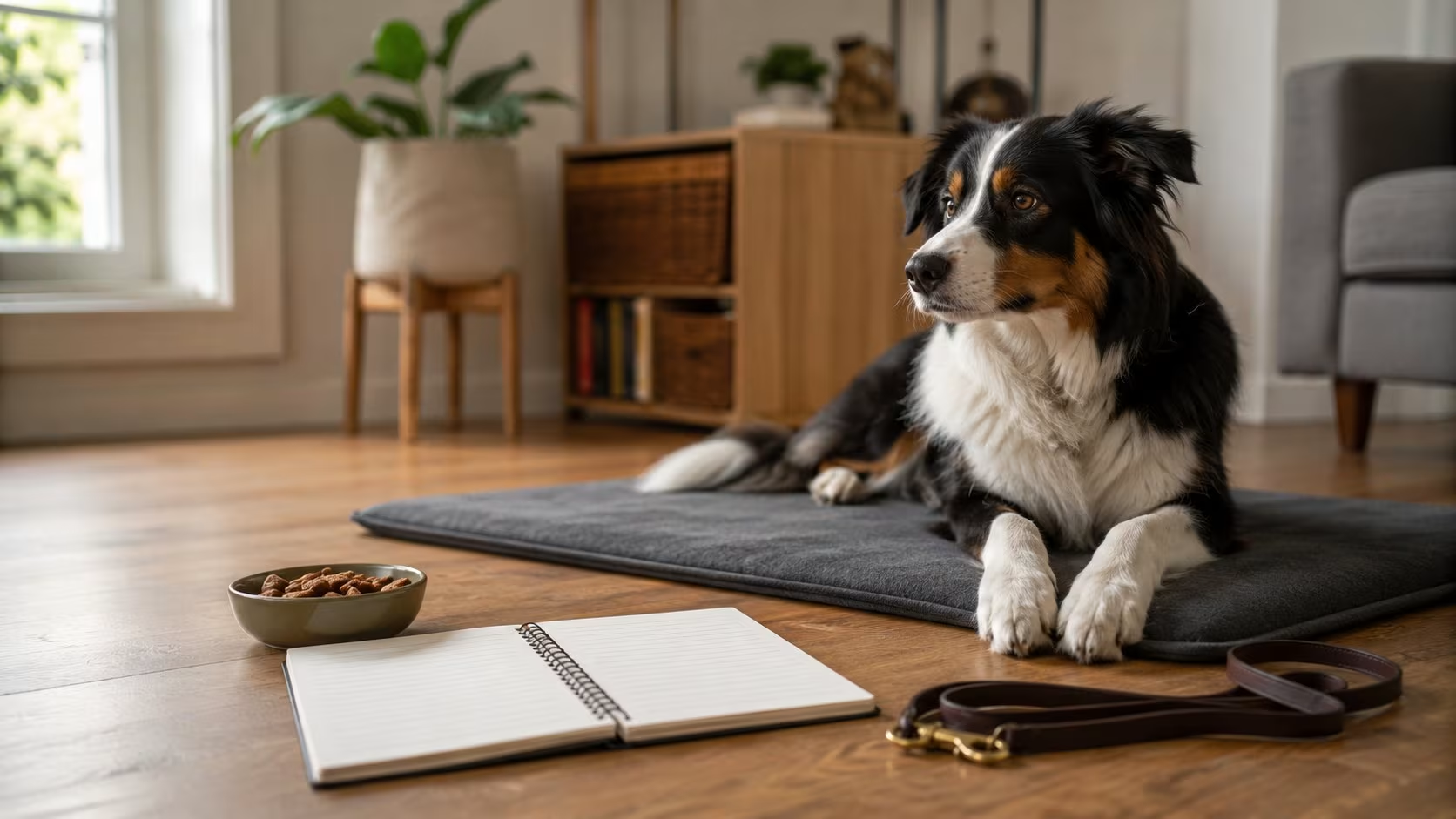
Write down what you practiced, where, and what happened. If the dog can wait at the food bowl but not at the front door, that is not failure. It means the door is harder. If the dog can settle after a walk but not before dinner, train the easier version first.
If the dog jumps for treats, lower the treat hand only when four paws are on the floor. If the dog grabs fingers, use a flat palm, larger treat, or toss the food on the floor. If the dog barks from frustration, make the task easier and reward quiet choices before the barking starts.
If the dog ignores cues outside, the environment is too hard. Move farther from distractions and use better rewards. If the dog lies down and quits, the session may be too long. If the dog becomes frantic, add sniff breaks and calmer exercises.
Many owners accidentally train excitement. They use a high voice, wave treats, and move fast, then wonder why the dog cannot settle. Calm delivery helps. Reward relaxed posture, soft eye contact, and slow movement. Teach the dog that stillness pays too.
Turning daily routines into training moments
Use meals, walks, doors, toys, and greetings as training moments. Ask for a hand target before clipping the leash. Reward a sit before opening the door. Pay quiet mat behavior while the family eats. Practice recall between rooms before trying it outside.
Training becomes easier when it is part of life. A dog who earns small rewards all day learns faster than a dog who has one long lesson after everyone is tired.
A trained family dog does not need to be perfect. The dog should be able to settle while people eat, walk through a doorway without launching, come away from the yard with help, and relax after visitors arrive. Those are practical wins.
If a behavior keeps failing, define it more clearly. "Be good" means nothing to a dog. "Lie on your mat while I cook" is trainable. "Stop being wild" is vague. "Bring a toy and sit before greeting" gives the dog a job.
Clear jobs reduce household conflict quickly.
Get professional help for aggression, severe fear, separation distress, resource guarding, panic, repeated biting, or behavior that risks safety. Look for a credentialed trainer who uses reward-based methods and can explain a plan without intimidation. A veterinarian should check sudden behavior changes because pain, vision loss, endocrine disease, and neurological problems can alter behavior.
Building humane habits into everyday life
Dog training basics are simple but not always easy: manage the environment, reward the behavior you want, use clear cues, keep sessions short, raise difficulty slowly, and protect the dog's confidence. Humane training works best when it is specific, consistent, and woven into daily life rather than saved for a single long session once a week.



0 Comments
No comments yet. Be the first to share your thoughts!
Leave a Comment
Your name, email address and comment are processed to publish and reply to the comment; your email address is never published. Details: Privacy Notice.