

Through choice and relaxation more than through dramatic behavior. A dog that seeks you out, settles with loose muscles and soft eyes, checks in on a walk, sleeps facing away from you and comes back after being given space is showing attachment. Single behaviors mislead. A wag can mean arousal of any kind, and a lick can mean stress.
Dogs do not say "I love you" in words, and not every wag, lick, or stare means affection. Dogs communicate through body posture, movement, scent, sound, routine, and choices. The strongest signs of love are usually calm and repeatable: the dog seeks you out, relaxes near you, checks in without panic, and chooses contact that looks soft rather than tense.
Reading those signs carefully protects the dog too. A dog who leans because it feels safe is different from a dog who freezes while being hugged. A dog who licks gently during greeting is different from a dog who licks compulsively from stress. Love should be read in the whole body, not one cute behavior taken alone.
Reading a relaxed body versus a tense one
VCA's guide to canine communication explains that dogs use body posture, facial expression, tail position, ears, eyes, sounds, and scent cues to communicate. A dog who feels safe with you often has soft eyes, a relaxed mouth, loose muscles, and an easy body curve.
Hard staring, stiffness, tucked tail, whale eye, raised hackles, and a frozen posture tell a different story. The body should look loose, not locked. Soft eyes are one of the sweetest signs because they often appear when a dog is resting near a trusted person with no demand being made.
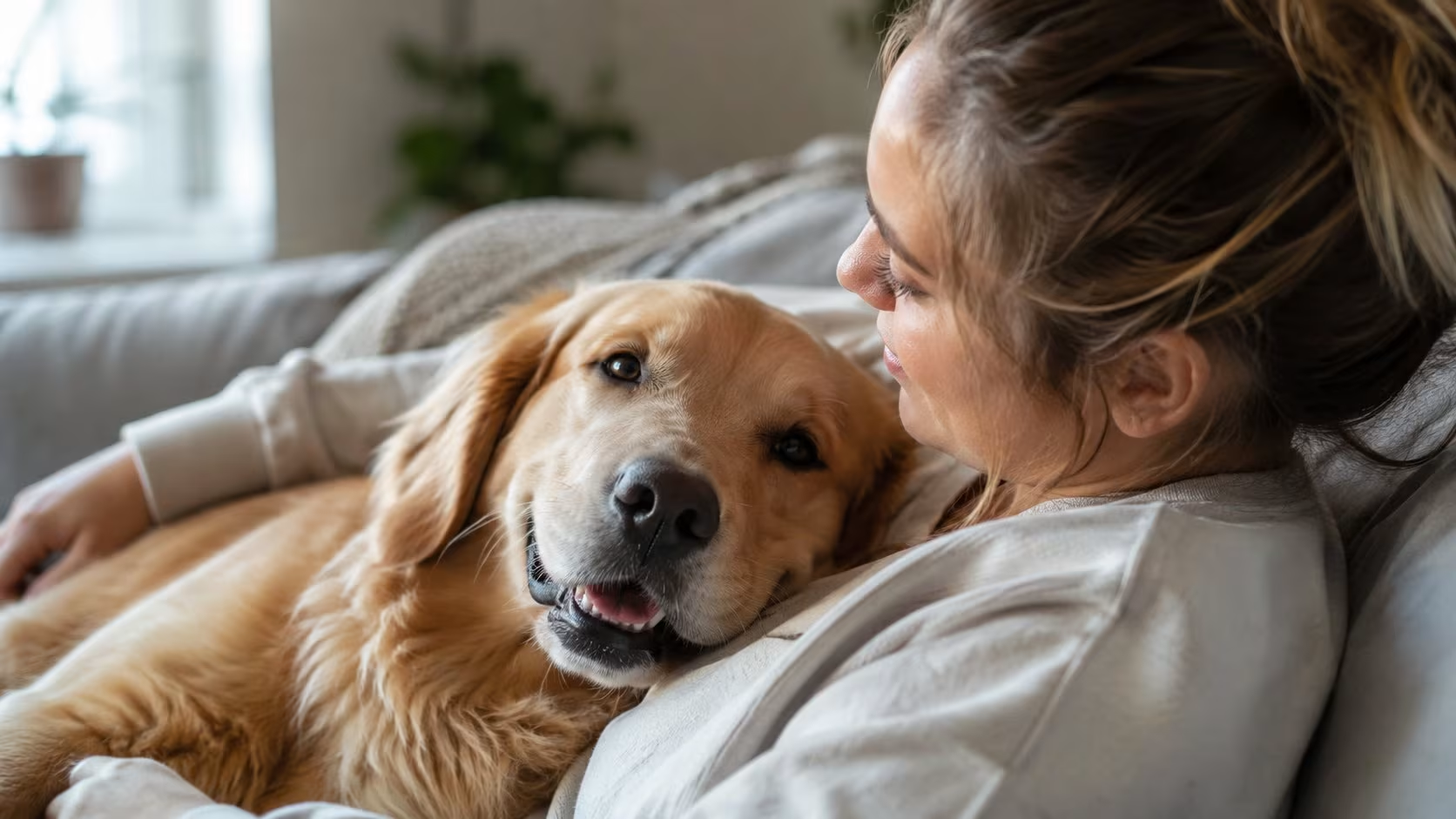
This is also why the most comforting dogs are rarely the most demonstrative ones. A dog that lies down four feet away and exhales is doing more for a person in distress than one that jumps, spins and licks, which is the same pattern described in how ESAs can help with mental illness. Calm is contagious in both directions.
A dog who glances back during a walk, slows down when you stop, or returns after sniffing is showing social connection. It does not mean the dog never wants independence. It means the dog includes you in its movement through the world.
Reward check-ins. Say "yes," offer a treat, smile, or move toward a sniffing spot. This builds a walking partnership. Dogs who check in are easier to keep safe because they are not treating the leash as a contest.
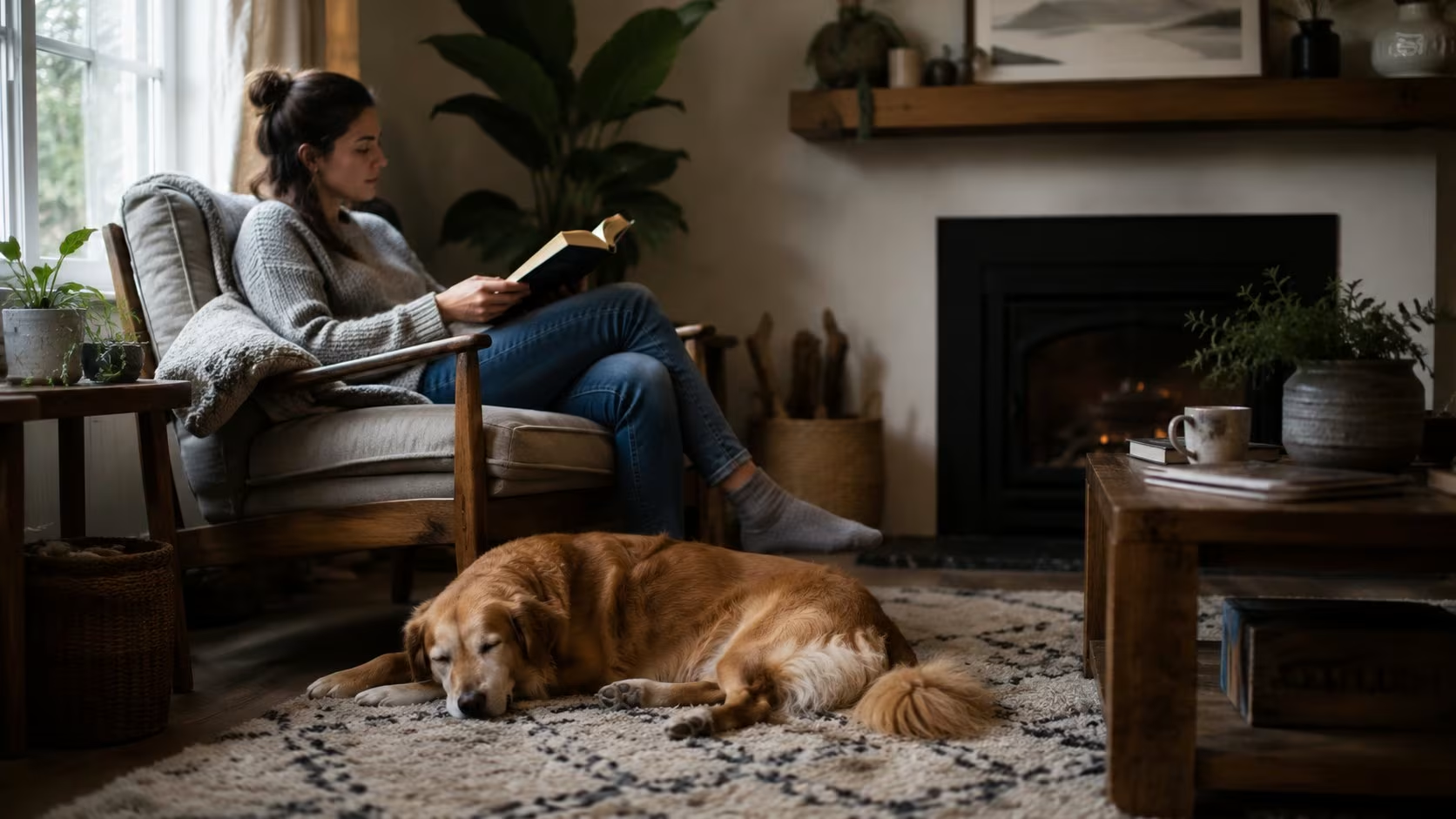
Many dogs show trust by sleeping in the same room, resting with their back turned, or lying near your feet. Turning the back can be a compliment because the dog does not feel the need to watch you constantly. Rest is vulnerable, so a dog who truly sleeps near you is saying the space feels safe.
Contact style is temperament, not a measure of the bond. Some dogs want to be touching. Others want the same room and six feet of floor, and among breeds bred to work at a distance that is closer to normal than lap-sitting is. The measure is whether the dog chooses to be where you are, not how close it parks. That preference for proximity over contact is a real form of company, which anxiety disorders and ESA animals touches on from the human side.
| Sign | What it looks like | What it is not | |
|---|---|---|---|
| 1 | Relaxed body | Loose muscles, easy curve to the spine, open mouth, weight settled | Stillness. A frozen dog is also not moving, and it is the opposite of this |
| 2 | Soft eye contact | Brief, blinking, voluntary, offered while nothing is being asked for | A hard stare held with a stiff body, which is a warning |
| 3 | Voluntary closeness | The dog chooses your room, then settles | A dog that cannot be in any other room without panicking |
| 4 | Manageable greeting | Wiggling, a stretch, a toy, then settling within a minute or two | Frantic barking, urination, shaking or destruction, which is distress wearing excitement's clothes |
| 5 | Play invitation | A play bow, a dropped toy, a bounce and a pause to see what you do | Mouthing and jumping with no off switch |
| 6 | Check-ins | A glance back on a walk, slowing when you stop, returning after a sniff | Never leaving your side, which is a dog that cannot relax rather than one that likes you |
| 7 | Leaning | Shoulder against your leg or chin on your knee, body loose, free to step away | Pressing into you while trembling, which is a request for protection |
| 8 | Resting nearby | Sleeping in your room, sometimes with its back to you | Sleeping only while in physical contact, unable to settle otherwise |
| 9 | Responding to cues | Coming when called, settling on a mat, waiting at a door, without being loomed over | Compliance produced by pressure, which looks similar and feels different to the dog |
| 10 | Syncing with routine | Anticipating breakfast, walks, bedtime, and the sound of your workday ending | Anxiety at every schedule change, which is rigidity rather than comfort |
Greetings that feel calm versus overexcited
A loose, wiggly greeting when you come home can be a sign of affection. The dog may wag, stretch, bring a toy, circle, or press close. The key is body softness. A greeting that includes frantic barking, urination, shaking, or destruction may be excitement mixed with distress, not simple happiness.
Help the dog by keeping greetings calm. If the dog jumps, reward four paws on the floor. If the dog panics when left alone, treat that as a behavior-health issue rather than proof of love. Secure attachment can look calm, not desperate.
Some dogs show affection by bringing a toy, doing a play bow, or starting a game. A dog who brings you a toy may want tug, fetch, chase, or simply shared attention. It is not always a gift in the human sense, but it is a clear invitation.
Use play to strengthen the bond. Teach take, drop, wait, and restart so the game has rules. This makes play safer and gives the dog a way to connect without jumping or mouthing.
Worth saying plainly, since the phrase turns up everywhere: there is no such thing as an ESA certification. No federal registry exists, and the certificates, ID cards and registry listings sold online carry no legal effect, whatever pages such as getting pets ESA certified suggest. What exists is a letter from a licensed mental health professional who treats you. A dog can be deeply loved, and can genuinely help, and still be a pet in the eyes of a landlord.
Leaning close and choosing consent-based petting
Leaning can mean trust, comfort, or a request for contact. A dog may press its shoulder against your leg, rest a chin on your knee, or stand close while you scratch its chest. This is affectionate when the body stays loose and the dog can move away freely.
Do not trap the dog in hugs. Many dogs tolerate hugging without enjoying it. Instead, pet for a few seconds, pause, and see whether the dog asks for more. Consent-based petting keeps affection from becoming pressure.
The Science paper on the oxytocin-gaze positive loop found that mutual gaze between dogs and owners was associated with oxytocin changes linked to bonding. That does not mean staring down a nervous dog is loving. It means soft, voluntary eye contact between bonded partners can be part of the relationship.
Let the dog choose the gaze. Soft blinking, relaxed posture, and easy breathing are good signs. A hard stare with stiffness is a warning.
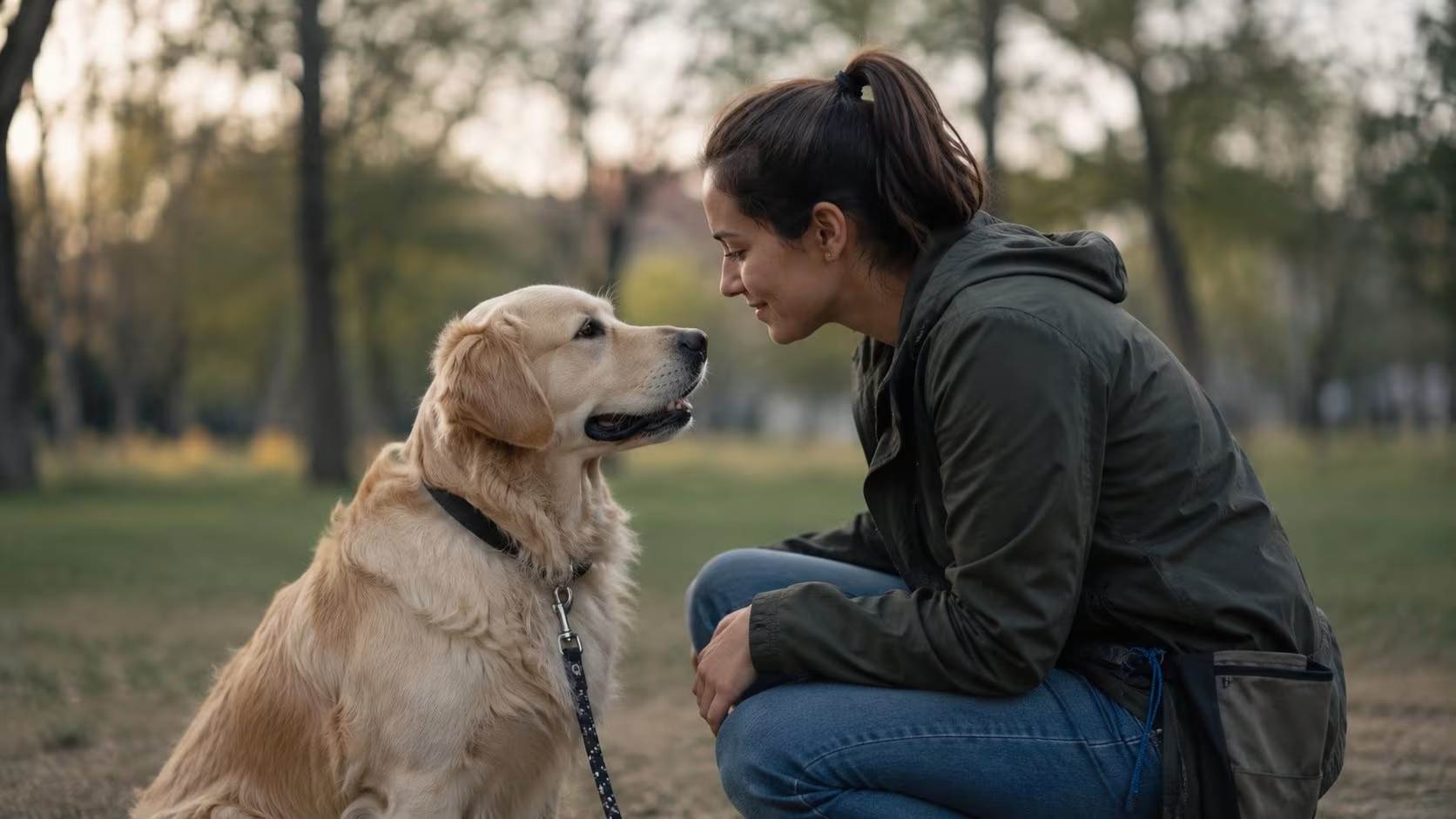
Some dogs follow their people from room to room because they enjoy company. A relaxed follower may settle nearby while you cook, work, fold laundry, or get ready for bed.
Following becomes a concern when the dog cannot rest unless touching you, panics behind closed doors, or becomes destructive when alone. The loving response is to build confidence, not reward panic. A healthy bond leaves room for the dog to rest independently.
There is a five-second test for whether a dog is enjoying being petted, and most people have never run it.
- Pet the dog for about five seconds, on the chest or the side of the neck rather than over the top of the head.
- Stop. Take your hand back to your own lap and stay still.
- Watch for three seconds. A dog that wants more will push into the hand, paw at it, move closer, or reposition to put the good spot under it.
- A dog that stays put and does nothing was tolerating it. A dog that gets up, turns its head away, licks its lips, yawns, shakes off, or moves out of reach was asking you to stop before you stopped.
- Run it with a new dog, run it when a child wants to pet your dog, and run it on your own dog occasionally. Preferences change with age, with pain, and with the spot you picked.
The test matters more than it sounds because most bites to family members follow a sequence of ignored requests to stop. The dog that turns its head away is being polite. Dogs that learn politeness does not work stop using it.
Syncing with the household's daily rhythm
A dog who responds to familiar cues is not showing obedience in a cold way. The dog has learned that your communication predicts something understandable. Coming when called, settling on a mat, waiting at a door, or dropping a toy can all reflect trust built through fair training.
Responding to a cue is also not the same as performing a task, a distinction that matters if anyone ever asks. A dog that lies on a mat when told is a well-mannered dog. A dog trained to lie across someone's legs during a panic episode, because that person needs it, is doing task work, and that difference is what ESA letter requirements turns on. Most loved, well-trained dogs are in the first group and there is nothing lesser about it.
Dogs often show love by syncing with the household. They learn breakfast time, walk time, bedtime, work calls, school pickup, and weekend patterns. A dog who relaxes into the family's rhythm is showing comfort with the people and the environment.
The syncing runs both ways, and that is the part owners underestimate. A dog learns your Sunday from your Tuesday within weeks, and it also learns your bad days, often before you have named them yourself. Households where the schedule is stable produce dogs that settle faster, which is the practical reason routine matters for emotional support, whether or not any paperwork is ever involved. The state-by-state process, for readers who need it, is in getting an emotional support animal in New York.
Why a single behavior can mean many things
Tail wagging does not always mean love. The AKC guide to reading dog body language explains that a wagging tail can indicate emotional arousal, which may include excitement, frustration, or other feelings. Licking can mean affection, appeasement, taste, stress, or habit. Rolling over can invite belly rubs, but it can also signal uncertainty.
Read three things at once instead of one. What the whole body is doing, not just the tail. What just happened, since the same posture means different things a second after a doorbell and a second after a nail trim. And whether the dog could leave if it wanted to, because a behavior performed by an animal with no exit is not evidence of anything.
Love is not a dog tolerating everything a person wants. A dog who freezes during hugs, turns the head away during kisses, or licks lips while being held may be asking for space. A respectful owner notices those signals and changes the interaction.
Love is also not constant access. Dogs need sleep, choice, exercise, sniffing, and quiet time. A dog who can rest away from you and then return happily is often showing a healthier bond than a dog who cannot cope with a closed door.
What builds this is boring and cumulative. The dog learns that when it moves away from your hand, the hand stops, every time. That when it comes back after being called away from something good, it does not lose the good thing. That when a stranger reaches over its head, you step in. None of those register as events. A few hundred of them are the relationship.
If a dog's affectionate behavior changes suddenly, consider pain or illness. A dog who stops greeting, avoids touch, or becomes irritable may need a veterinary check rather than a relationship theory.
The bond also improves when owners meet the dog's species needs. Sniffing, chewing, exploring, training, play, rest, and predictable care all give the dog reasons to feel secure. Affection is easier to see when the dog is not bored, overwhelmed, or uncomfortable.
Small rituals count too: the same bedtime cue, a calm morning greeting, a favorite walking route, or a quiet brushing session. Dogs often show love through these repeated, ordinary moments.
| Behavior | Can mean | What tells you which |
|---|---|---|
| Tail wagging | Emotional arousal of any kind, including excitement, frustration or conflict | Where the tail is held and how the rest of the body looks. A low loose sweep with a wiggling body is not the same as a high stiff flick |
| Licking your face | Greeting, appeasement, taste, learned attention-seeking, or stress | What preceded it. Licking that starts when you lean over the dog is usually a request for space |
| Rolling over | Inviting a belly rub, or signaling uncertainty and asking to be left alone | Whether the dog stays loose when you approach. Rub for three seconds and stop. If the dog holds the position, it wanted the rub |
| Following you everywhere | Enjoying company, or being unable to cope alone | Whether the dog settles once it arrives, and what happens behind a closed door |
| Leaning on you | Comfort and contact-seeking, or fear | The rest of the body. A trembling dog pressing into your legs in a vet lobby is not being affectionate |
| Yawning | Tiredness, or stress | Whether the dog just woke up. A yawn during a hug or a training session is usually the second one |
| Staring at you | Soft mutual gaze, or a hard warning stare | Blinking and muscle tone. Soft eyes blink and the face is loose. A warning stare does neither |
| Bringing you an object | An invitation to play, an invitation to chase, or guarding it near you | Whether the dog releases it, and what happens if you reach. Stiffening over the object is not a gift |
Reading the whole dog for genuine affection
The single most reliable sign is the one that is hardest to photograph. Give the dog a way out of the interaction, and watch whether it stays. A dog that can leave the room and lies down in it anyway, that can move away from your hand and pushes back into it, that can ignore you on a walk and glances back regardless, is telling you something a dog with no choice cannot tell you at all.

0 Comments
No comments yet. Be the first to share your thoughts!
Leave a Comment