

The phrase "attack dog training secrets" attracts the wrong kind of attention. A dog trained to bite, threaten, or pursue people is a serious liability when handled poorly. Real protection work is not a shortcut for feeling safer at home, and it is not something to copy from videos. The responsible path starts with obedience, neutrality, impulse control, safe management, and honest limits about what a family dog should be asked to do.
Most homes do not need an attack-trained dog. They need a stable dog who can ignore visitors, stop at doors, release toys, walk without lunging, settle behind a gate, wear a muzzle if needed, and come when called. Those skills protect the dog, the family, guests, delivery workers, children, and neighbors.
Why fear-based protection creates real danger
The American Veterinary Society of Animal Behavior's humane dog training position statements support reward-based methods and warn against aversive approaches. That matters here because intimidation-based training can increase fear, defensive behavior, and loss of control. A dog who bites from panic is not protection. It is a danger.
Legitimate protection, police, military, and sport-dog programs use selection, testing, controlled environments, experienced trainers, insurance awareness, and strict handling rules. A family trying to make a pet "more protective" by teasing, scaring, or encouraging aggression can create a dog who cannot safely live in ordinary society.
Pawdraft's article on why dogs become aggressive over toys is a better starting point than any bite-work fantasy. Resource guarding, fear, pain, and frustration should be treated as behavior problems, not shaped into weapons.
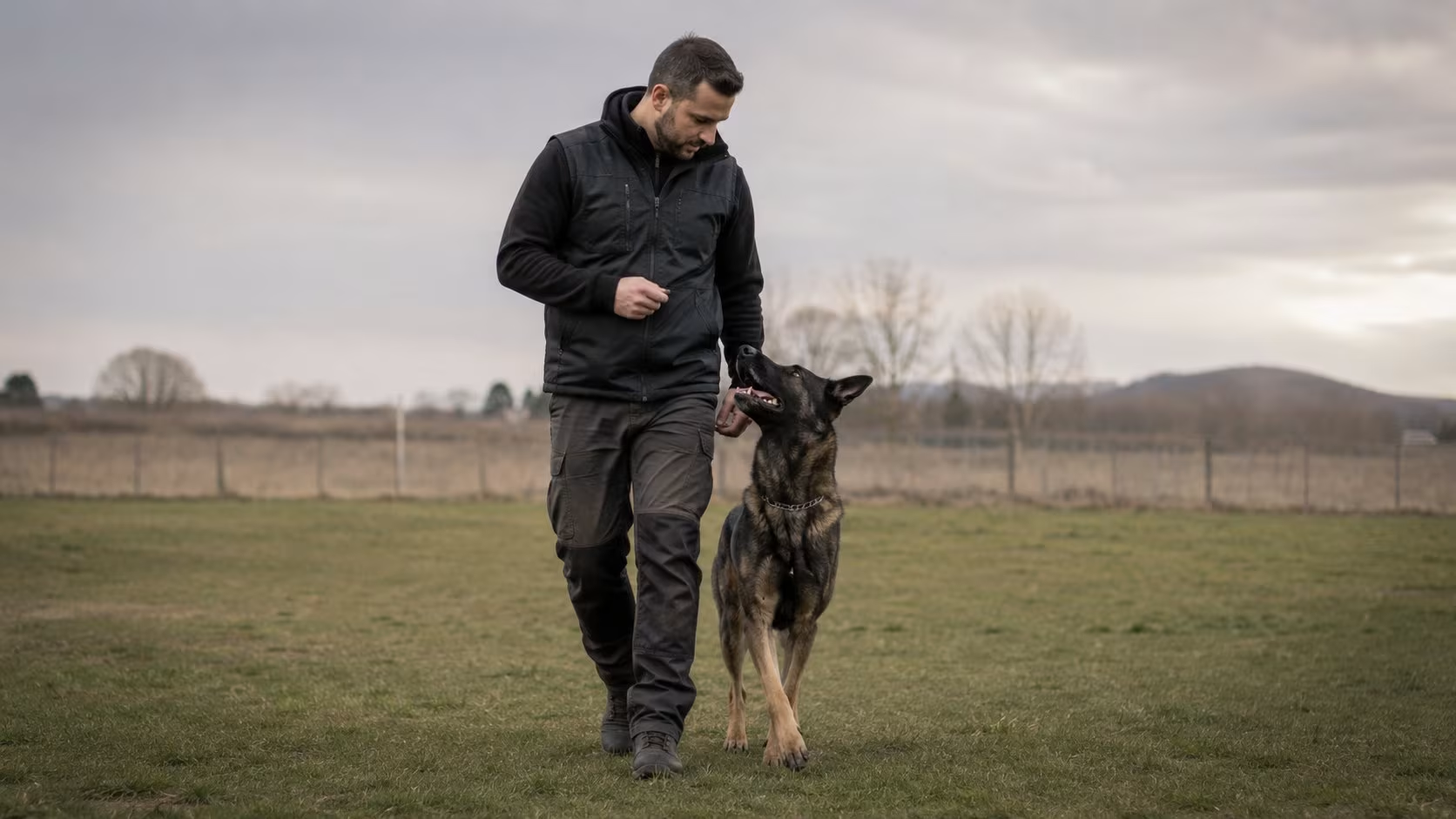
A reliable dog does not explode at every person who walks past the house. Neutrality means the dog can notice a person, dog, bicycle, doorbell, or delivery truck and still think. The dog may look, then return to the handler. That skill is built through distance, rewards, and calm repetition.
Reward the dog for checking in around triggers. Practice from far enough away that the dog can eat, look back, and move with you. If the dog is barking, lunging, or spinning, the setup is too hard. Move farther away and make the next repetition easier.
Pawdraft's guide to stopping leash lunging fits this work directly. A dog who cannot pass a stranger on leash should not be encouraged to "protect" anyone.
Everyday obedience skills that prevent trouble
Useful guard-dog foundations are ordinary skills done under distraction: name response, recall, sit, down, stay, leave it, drop, loose-leash walking, place, wait at doors, and calm release from excitement. These are not glamorous, but they are the skills that let a handler prevent a problem.
A strong recall matters more than a strong bark. A dog who comes away from a fence, leaves a dropped object, and settles behind a door is safer than a dog who has been praised for acting threatening. Practice small wins every day.

Pawdraft's article on teaching your dog to wait for the food bowl teaches the same impulse-control pattern in a low-risk setting. Waiting for food, doors, toys, and greetings builds a dog who can pause before acting.
Doorways are where many "protective" dogs fail. Use barriers before the door opens: leash, baby gate, crate, closed room, or place mat. Reward the dog for going to the station when the doorbell rings. Do not let the dog rehearse charging at guests or delivery workers.
For a dog who barks at guests, the goal is not to silence every sound. A short alert bark may be normal. The goal is that the dog can stop, move away, and let the handler decide what happens next. If the dog cannot recover after the trigger is gone, the dog needs behavior help.
Pawdraft's guide to calming a high-energy dog before guests arrive is useful because arousal control before the door opens is easier than trying to regain control during chaos.
A basket muzzle is not a punishment. It is a safety tool for vet care, grooming, travel, legal requirements, or behavior modification. A dog should learn to put its nose into the muzzle voluntarily, eat through it, wear it briefly, and move calmly while wearing it. This should be conditioned with rewards.
Muzzle training does not mean the dog is bad. It means the handler is taking risk seriously. A muzzle does not replace training, leashes, gates, or distance, and it should not be used to push a dog into situations it cannot handle.
Getting professional help after a bite occurs
If a dog has already bitten, threatened visitors, lunged at children, guarded people, or shown unpredictable aggression, get help from a veterinarian and qualified behavior professional. Pain, fear, neurological problems, past trauma, and poor handling can all create aggressive behavior.
Ask about liability too. Home insurance, rental agreements, local ordinances, breed rules, and bite laws can affect the family. A single bite can lead to medical bills, legal action, housing problems, and euthanasia risk for the dog. No online training tip is worth that.

Golden Retrievers, German Shepherd Dogs, Malinois, Rottweilers, Boxers, Dobermans, and mixed breeds can all become unsafe if their needs and training are ignored. Breed does not excuse poor control. Pawdraft's article on training a Golden Retriever is a reminder that even friendly breeds need manners, recall, and impulse control.
High-drive dogs also need legal outlets: scent work, tracking games, obedience, agility foundations, tug with rules, trick training, and structured exercise. A bored dog with guarding instincts can invent work nobody wants.
Behaviors owners should never encourage at home
Do not tease a dog behind a fence. Do not reward growling at guests. Do not ask friends to act like attackers. Do not use pain to create "respect." Do not encourage a fearful dog to threaten people. Do not let children handle a dog during guarding behavior. Do not assume a barking dog will know the difference between a criminal and a neighbor.
Also avoid building behavior you cannot stop. If you teach a dog that charging makes people retreat, the dog may use that lesson in contexts you never planned: a hallway, hotel, vet clinic, playground, or family gathering.
A family dog is expected to live with visitors, children, neighbors, repair workers, delivery drivers, and veterinarians. That job rewards calm recovery, predictable handling, and tolerance of ordinary human movement. A protection dog has a narrower, highly controlled working role. Blending the two without professional structure is where many owners create risk.
If the household wants a dog mainly for deterrence, the safest deterrents are often non-bite skills: barking once and returning to a mat, standing calmly beside the handler, walking with confidence, and staying under control when a stranger appears. A dog does not need to bite to make the household feel more prepared.
Practice impulse control around everyday rewards. Ask the dog to wait before the door opens, pause before chasing a toy, drop a tug toy, return to the handler after looking at a person, and settle on a mat while guests sit down. These drills build the pause that prevents mistakes.
Keep drills easy enough that the dog can win. If the dog is already barking or lunging, do not ask for a heroic down-stay. Move away, lower the trigger level, and reward the first calm check-in. Safety training should reduce arousal, not push the dog until it fails.
Documenting a bite history for professionals
A bite history changes the plan. Write down who was bitten, what happened before it, where the bite landed, whether skin broke, whether food or toys were involved, and how the dog behaved afterward. That record helps a veterinarian or behavior professional assess risk.
Do not test the dog by recreating the bite setup. A bite is data, not a challenge. Use gates, leashes, muzzles, and distance until a professional plan is in place. The goal is to prevent rehearsal while the cause is investigated.
Children should never be told to "be the boss" of a guarding dog. They should close gates, avoid grabbing collars, and get an adult. Visitors should not be asked to feed, correct, or challenge the dog. Delivery workers should not become training helpers without consent.
Set the house up so people do not have to make fast choices. Put signs where needed, lock gates, use package drop spots, and move the dog before doors open. Good management is quiet, but it prevents the incidents that create legal and emotional fallout.
Building control instead of encouraging aggression
The safest "attack dog training secret" is that most pet owners should not train attack behavior at all. Build obedience, neutrality, impulse control, recall, doorway routines, muzzle comfort, and safe management. If true protection work is needed, use lawful, qualified professionals who can evaluate the dog, handler, and risk. A responsible dog protects the household best by staying clear-headed and controllable, not by being encouraged to threaten first.




0 Comments
No comments yet. Be the first to share your thoughts!
Leave a Comment
Your name, email address and comment are processed to publish and reply to the comment; your email address is never published. Details: Privacy Notice.