

Boxers are strong, playful, people-focused dogs. A well-trained Boxer can be funny, affectionate, athletic, and reliable in a busy home. An under-trained Boxer can become a jumping, mouthy, counter-surfing force with excellent comic timing and very little self-control. The training goal is not to flatten the dog's personality. The goal is to teach the dog where all that energy should go.
Start with short sessions, clear rewards, enough exercise, and household rules everyone follows. Boxers often learn quickly when the work feels like a game, but they also notice inconsistency. If one person rewards jumping with laughter and another person scolds it, the dog receives a mixed lesson.
Reward-based methods for a powerful breed
The American Veterinary Society of Animal Behavior's humane dog training position statement supports reward-based methods and advises against aversive training. That matters for Boxers because they are physically powerful and socially sensitive. Harsh handling can create avoidance, frustration, or defensive behavior without teaching the replacement skill.
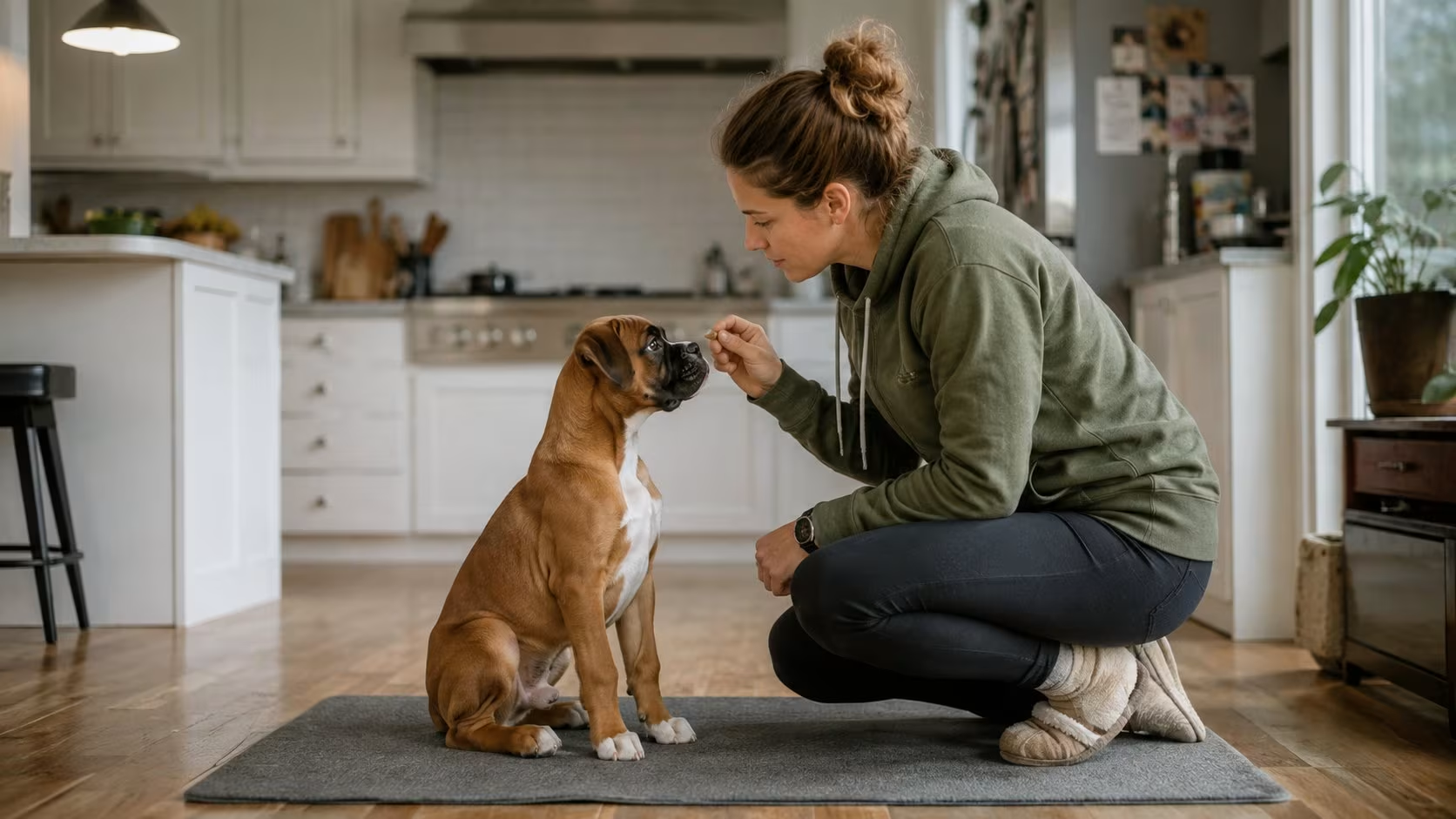
Reward the behavior you want before the Boxer invents something louder. Pay for four paws on the floor, eye contact, settling on a mat, loose-leash walking, dropping a toy, and coming when called. Food, play, praise, access to a sniffing area, and a tug session can all be rewards if the dog values them.
Pawdraft's article on crate training a dog fits well with Boxer training because a safe resting place helps active dogs learn off-switch behavior. A crate should be introduced gradually, not used as a place to trap a frustrated dog for hours.
A Boxer who is staring at guests, squirrels, food, or another dog cannot process a cue well. Teach attention first. Say the dog's name once, mark the moment the dog looks back, and reward. Practice in quiet rooms, then the yard, then sidewalks, then near mild distractions.
Do not repeat the name ten times. Repetition teaches the dog that the first nine tries do not matter. If the dog cannot look back, increase distance from the distraction or use a better reward. Attention is the doorway to sit, down, recall, leave it, heel, and calm greetings.
Practicing polite greetings with guests
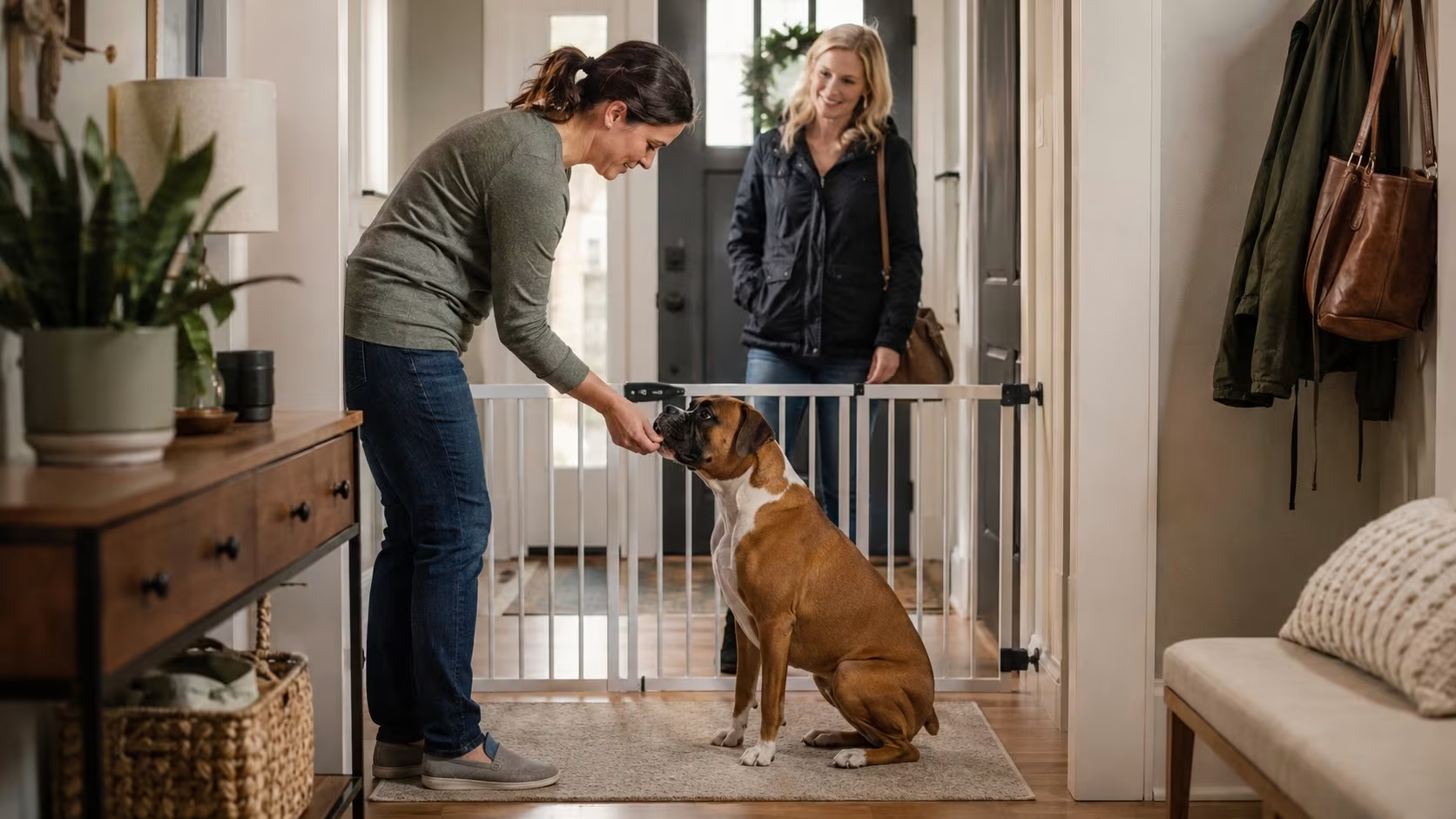
Jumping is one of the most common Boxer complaints because the breed can be bouncy and enthusiastic. Do not wait until the dog is already launching at a visitor. Practice with family members first. The dog approaches, all four paws stay down, a treat appears low near the dog's mouth, and the person greets calmly.
If the dog jumps, the person turns away or steps behind a gate. The dog is not yelled at, pushed, or kneed. Physical pushing often turns greeting into wrestling. Reward the instant the paws are on the floor. Use a leash or baby gate for real guests until the dog has enough practice.
Pawdraft's article on why a dog is scared of new people is useful if the Boxer is not just excited but worried. Fearful dogs need distance and choice, not forced greetings.
Impulse control does not mean asking a Boxer to be still for long periods with no outlet. It means teaching the dog that waiting briefly makes good things happen. Ask for a pause before food bowls, doors, tug games, car exits, and leash clipping. Keep early waits one or two seconds.
Tug is a strong training tool for many Boxers. Teach take, drop, and restart. Dropping the toy should make the game come back, not end forever. This makes the cue valuable and reduces grabbing. If teeth touch skin, the game pauses. If the dog takes the toy calmly, the fun returns.
Pawdraft's guide to stopping a dog from eating poop is a separate behavior topic, but it reinforces the same management rule: prevent rehearsal while teaching the dog what pays instead.
A Boxer can pull hard enough to make walks unpleasant or unsafe. Begin loose-leash training before the dog is full grown. Reward the dog beside your leg, change direction before pulling becomes a habit, and stop moving when the leash tightens. Movement is part of the reward, so the dog should learn that a loose leash makes the walk continue.
Use equipment that protects the dog and handler. A front-clip walking gear may help some families manage pulling while training develops. Avoid relying on pain or fear to control a strong dog. Equipment can create a window for learning, but it does not replace teaching.
Practice in low-distraction areas first. A Boxer who pulls mildly on a quiet street may lose control around another dog, a soccer game, or a jogger. Add difficulty slowly, and reward check-ins often.
Meeting the breed's exercise and play needs
The American Boxer Club describes Boxers as active, high-energy dogs who enjoy physical and mental challenges. Training works better when that need is respected. A Boxer who has spent the whole day under-stimulated may not be ready to practice a polite guest greeting at 7 p.m.
Daily exercise can include walks, sniffing time, fetch with rules, tug, training games, food puzzles, safe play, and dog sports when appropriate. Avoid overdoing repetitive jumping with young puppies because growing bodies need sensible limits. Mental work can tire a Boxer without turning every day into a marathon.
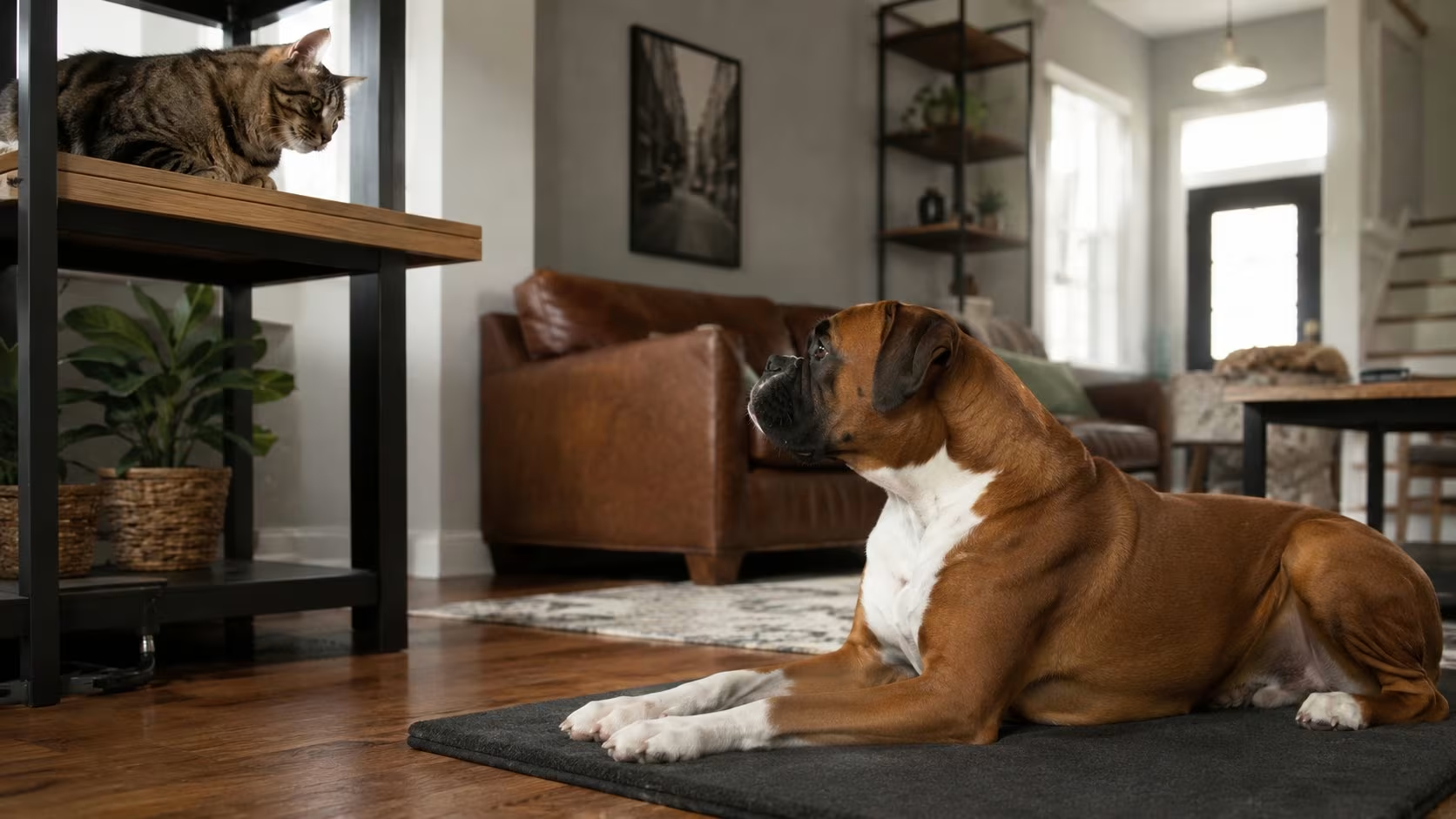
Boxers can be friendly, but their play style may be too rough for cats, puppies, small dogs, or older pets. Use barriers, leashes, and short introductions. Reward calm looking away, relaxed sniffing, and returning to the handler. Do not let the Boxer chase and then hope friendship develops.
Pawdraft's article on introducing a new puppy to your cat is useful for any high-energy dog entering a home with smaller animals. Calm management protects both pets and prevents chase habits.
Building tolerance for grooming and handling
Boxers have short coats, but they still need nail trims, ear checks, tooth brushing, bath routines, and veterinary handling. Teach these in tiny pieces. Touch a paw, reward, stop. Lift a lip, reward, stop. Show the towel, reward, stop. A dog who accepts handling is safer at home and easier for the clinic to examine.
Pawdraft's guide to getting a dog to like taking a bath fits this work because bath resistance often starts with slippery floors, rushed handling, or scary water pressure. Slow preparation beats a wrestling match.
The first mistake is waiting for the dog to grow out of behavior. Jumping, mouthing, stealing laundry, and pulling can become stronger with age if they are rewarded. The second mistake is training only when the dog is already overexcited. Practice when the dog can still think.
The third mistake is using too few rewards. Owners often stop rewarding calm behavior because it looks like nothing is happening. For a Boxer, calm behavior is a real skill. Pay for it. The fourth mistake is letting exercise replace training. A tired Boxer may nap, but the dog still needs cues and rules.
Many Boxer owners feel blindsided when a polite puppy becomes a noisy adolescent. The dog may test jumping again, forget leash skills near other dogs, chew more, or become pushier with guests. This is not proof that early training failed. It is a normal time to return to easier setups and reward the basics heavily.
Use management during this stage. Put the dog on leash before visitors enter, block the kitchen during cooking, offer legal chew items, and schedule exercise before high-stimulation parts of the day. The adolescent Boxer needs fewer lectures and more structure.
Games that mix movement with thinking
Boxers often enjoy games that mix movement and thinking. Try short recalls between family members, find-it games with treats, controlled tug, mat work during meals, and short obstacle courses with low, safe objects. End while the dog is still successful. A five-minute session that ends well is better than a twenty-minute session that turns wild.
Keep heat and breathing in mind. Boxers can be sensitive to hot weather and heavy exertion. Train in shade, use water breaks, and avoid pushing hard exercise during high heat.
Get professional help if the Boxer growls over food, bites, lunges, panics when alone, fights handling, or becomes suddenly aggressive. Pain, fear, thyroid disease, sensory change, and past learning can all affect behavior. A veterinarian and qualified reward-based trainer can help separate manners from medical or emotional problems.
Keep records of what happens before the behavior. Boxers often look impulsive, but the pattern may be predictable: doorbell, leash, food bowl, children running, or another dog passing the fence. Patterns give the trainer something concrete to change.
Channeling energy into daily good manners
Boxer dog training works best when it channels energy instead of fighting it. Use reward-based methods, short sessions, daily exercise, attention games, loose-leash practice, polite greeting routines, crate comfort, and calm handling. Teach the Boxer what to do before excitement peaks, keep the household consistent, and treat good manners as a daily habit rather than a one-time puppy project.





0 Comments
No comments yet. Be the first to share your thoughts!
Leave a Comment