

Dog obedience training should make daily life easier and safer. The goal is not a dog who performs like a robot. The goal is a dog who can pay attention, come when called, walk on a loose leash, wait when needed, settle in the house, leave unsafe items, and cooperate with handling. Good obedience is communication.
The AVSAB humane dog training statement supports reward-based training and warns against aversive methods. For owners, that means teaching the behavior you want and paying it well, not scaring the dog into silence.
Teaching a dog to check in first
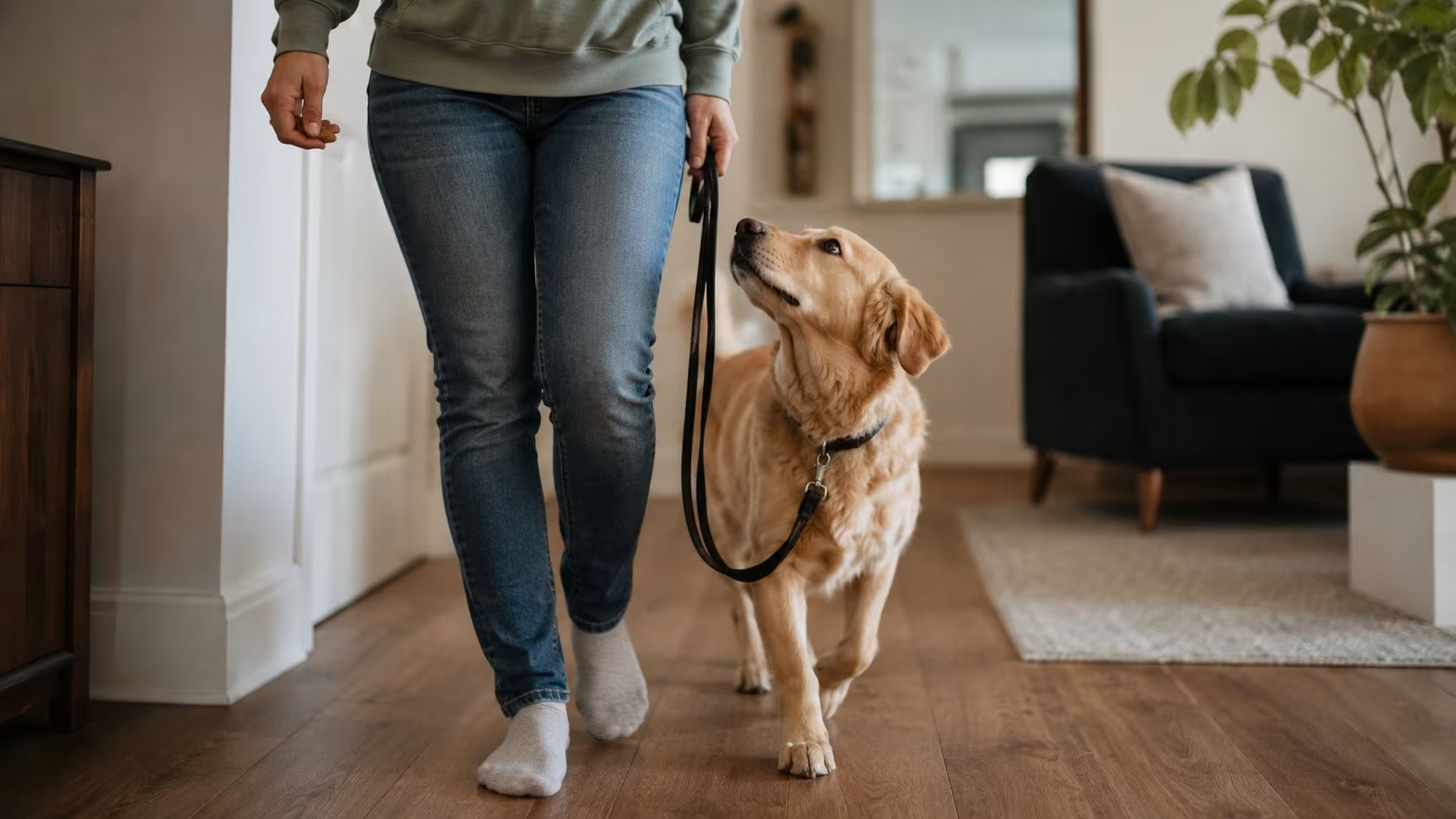
Before teaching many cues, teach the dog that checking in with you pays. Say the dog's name once. When the dog looks at you, mark and reward. Practice in quiet rooms, then the yard, then calm outdoor areas. Do not start in a crowded park.
Attention is not staring at you forever. It is the dog being able to reconnect when you ask. Without attention, sit, stay, heel, and come are much harder.
Pawdraft's guide to essential dog training commands can help organize cues, but attention is the foundation that makes those cues usable.
Sit and down are useful for greetings, vet visits, doorways, and settling. Lure with food if needed, mark the moment the dog's body reaches position, and reward. Fade the lure by moving food out of the hand and rewarding from a pocket.
Building a reliable recall with rewards
Recall should always pay. Use a happy voice, reward generously, and avoid calling the dog for punishment. Start with short distances. Practice indoors before using a long line outside. Never trust off-leash recall near traffic, wildlife, or hazards until the dog has a long history of success.
Wait means pause until released. Use it at doors, food bowls, crates, and curbs. Pawdraft's article on teaching a dog to wait at the curb shows why this cue has safety value.
Leave it protects dogs from dropped pills, spoiled food, trash, wildlife, and unsafe objects. Start with boring items, reward the dog for turning away, and build slowly. Do not begin with a steak on the floor.
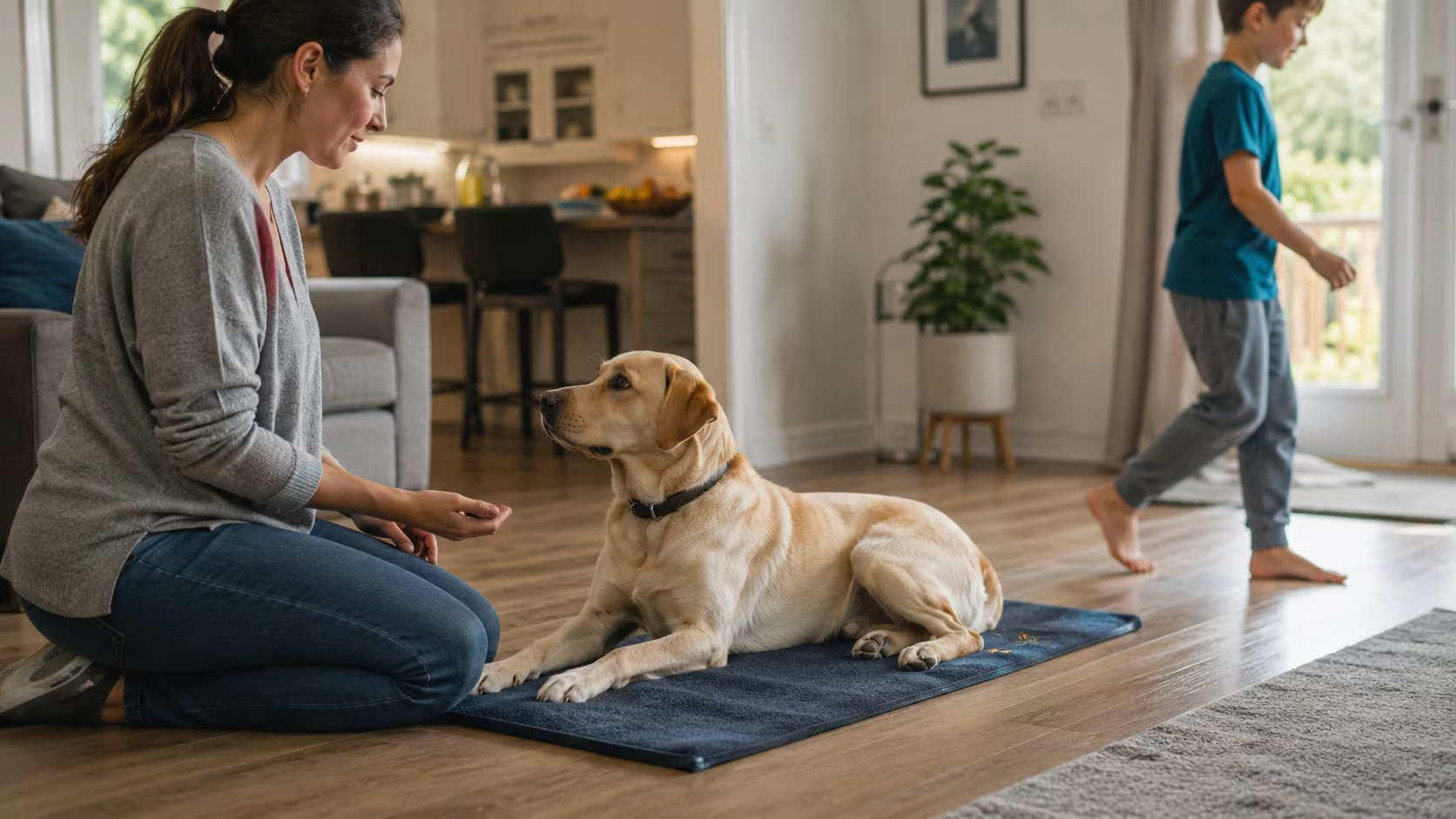
A settle cue teaches the dog to relax in a specific place. Pawdraft's guide on teaching a dog to go to their bed belongs in every household obedience plan.
Keeping sessions short and highly engaging
Train for two to five minutes several times a day. End while the dog is still engaged. If the dog is sniffing away, barking, biting hands, or lying down from frustration, the session is too hard or too long.
Use real-life rewards. A dog who waits at the door gets released outside. A dog who offers eye contact gets to sniff. A dog who walks beside you gets forward movement. Food is still useful, but life rewards help obedience move beyond the living room.
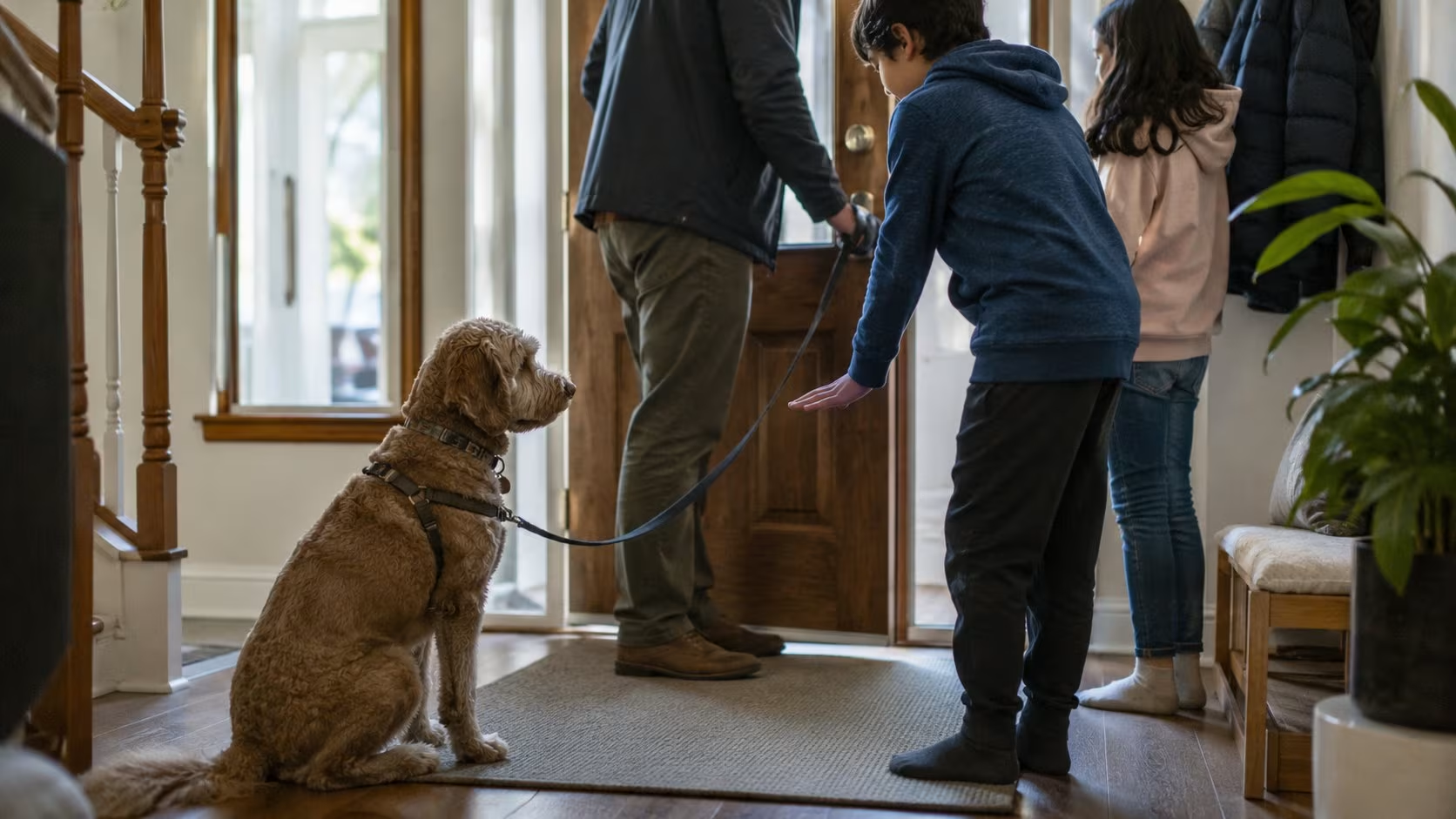
Every stay or wait needs a release cue. Use a word such as free, okay, or all done. Reward the dog for holding position, then release before the dog breaks. At first, duration may be one second. Build slowly. If the dog breaks repeatedly, the time is too long or the distraction is too hard.
Do not mix stay and wait carelessly. Some families use stay to mean hold position until the person returns, and wait to mean pause briefly until released. The dog does not care which words you choose, but the household should use them the same way.
Loose leash walking does not require the dog to stare up at you. It means the leash stays soft and the dog can move with you without pulling hard. Reward beside your leg, change direction before the leash tightens, and stop moving when pulling starts. Begin in boring areas.
If the dog is overexcited at home, Pawdraft's article on controlling hyperactive dogs at home can help reduce the energy level before outdoor walks. A dog who explodes out the door is not ready for polite leash work on a busy sidewalk.
walking gear can help with comfort and control, but they do not train the dog alone. The dog still needs reinforcement for walking near you and checking in.
Adding distractions one layer at a time
Dogs do not automatically understand that a cue learned in the kitchen applies near dogs, squirrels, children, doorbells, or traffic. Add distractions one layer at a time. Increase distance before increasing difficulty. Reward heavily when the dog succeeds in a new place.
If the dog fails, do not assume defiance. Move farther away, use a better reward, make the cue easier, or end the session. Training should stretch the dog, not drown it.
Obedience should include gentle handling. Teach the dog to accept collar touches, paw handling, ear checks, brushing, fitting walking gear, and mouth checks through rewards. This makes vet care and grooming easier.
Pawdraft's guide on teaching a dog to bring their leash is a fun task, but practical cooperation such as standing still for a walking gear may matter more for daily life.
Do not repeat cues endlessly. Do not punish a dog for coming back. Do not train only when guests arrive. Do not ask for stay before the dog understands release. Do not use obedience to suppress fear. A scared dog may need distance, confidence work, and professional help.
If aggression, panic, or separation distress is present, obedience alone is not enough. Get qualified help. A dog can know sit and still be overwhelmed.
Proofing cues across different locations
Proofing means teaching the dog that cues apply in more places than the kitchen. Practice sit, down, wait, and recall in different rooms, then the yard, then quiet sidewalks, then mildly distracting areas. Change one difficulty at a time: distance, duration, or distraction.
If the dog fails in a new place, pay more and ask for less. A three-second stay near the curb may be harder than a one-minute stay in the living room. Treat that as useful information.
Everyone should use the same release cue, recall cue, and leash rules. Children should not be responsible for high-distraction training without adult help. Guests should be told how to greet the dog before they enter. Dogs learn from every interaction, not only formal sessions.
Distractions should be planned, not random. Start with a toy on the floor, then a person walking by, then a dog at a distance, then a busier location. Reward success at each level. If the dog cannot eat or respond, move away. Stress and overexcitement block learning.
Recall around distractions should be protected with a long line. A failed recall teaches the dog that ignoring the cue works. Call once, move away happily, reward when the dog turns, and avoid using recall for anything unpleasant. If bath time always follows come, the cue will weaken.
Setbacks are normal. Illness, adolescence, moving homes, visitors, heat, storms, and schedule changes can make obedience look worse. Go back to easier versions instead of increasing pressure. A dog who knew wait last month may need a refresher in a new doorway.
Keep a simple list of skills and locations. Attention in kitchen, yard, sidewalk, park entrance. Wait at bowl, door, curb, car. This shows what is trained and what is only assumed.
Avoiding fear-based public practice mistakes
Good obedience should make the dog safer and calmer, not smaller and more worried. A dog who crouches, avoids eye contact, or stops offering behavior may be afraid. Reward-based obedience should create a dog who wants to participate.
Public practice should be boring at first. Choose a quiet parking lot, empty school sidewalk, or calm park edge. Practice attention, hand target, loose leash walking, and settle. Leave before the dog becomes frantic. A short success teaches more than a long struggle.
Do not use public places to test skills the dog does not have at home. If recall is weak in the hallway, it is not ready near traffic. If wait is weak at the kitchen door, it is not ready at a curb. Build each skill in layers.
Food can be faded without disappearing. Reward every correct response at first, then reward the best responses, then mix in life rewards such as sniffing, toys, greeting, or movement. Keep surprise food rewards available for hard environments. A paycheck that becomes random too early can make behavior fade.
If the dog stops responding after treats disappear, the reward schedule changed too fast. Go back a step and make success worth it again.
Food is information before it is bribery anyway.
Making obedience part of daily cooperation
Dog obedience training should build attention, recall, loose leash walking, wait, leave it, settle, and cooperative handling. Use reward-based methods, short sessions, clear criteria, and real-life practice. Obedience is strongest when it helps the dog understand the household, not when it forces performance through fear.

0 Comments
No comments yet. Be the first to share your thoughts!
Leave a Comment