

House training a dog is not about catching mistakes and scolding. It is about making the right toilet choice easy, rewarding it fast, and preventing indoor accidents while the habit forms. Puppies need frequent chances to go outside because their bodies are still developing. Adult dogs may need the same structure if they were never taught, changed homes, had a medical issue, or learned that indoor toileting was normal in a previous setting.
The plan is simple, but it requires consistency: take the dog to the right place often, reward there, supervise indoors, confine safely when you cannot watch, clean accidents well, and adjust the schedule based on real results.
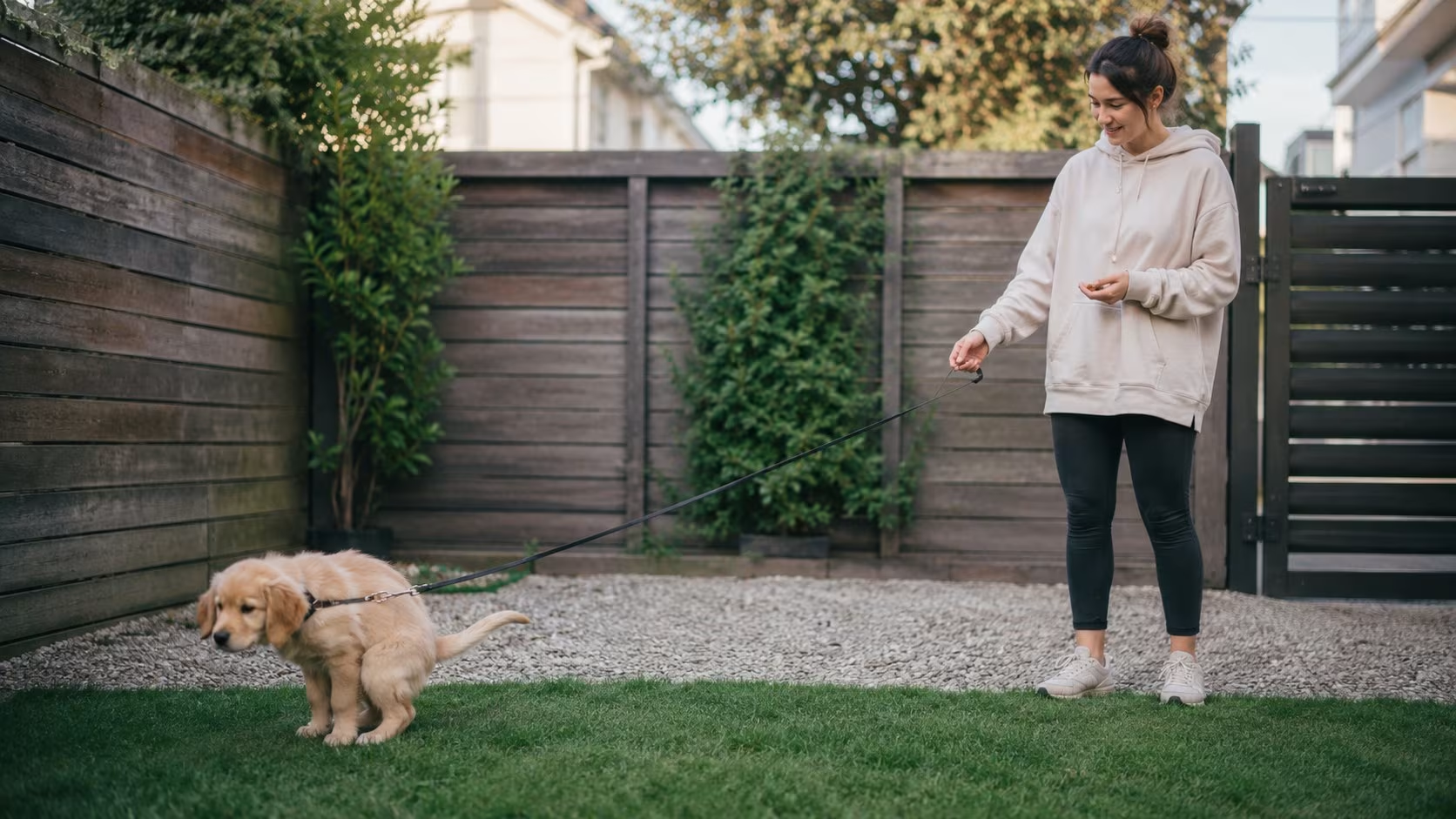
Rewarding a puppy right after toileting
VCA's guide to house training puppies and dogs recommends patience at the elimination area and rewarding after the puppy toilets while still outside. That timing matters. If the treat comes after the dog returns indoors, the dog may not connect the reward with toileting outside.
Young puppies often need trips after waking, eating, drinking, playing, training, chewing, and excitement. Adult dogs may be able to wait longer, but a dog learning a new home still benefits from frequent, predictable opportunities. Start with more trips than you think you need, then stretch the time only after success becomes routine.
Pawdraft's guide to crate training a dog pairs well with house training because confinement can prevent wandering accidents when introduced kindly.
Supervision is not the same as being in the same house. A puppy can squat behind a chair in three seconds. Use a leash tethered to an adult, baby gates, a pen, or a small dog-proofed room so the dog cannot drift away and practice the wrong habit.
Watch for sniffing, circling, sudden wandering, whining, moving toward a door, pausing during play, or leaving the room. Interrupt gently and take the dog outside. If the dog toilets outside, reward. If not, come back in, supervise closely, and try again soon.
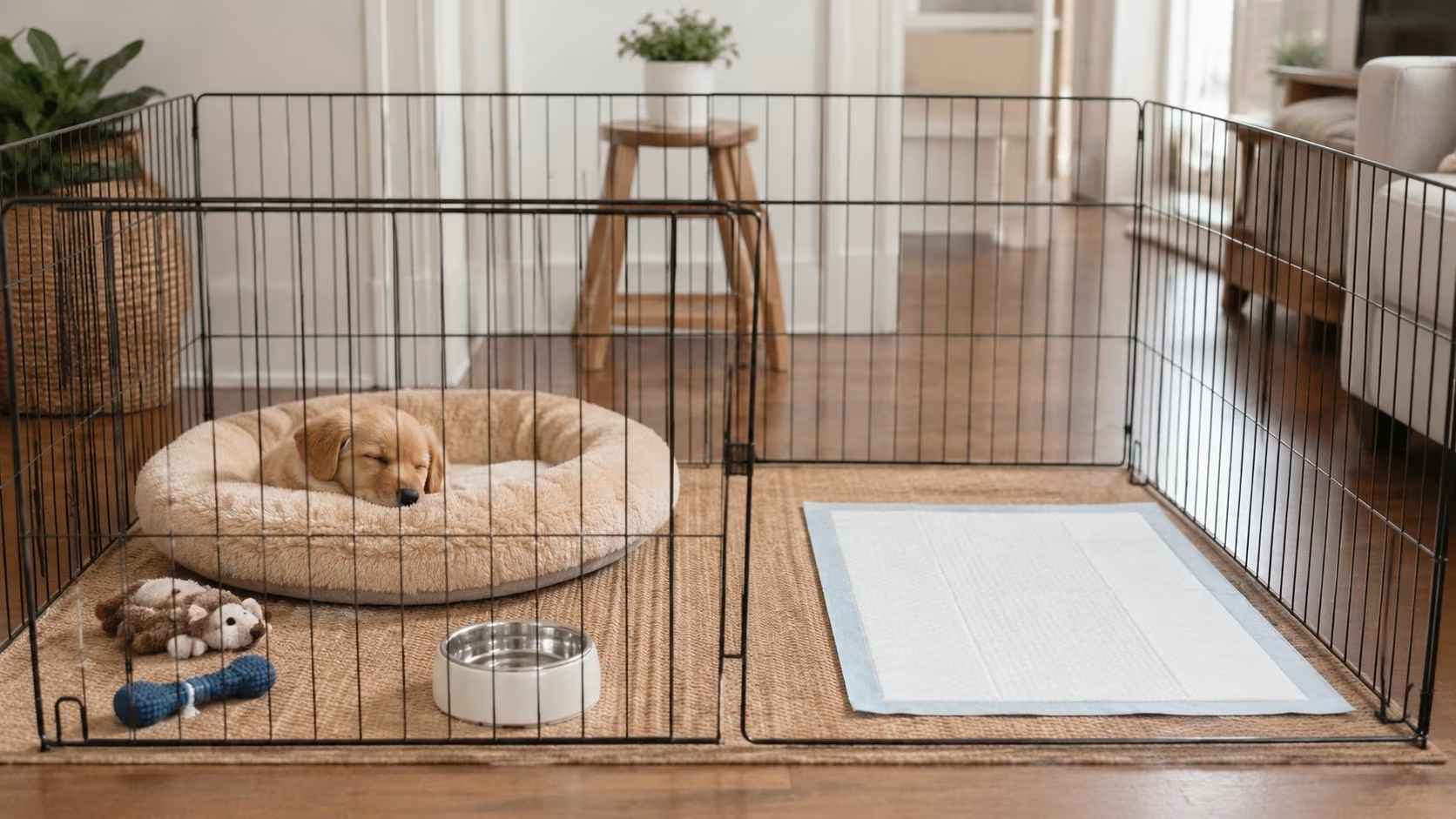
A crate should be large enough for the dog to stand, turn, and lie down comfortably, but not so large that one corner becomes a toilet. Some dogs do better with an exercise pen that has a bed area and an appropriate toileting surface during early training or long workdays.
Crates should not be used as punishment. Feed meals there, offer safe chews, and build comfort gradually. If the dog panics, drools, bends bars, or soils from distress, stop using the crate as the main answer and get help.
Timing treats and praise outdoors
Take treats outside with you. Wait quietly. When the dog finishes toileting, mark the moment with a soft "yes" or praise, then give the treat near the toilet area. You can also add a short play break after the reward so the dog does not learn that toileting ends outdoor fun.
Avoid repeating a cue over and over while the dog sniffs. Use one calm phrase if you like, then wait. Dogs need time to find the right spot.
If you catch the dog starting to toilet indoors, interrupt gently with a neutral sound and take the dog outside. If the dog finishes outside, reward. If you find the accident later, clean it and adjust the plan. The dog will not understand punishment after the fact.
Use an enzymatic cleaner made for pet urine. Ordinary cleaners may remove the smell for humans while leaving odor that tells the dog the spot is still a toilet.
Call a veterinarian if accidents appear suddenly in a previously trained dog, if the dog strains, cries, drinks far more, urinates huge amounts, leaks while sleeping, has blood in urine, vomits, loses weight, or seems painful. House training cannot fix urinary tract disease, diabetes, kidney disease, incontinence, diarrhea, or pain.
Pawdraft's article on simple ways to stop dogs from eating poop is relevant because some dogs investigate or ingest waste during the same toilet routine. Clean promptly and manage access while training continues.
Managing nighttime and morning trips
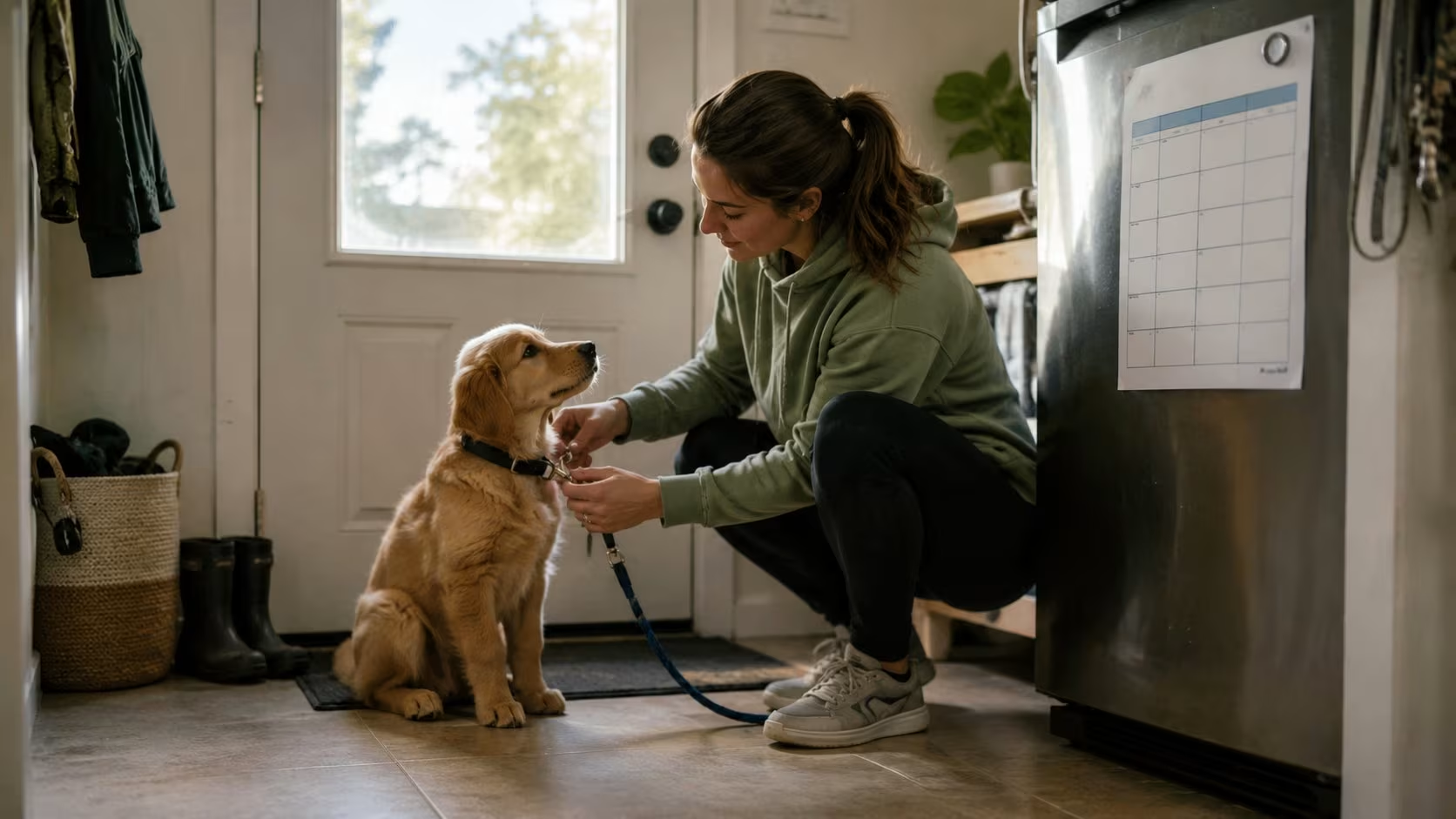
Puppies often need a nighttime trip at first. Keep it boring: leash on, outside, toilet, reward if they go, back to bed. Do not turn the 2 a.m. trip into playtime. Morning trips should happen quickly because many dogs need to go as soon as they wake.
If accidents happen just before the usual morning trip, wake earlier for a week. Success builds the habit; repeated accidents teach the wrong pattern.
Some dogs need a leash even in a fenced yard because they forget the purpose of going outside and start playing. Stand still near the toilet area first. After the dog goes, reward and then release to sniff or play.
Pawdraft's article on teaching a puppy to walk on a leash can help families who struggle to get the puppy outdoors calmly. A puppy who pulls, bites the leash, or freezes at the doorway may need leash practice separate from toilet urgency.
Bored dogs may wander, chew, drink from odd places, and create messes that look like training problems. Pawdraft's article on signs your dog is bored can help owners separate toilet mistakes from a day that lacks exercise, sniffing, and mental work.
Still, do not use more freedom as enrichment until house training is reliable. Give enrichment inside a managed space, then expand room access gradually.
Tracking accident patterns to adjust the plan
Track accidents, outdoor successes, meal times, water intake, crate time, and overnight results. Patterns show what to change. If accidents happen at 4 p.m., add a 3:45 trip. If accidents happen during play, take the dog out before play and again after a few minutes.
Give more freedom only after a clean pattern. One good day is not finished training. Several weeks of success in one area can earn access to another room.
Adult dogs can be house trained, but the plan may need extra patience. A rescue dog may have lived outdoors, in a kennel, in a crowded home, or with inconsistent routines. Some adult dogs do not understand that carpet, rugs, and corners are off limits because nobody taught the rule before.
Treat the adult dog like a learner, not a troublemaker. Start with frequent trips, supervision, confinement, and rewards just as you would with a puppy. The advantage is that many adult dogs have better bladder control once they understand the routine.
Transitioning from pads to outdoor toileting
Some homes use pads, turf boxes, or balcony toilets because of apartment living, illness, weather, or vaccine timing. If the final goal is outdoor toileting, make that transition deliberately. Move the pad closer to the door, reward outdoor success heavily, and avoid leaving pads in many locations.
Dogs learn surfaces. A puppy trained on soft pads may generalize to bath mats or rugs if the setup is unclear. Keep the toilet surface distinct and the rest of the home managed.
Clean every accident thoroughly, then block access to repeat spots until the dog has a better habit. If one hallway corner becomes a favorite toilet, close the door, use a gate, or keep the dog leashed near you. Repeated practice in the wrong spot can overpower a good schedule.
Remove loose rugs during early training if needed. Rugs absorb odor and feel like grass or pads to some puppies. Add them back after the dog has a reliable history.
House training can slide during teething, adolescence, moving, boarding, illness, schedule changes, or bad weather. Do not treat regression as betrayal. Return to the last level that worked: more supervision, more outdoor trips, less freedom, and better rewards.
If regression appears suddenly in an adult dog, call the veterinarian. Medical causes should be ruled out before assuming the dog forgot training.
Logging a week of habits and mistakes
For one week, write down wake time, meals, water, outdoor trips, successful toilet times, accidents, crate periods, and sleep. Patterns appear quickly. A log also helps the veterinarian if accidents seem medical.
Use the log to plan instead of reacting. If the puppy urinates twenty minutes after dinner every night, schedule that trip. If the dog has accidents after rough play, interrupt play for a toilet break.
The biggest mistake is giving freedom too soon. A puppy who has one clean day in the kitchen is not ready to roam bedrooms, hallways, and carpeted rooms. Expand access slowly, one area at a time, and return to smaller spaces after mistakes.
Another mistake is ending the outdoor trip immediately after toileting every time. Some dogs learn to delay because going potty makes the fun stop. Reward toileting, then allow a few minutes of sniffing or calm play when possible.
Rain, snow, heat, wind, construction noise, and neighborhood dogs can interrupt progress. If the dog will not go outside during bad weather, create shelter, use a leash, and wait calmly. Reward even small success. For tiny dogs and young puppies, safe footing and warmth matter.
Distractions matter too. A puppy may forget to toilet because leaves, birds, and smells are more interesting. Keep the dog in the toilet area first, then allow exploring after success.
Building reliability through repeated success
House training a dog works when the household controls the setup. Take the dog out often, reward immediately outside, supervise closely indoors, use crates or pens kindly, clean accidents with enzymatic cleaner, and watch for medical signs. A reliable dog is built through repeated success, not punishment after mistakes.



0 Comments
No comments yet. Be the first to share your thoughts!
Leave a Comment