

Agility is one of the most enjoyable dog sports because it combines movement, timing, focus, and teamwork. The dog runs tunnels, jumps, contact obstacles, weave poles, and handling lines while the person directs the path. Good agility training starts long before full-height jumps or fast courses. It begins with health, warmups, body awareness, focus, safe surfaces, and short sessions that leave the dog wanting more.
Speed is the reward after foundations are in place. Rushing a dog into equipment can create fear, injury, sloppy habits, or frustration. A safe agility dog understands cues, can recover from excitement, and has the strength and coordination to handle the work.
Checking physical readiness before jumps
The AKC page on getting started in agility describes agility as a sport that involves tunnels, weave poles, jumps, and other obstacles. Those movements can be demanding. Before training seriously, ask a veterinarian whether the dog is physically ready, especially if the dog is young, senior, overweight, recovering from injury, or has orthopedic concerns.
Puppies can learn flatwork, focus, body awareness, and play skills, but repetitive jumping and tight turning should wait until growth and conditioning are appropriate. Large dogs, long-backed dogs, and dogs with prior injuries may need a slower plan.

Pawdraft's article on why dogs eat grass is not an agility guide, but digestive upset during training days should be noticed. A dog who feels unwell should not be pushed through a class.
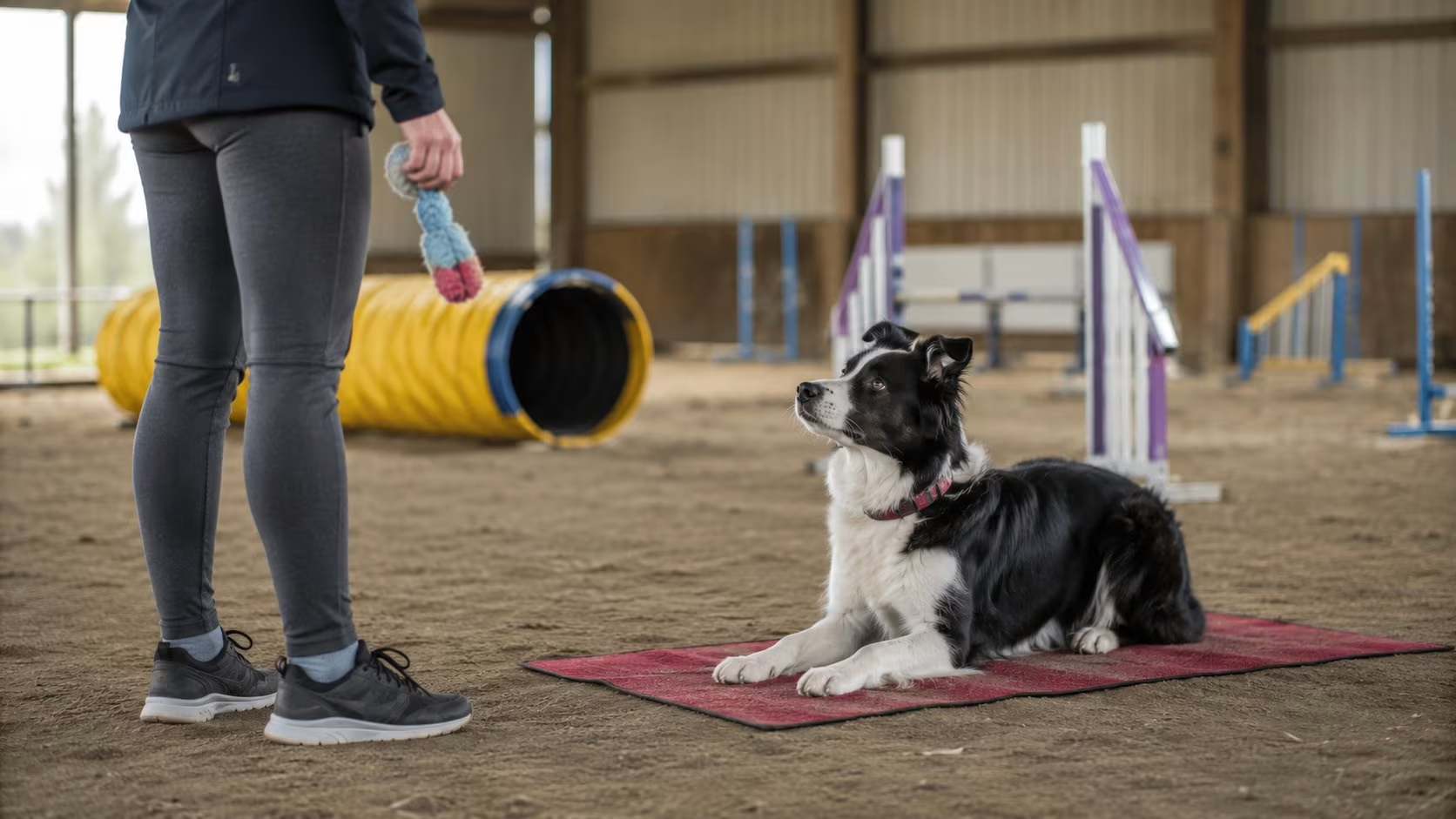
Teach attention, recall, hand targets, toy play, mat work, start-line stay, release cues, left and right turns, and reward placement before adding obstacles. The dog should learn that following the handler is fun and clear. Equipment then becomes part of the game rather than the whole game.
Short sessions work best. Five minutes of clean practice can teach more than a tired dog running ten messy repetitions. End before the dog gets frantic or sore.
Train on nonslip surfaces. Wet grass, slick floors, loose gravel, and hard pavement can increase injury risk. Warm up with walking, gentle turns, tricks, and low-intensity movement before asking for speed. Cool down with easy walking.
Do not train hard in heat. Dogs can overheat during fast work, especially thick-coated, brachycephalic, senior, or overweight dogs. Bring water, shade, and rest breaks.

Introducing jumps, tunnels and weave poles
Jumps should start low. Teach the dog to move between jump wings, follow the handler, and land balanced before height matters. Do not use jumping to burn energy from an out-of-control dog. That creates unsafe speed without thought.
Tunnels can be exciting or scary. Keep early tunnels short, straight, and open. Reward the dog for choosing the tunnel. Never drag a dog through equipment. Confidence built by choice lasts longer.
Weave poles require body bending and precision. Start with foundation methods that protect the dog's body and confidence. Contact obstacles such as A-frames, dog walks, and teeters should be introduced under qualified instruction because height, movement, and contact-zone criteria affect safety.
The AKC agility brochure notes that contact zones are part of obstacle performance for safety and scoring. In training, contacts should not be treated as a detail to add later. They teach the dog how to enter and exit obstacles safely.
Some agility dogs bark from excitement, frustration, or uncertainty. Barking by itself is not a training plan. Teach the dog to wait, take a reward, tug with rules, and settle between turns. Pawdraft's guide to stopping a dog from barking can help owners think about triggers instead of only trying to stop noise.
A dog who screams, spins, or bites the leash before every run may need more impulse-control work away from equipment. Agility should raise joy, not erase self-control.
Building recall before off-leash work
Agility usually happens off leash in fenced spaces, so recall and focus matter. Pawdraft's article on stopping a dog from running away off leash is relevant before a dog works in large fields or competitions. A dog who leaves the ring to visit other dogs is not ready for harder setups.
Build value for returning to the handler. Reward check-ins, recalls, and coming back after obstacles. Do not punish the dog for returning after a mistake.
You do not need full equipment to start. Practice body awareness with cushions, low platforms, cones, boxes, and target mats. Teach the dog to wrap a cone, follow a hand, send to a mat, and return to you. Keep objects low, stable, and safe.
Pawdraft's article on teaching a dog to roll over is a trick guide, but tricks can support flexibility and body awareness when taught gently.
Agility dogs need rest days. Watch for soreness, reluctance to jump, knocked bars, slower weaves, slipping, irritability, or a dog who refuses an obstacle it usually likes. Those signs can mean fatigue, pain, fear, or confusion.
Pawdraft's article on destructive behavior when left alone is a reminder that mental and physical needs affect the whole day. Agility should be part of a balanced life, not the only outlet.
Agility is not the dog performing while the person watches. The handler's timing, body position, reward placement, motion, and clarity shape the run. Many dogs look confused because the handler's signals arrive late or point in two directions.
Practice without equipment. Walk handling lines, reward the dog for following your motion, and learn how your shoulders, feet, and hands affect the dog's path. A clear handler makes the sport safer and more fun.
Conditioning the body between classes
Agility class may happen once a week, but conditioning happens through the rest of life. Hill walks, controlled backing up, balance work, core exercises, and regular low-impact movement can help a dog develop strength. Ask a veterinarian or canine conditioning professional for advice if the dog has any health concern.
Conditioning should be gradual. Weekend-only intense activity raises injury risk. A dog who sleeps all week and runs hard on Saturday is not well prepared for tight turns and jumping.
A dog is ready for trials when it can work around other dogs, wait its turn, recover from mistakes, toilet appropriately, and remain comfortable in a busy environment. Obstacle skill alone is not enough. The trial site includes crates, gates, speakers, clapping, food smells, and strange dogs.
Visit events as an observer if allowed. Watch how experienced handlers warm up, manage arousal, reward, and rest their dogs. The calm routines around the ring are part of the sport.
Common mistakes include raising jump height too soon, drilling weaves until the dog is sore, dragging a dog into tunnels, skipping warmups, training on slippery surfaces, and ignoring stress signals. Another mistake is using agility to exhaust a dog instead of teaching self-control.
If the dog refuses an obstacle, do not assume defiance. Check pain, fear, confusion, surface, handler timing, and fatigue. Refusal is information.
Structuring a balanced training week
A balanced agility week might include one class, one or two short foundation sessions, normal walks, rest days, and light conditioning. Dogs do not need equipment every day. Repeating the same obstacle while the dog gets tired often teaches worse form.
Rotate focus. One day can be start-line stays, another can be body awareness, another can be recalls and reward placement. Variety keeps the dog engaged and protects the body from repetitive stress.
Bring water and small rewards to class. Use treats the dog can swallow quickly without coughing or losing focus. Avoid a large meal right before running. Dogs who are hungry, overheated, or thirsty do not learn well.
Breaks are part of training. A dog who rests quietly between turns learns a useful competition skill. Use a mat, crate, or calm walking break so arousal has time to drop.
If a dog becomes worried about an obstacle, go back to an easier version immediately. Reward looking at it, walking near it, touching it, or choosing a simple part of the behavior. Fear grows when the handler pushes through it.
Confidence is faster in the long run. A dog who trusts the handler will try again. A dog who has been forced may avoid the whole sport.
Keep a simple training journal. Note what the dog practiced, which reward worked, what looked hard, and whether the dog was tired afterward. Patterns help prevent overtraining and show when the dog is ready for more.
Share that journal with instructors so advice is based on real sessions rather than memory.
If the dog limps, slows down, or starts refusing jumps, stop and reassess before the next class.
Building confidence before adding speed
Dog agility training should begin with health, foundation skills, body awareness, safe surfaces, low equipment, short sessions, warmups, and reward-based handling. Build confidence before speed, use qualified instruction for contacts and weaves, and let the dog's age and body guide progress. Agility should feel like teamwork: clear, athletic, safe, and fun for both dog and handler.




0 Comments
No comments yet. Be the first to share your thoughts!
Leave a Comment
Your name, email address and comment are processed to publish and reply to the comment; your email address is never published. Details: Privacy Notice.